One major battle in the infamous “Current War” between George Westinghouse and Thomas Edison centered over the use of the incandescent electric light bulb, which Edison had patented in 1880.

Having prevaled in an earlier suit decided in McKeesport, Pennsylvania, in 1891, Edison sued the United State Electric Lighting Company, a Westinghouse controlled entity, for patent infringement because it manufactured “lamps” that competed directly with Edison products.

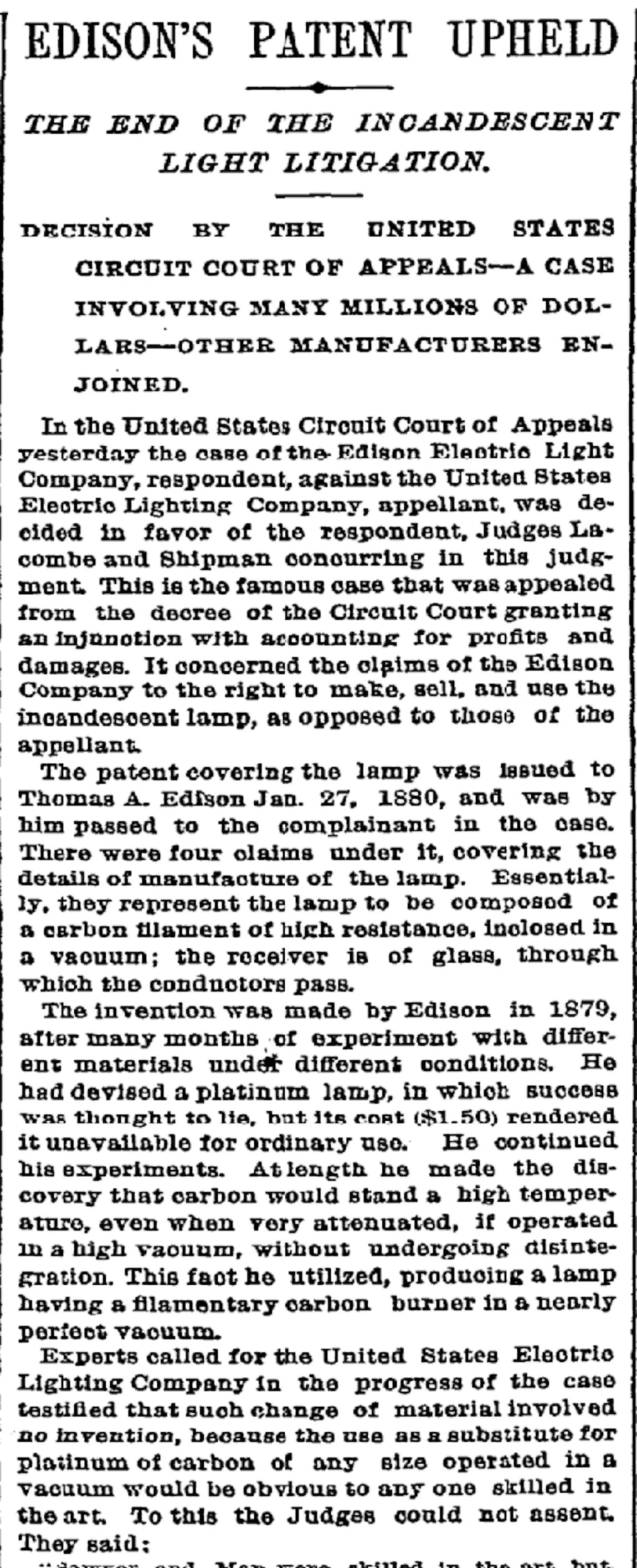
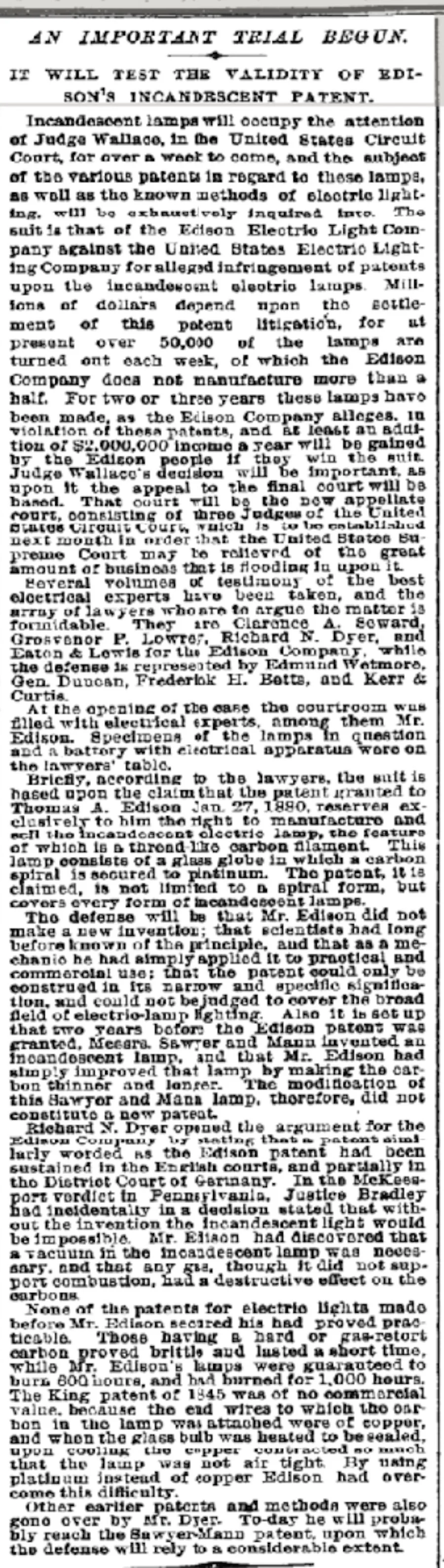
This second trial drew close attention from The New York Times, starting with this article which ran on May 27, 1891.

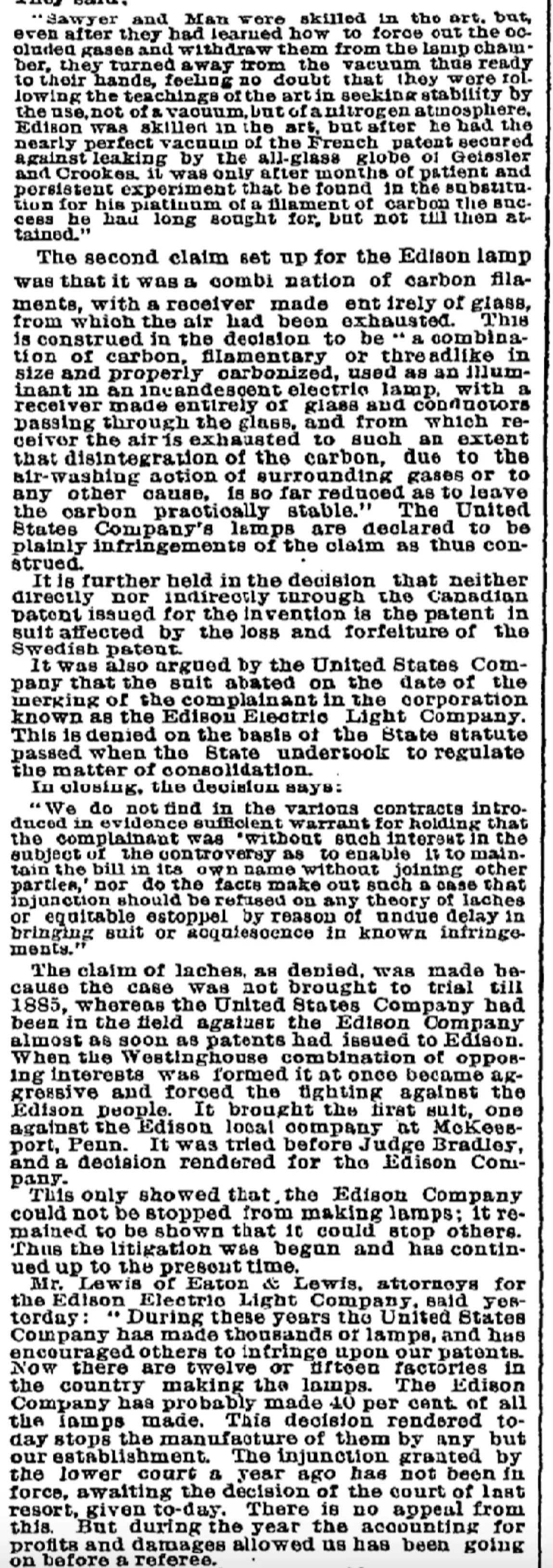
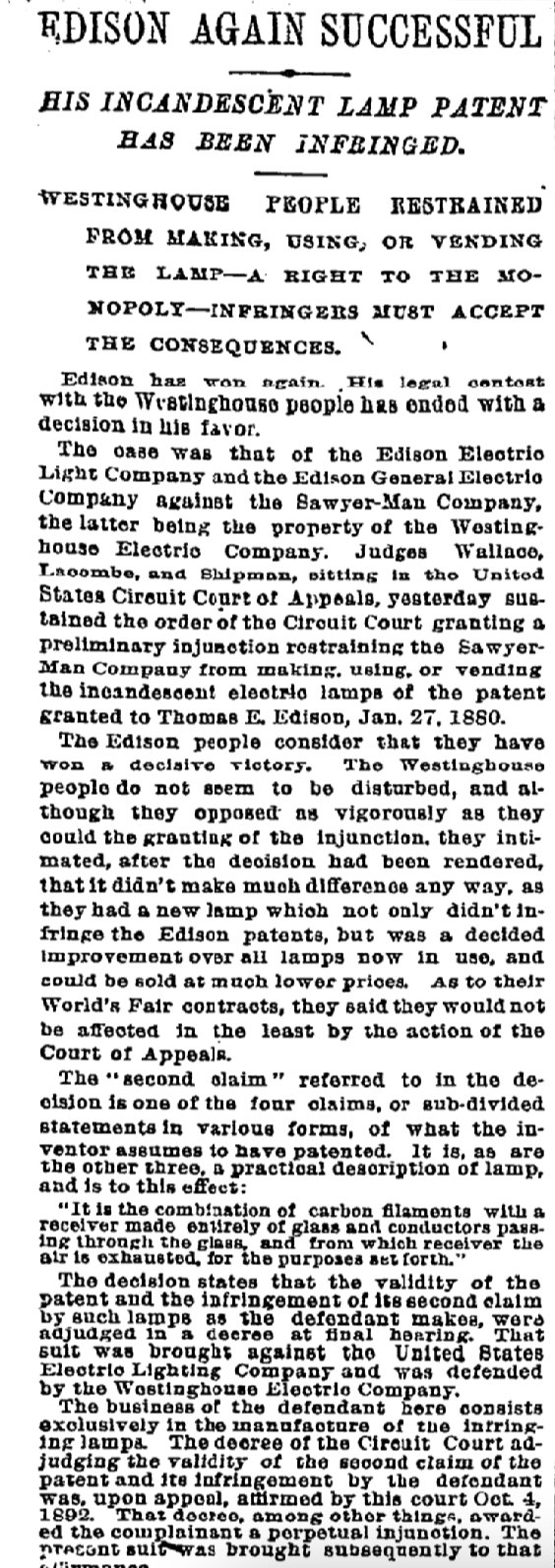
The Circuit Court Justices took their time considering the landmark case. The Times follow-up coverage came on October 5, 1892, when the decision was announced.

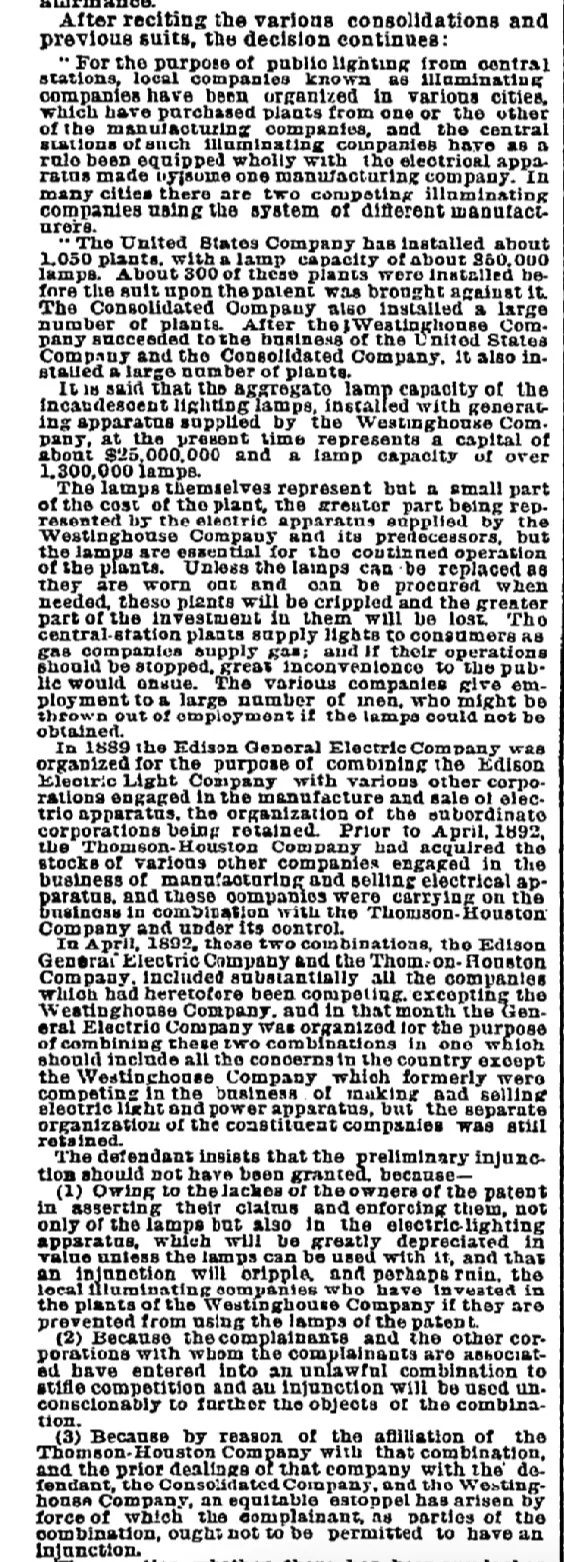
The following article explains the case in detail.

Edison’s patents were upheld, despite the fact that earlier entities, such the Sawyer Man Company, had been making similar bulbs on which he had only improved.

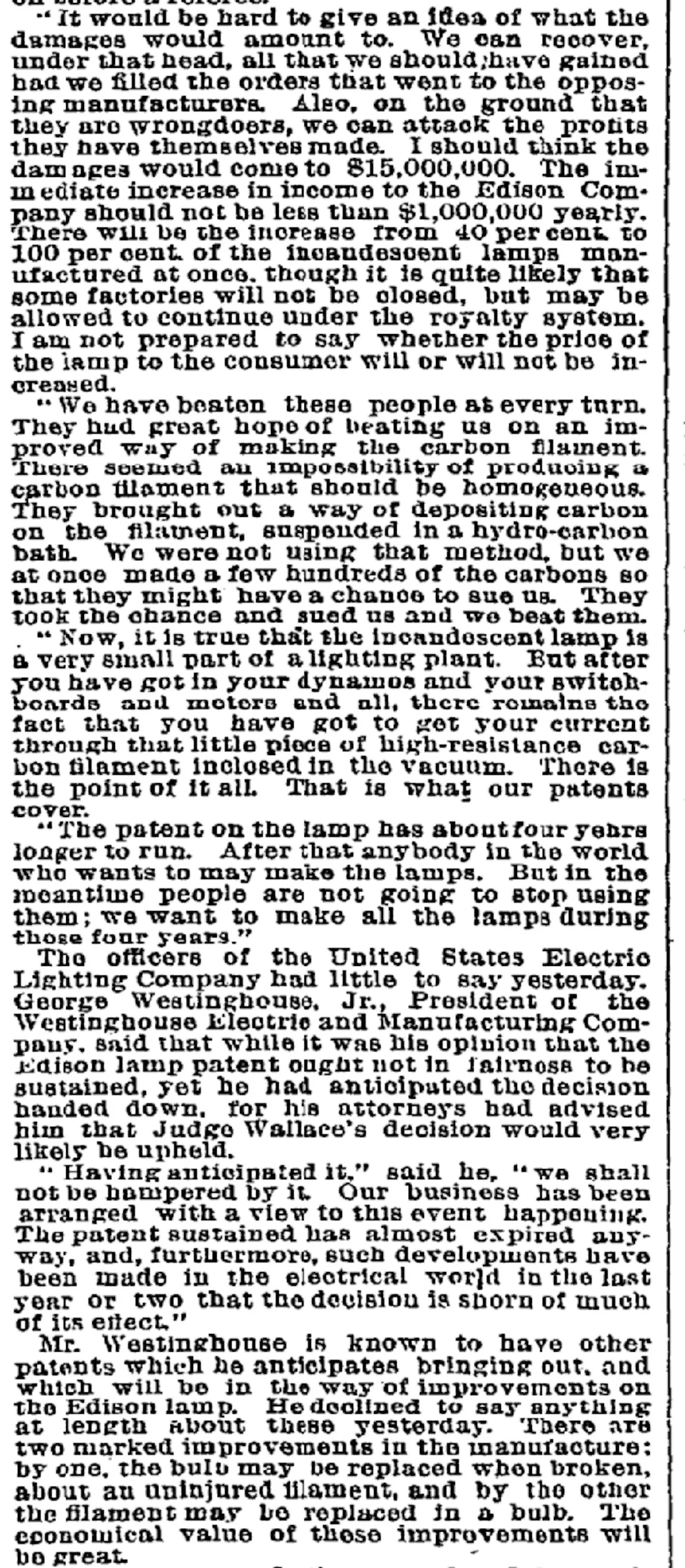
Despite losing this round, George Westinghouse’s response reveals much about the person and innovator he was.

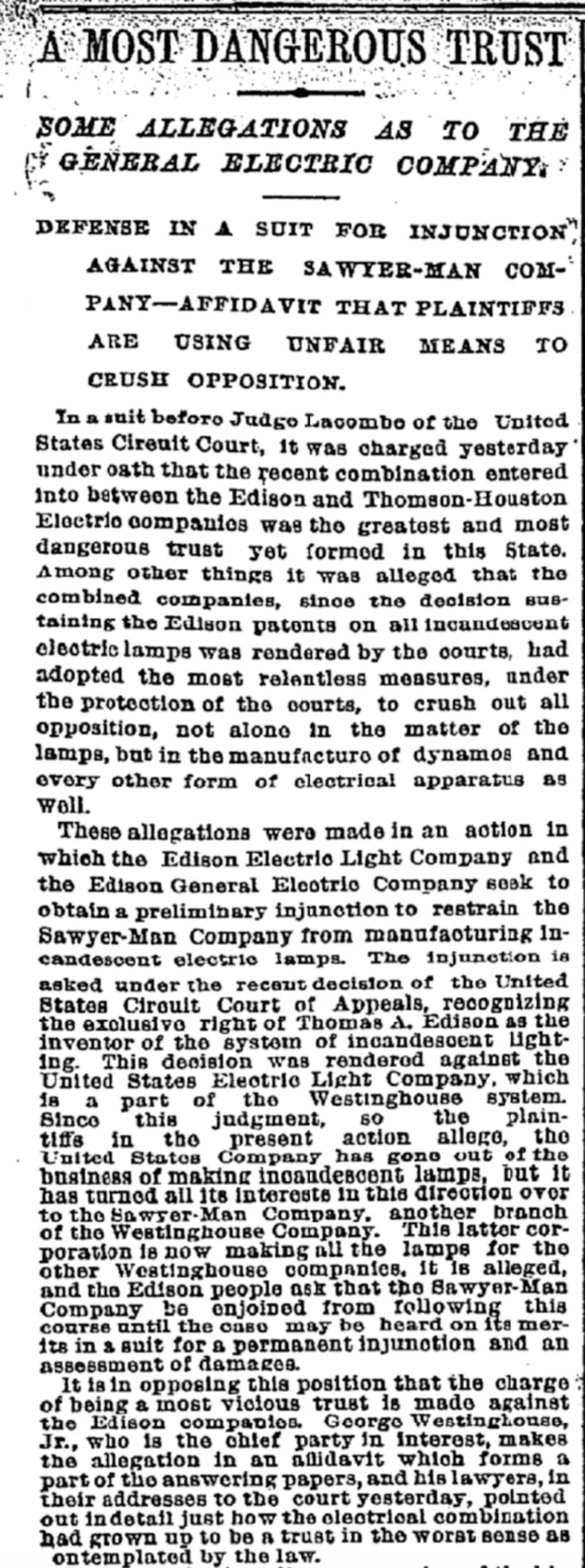
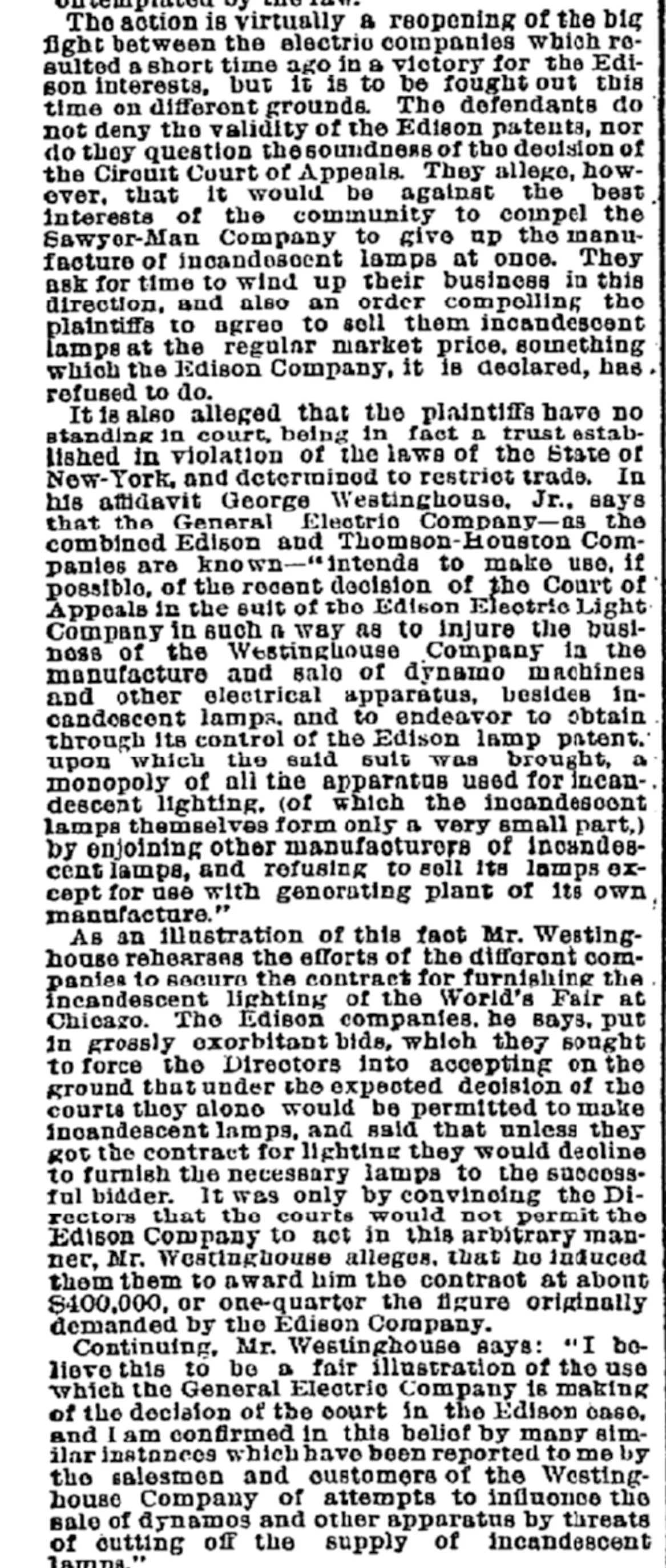
A month later, on November 19, 1892, The Times reported on a new battle in the “Current War.” George Westinghouse asserted that the Edison Company, recently reorganized as General Electric, was “ A Most Dangerous Trust,”which was using the court’s ruling to unfairly crush any competition.

One primary example Westinghouse cited concerned the pending contract to illuminate the Chicago World’s Fair.

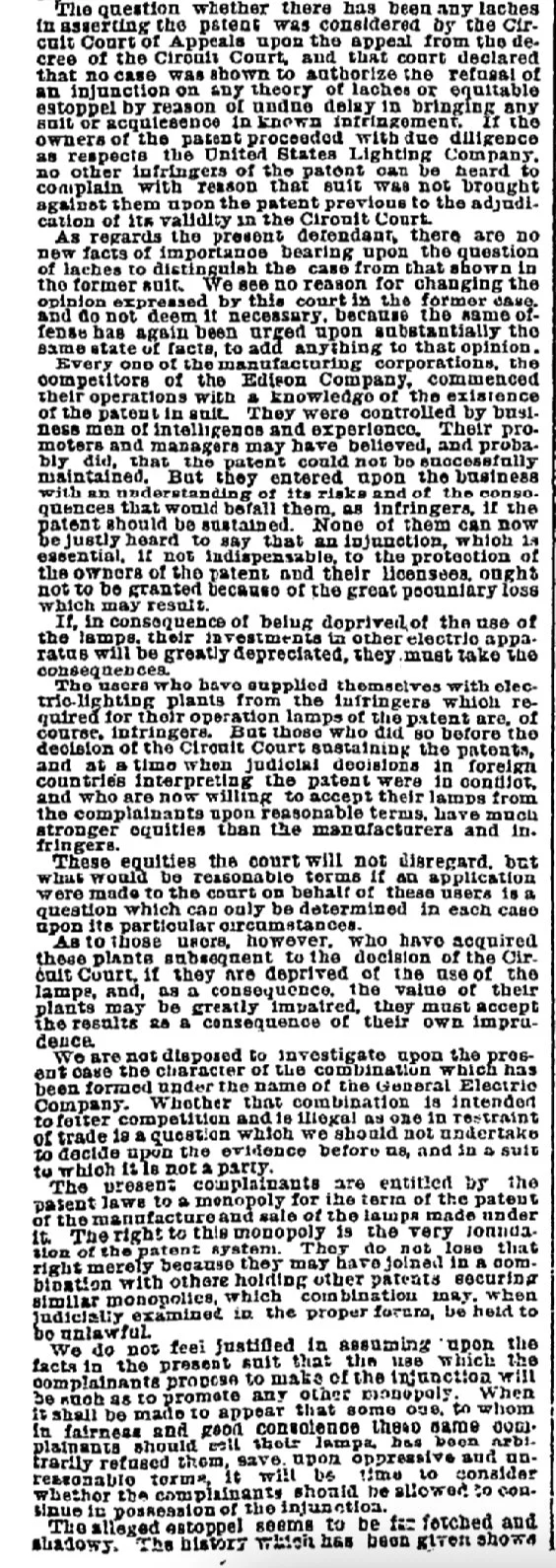
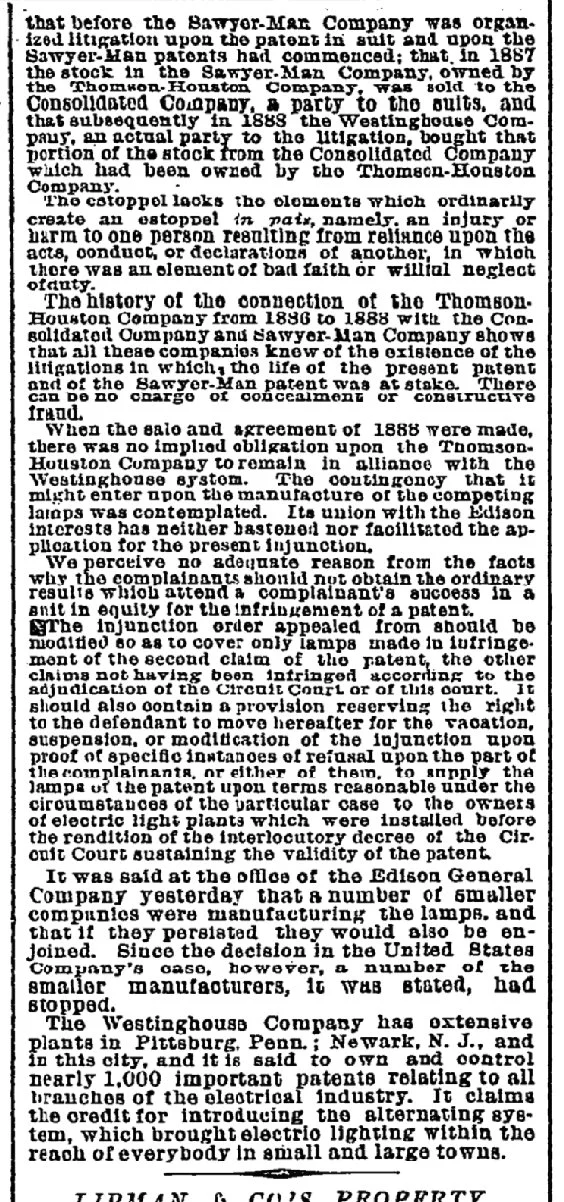
Then the court again ruled in Edison’e favor, as The Times reported on December 16, 1892.

The in-depth coverage both parsed the court’s thinking and presented George Westinghouse’s detailed, and ultimately successful, work-around.

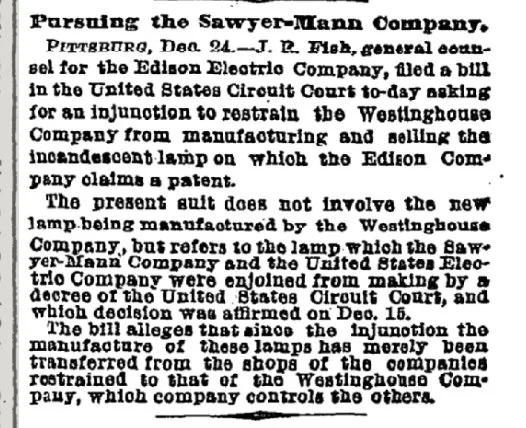
One week later, on December 25, 1892, The Times reported on Edison’s response.

There doesn’t seem to be any further Times coverage of the incandescent issue.

However, history records that Westinghouse Electric did win the contract to illuminate the Columbian World Exposition, and it did so brilliantly, in part by quickly manufacturing millions of “electric lamps” which did not infringe on Edison’s patents, which expired two years later.

While by no means the final battle in “The Current War,” the incandescent issue proved to be a decisive victory for Westinghouse Electric.

Previous
Previous

Electricity on Trial with the Railroads

Next
Next

Union Switch & Signal: The Rowand Rebellion