When railroads started to transition from steam power to electricity, safety and reliability was a primary concern.
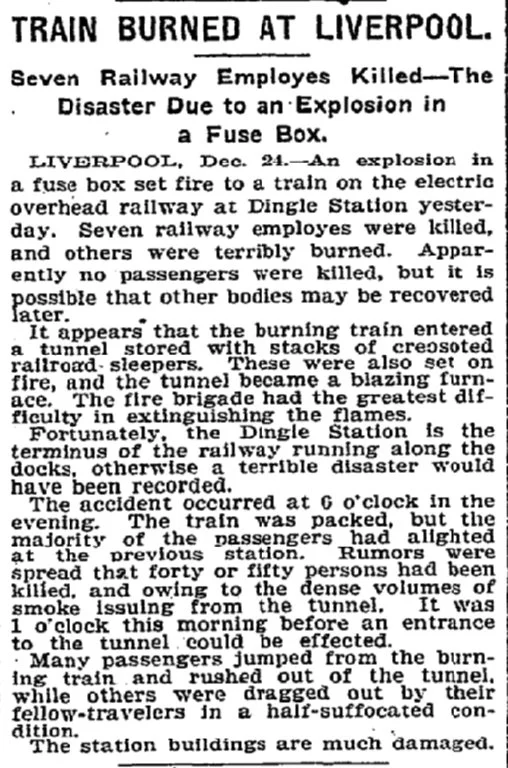
As reported in this New York Times article published on December 24, 1901, a simple fuse box failure on an electric-powered train engine pulling into a station in Liverpool, England the previous day had started a fire of catastrophic consequence.
The Liverpool train conflagration immediately caught the world’s attention.
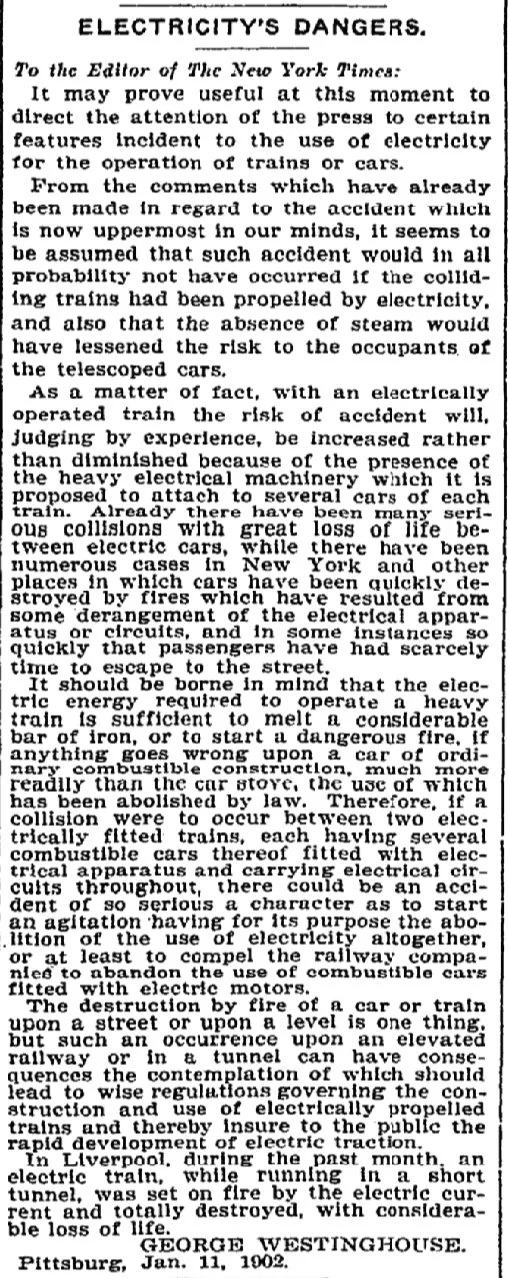
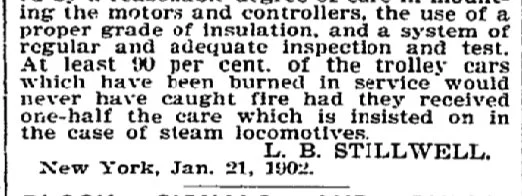
Several weeks later, George Westinghouse wrote a letter to The New York Times commenting on the disaster. His letter was published on January 16, 1902.
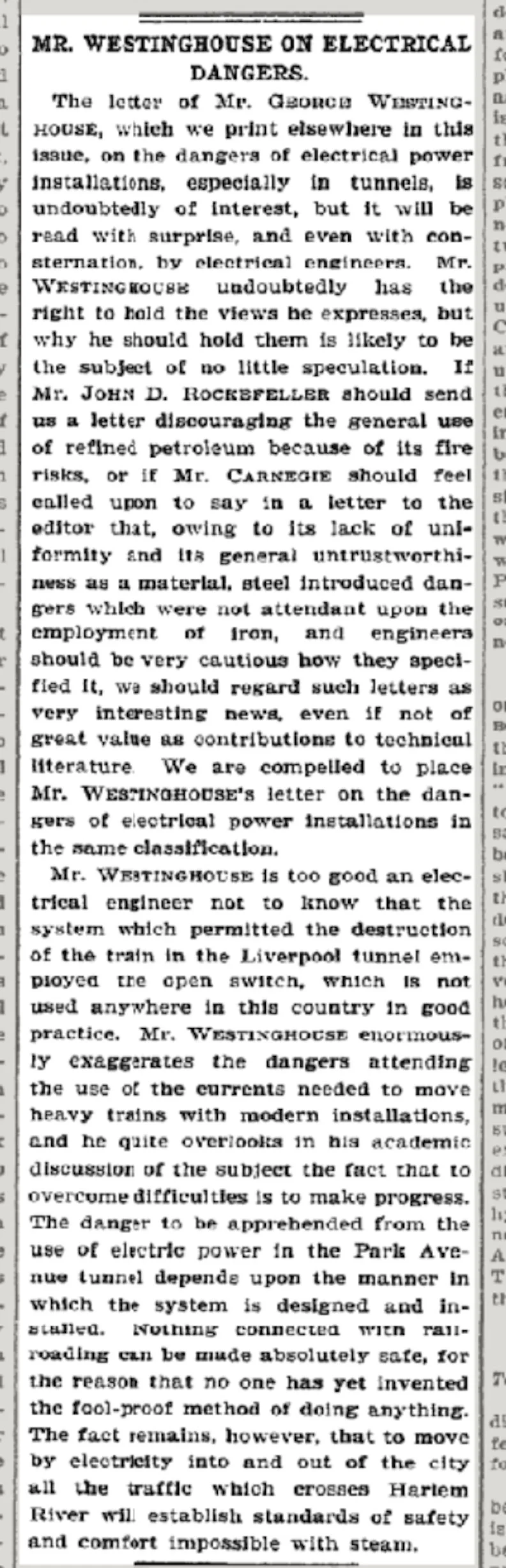
Curiously, in that same issue of January 16, 1902, Times editors critically commented on Westinghouse’s letter, especially as it pertained to the subway tunnel then being built under Park Avenue.
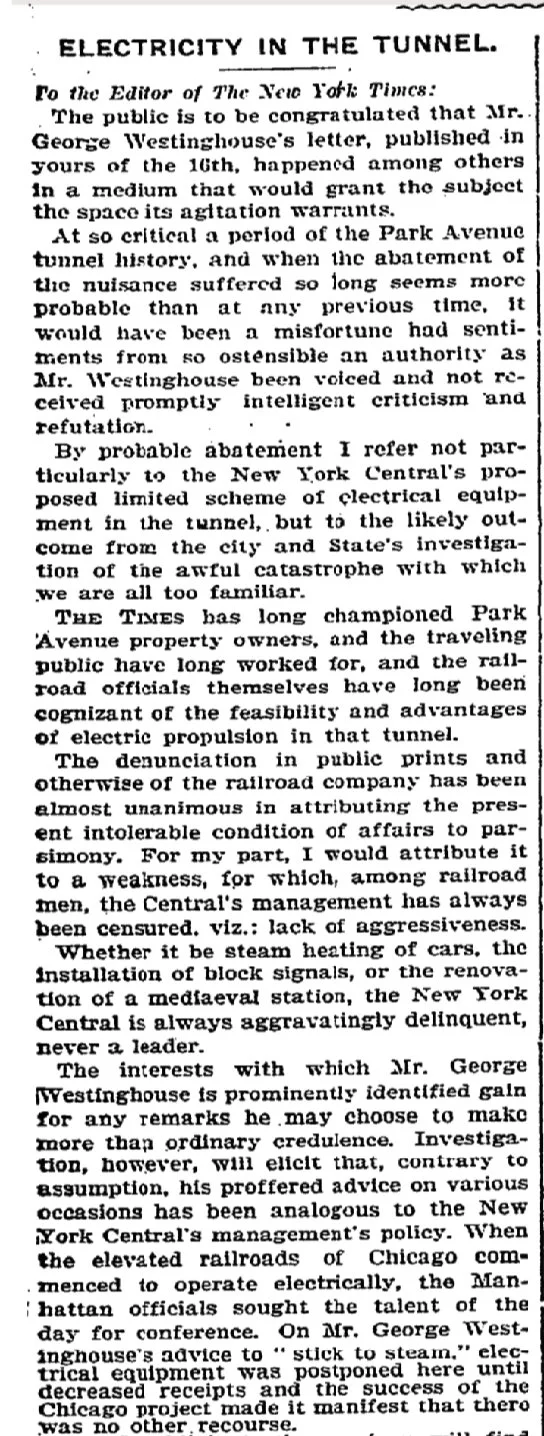
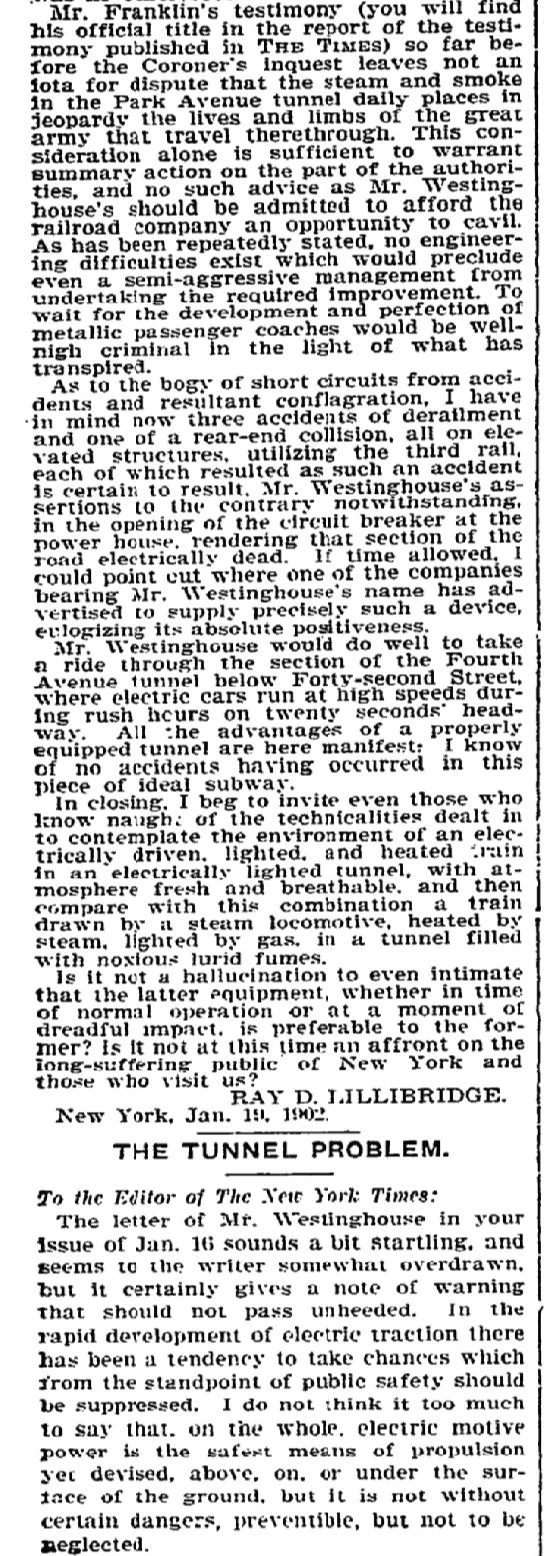
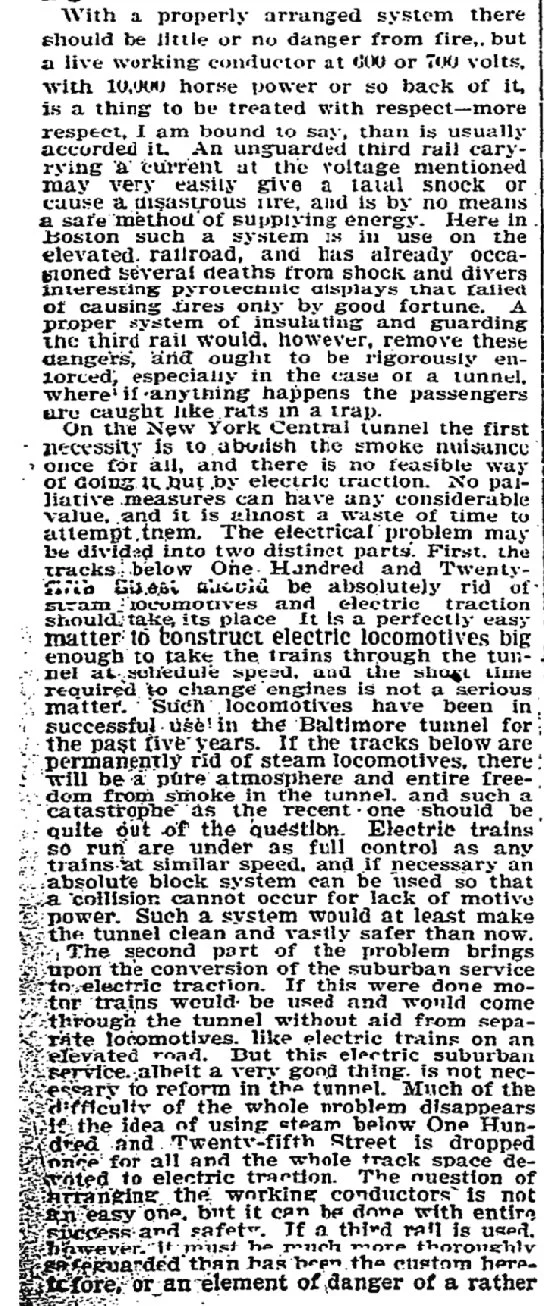
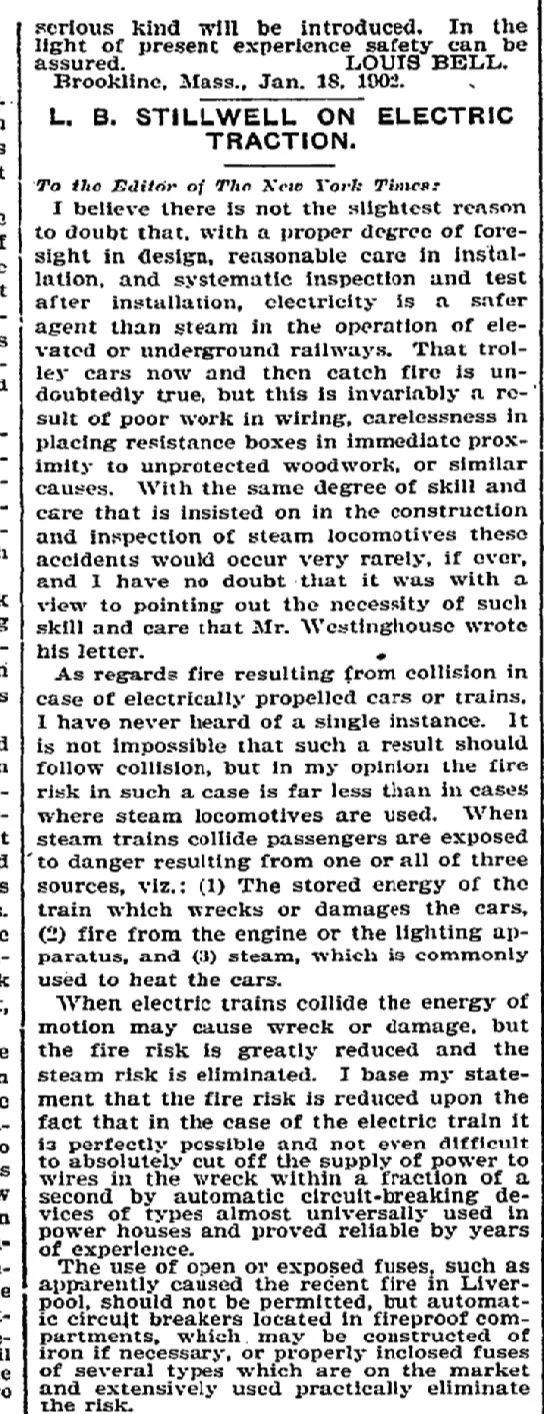
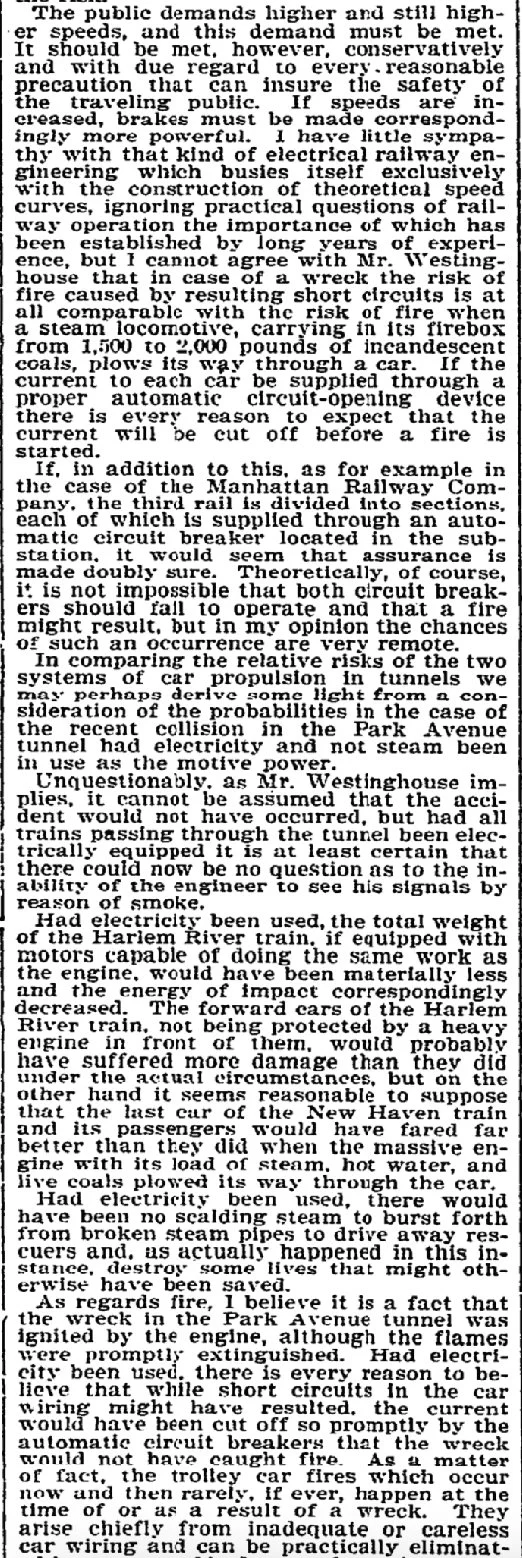
But the tunnel discussion didn’t stop there. Two weeks later, January 26, 1902, the Times published three more letters commenting on the issues Westinghouse had raised and proving insight on the electricifaction of subway lines.
The controversy notwithstanding, electric traction was eventually adopted by subway lines around the world.