The George Westinghouse Memorial
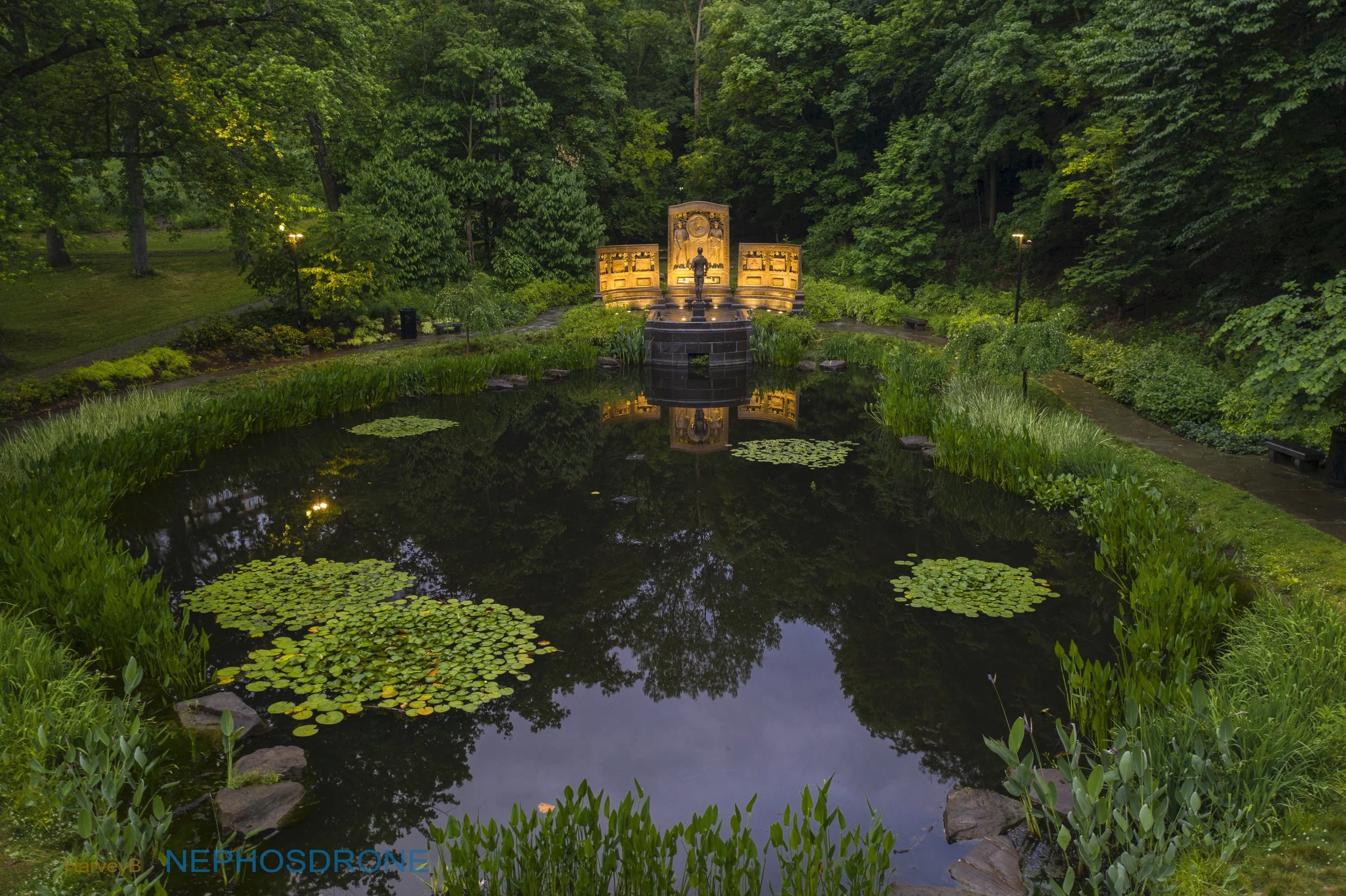
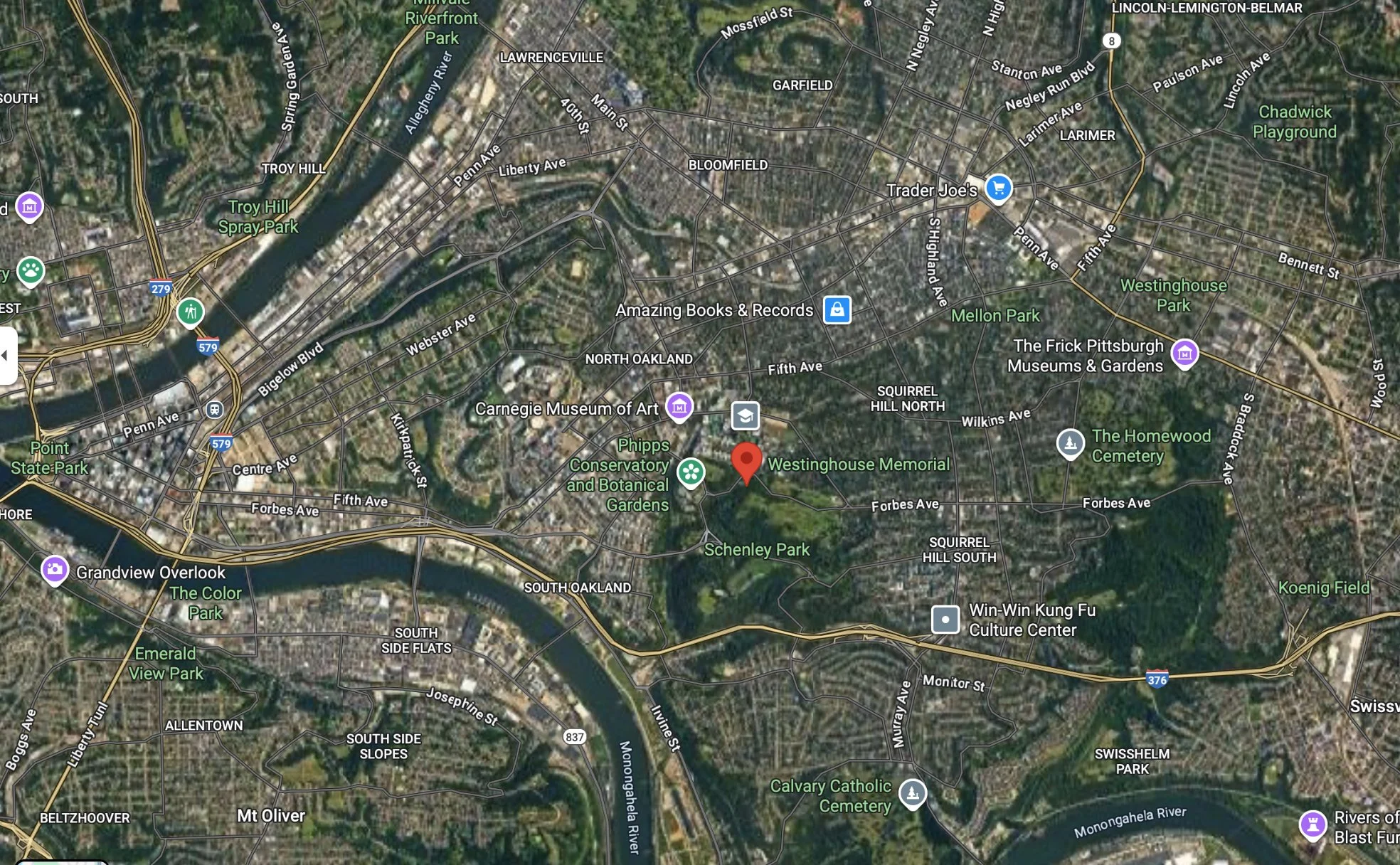
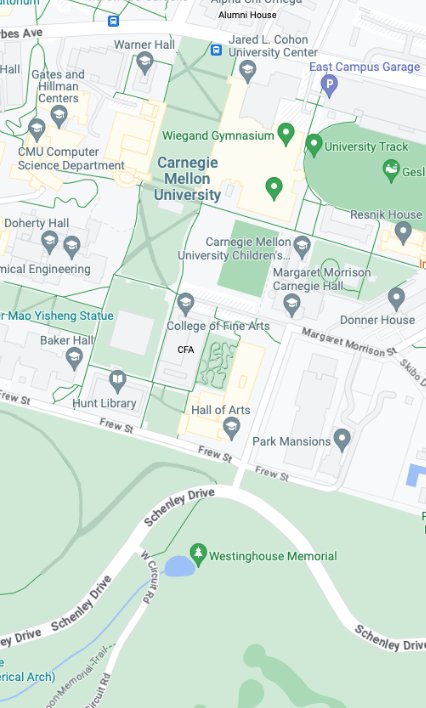
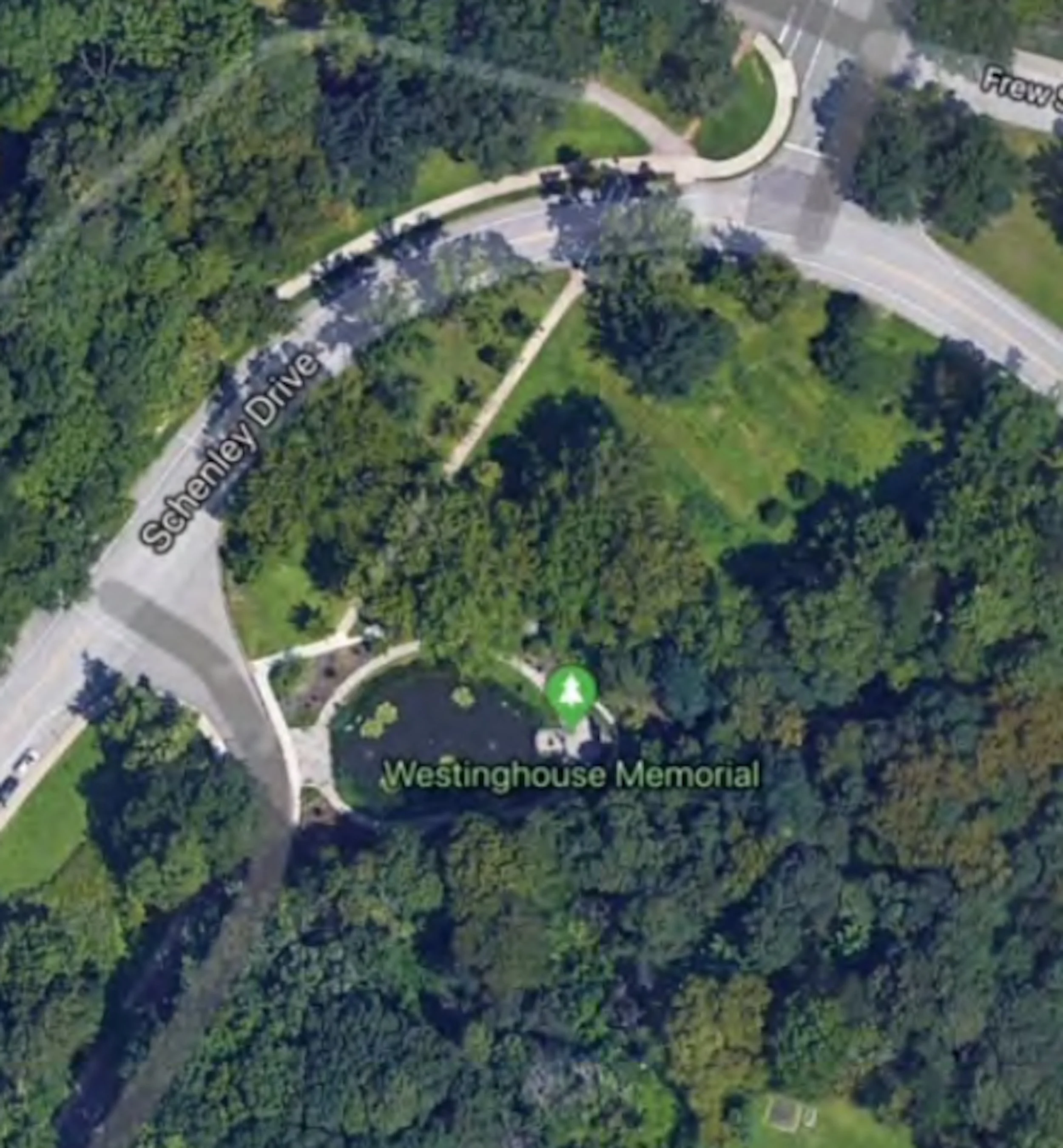
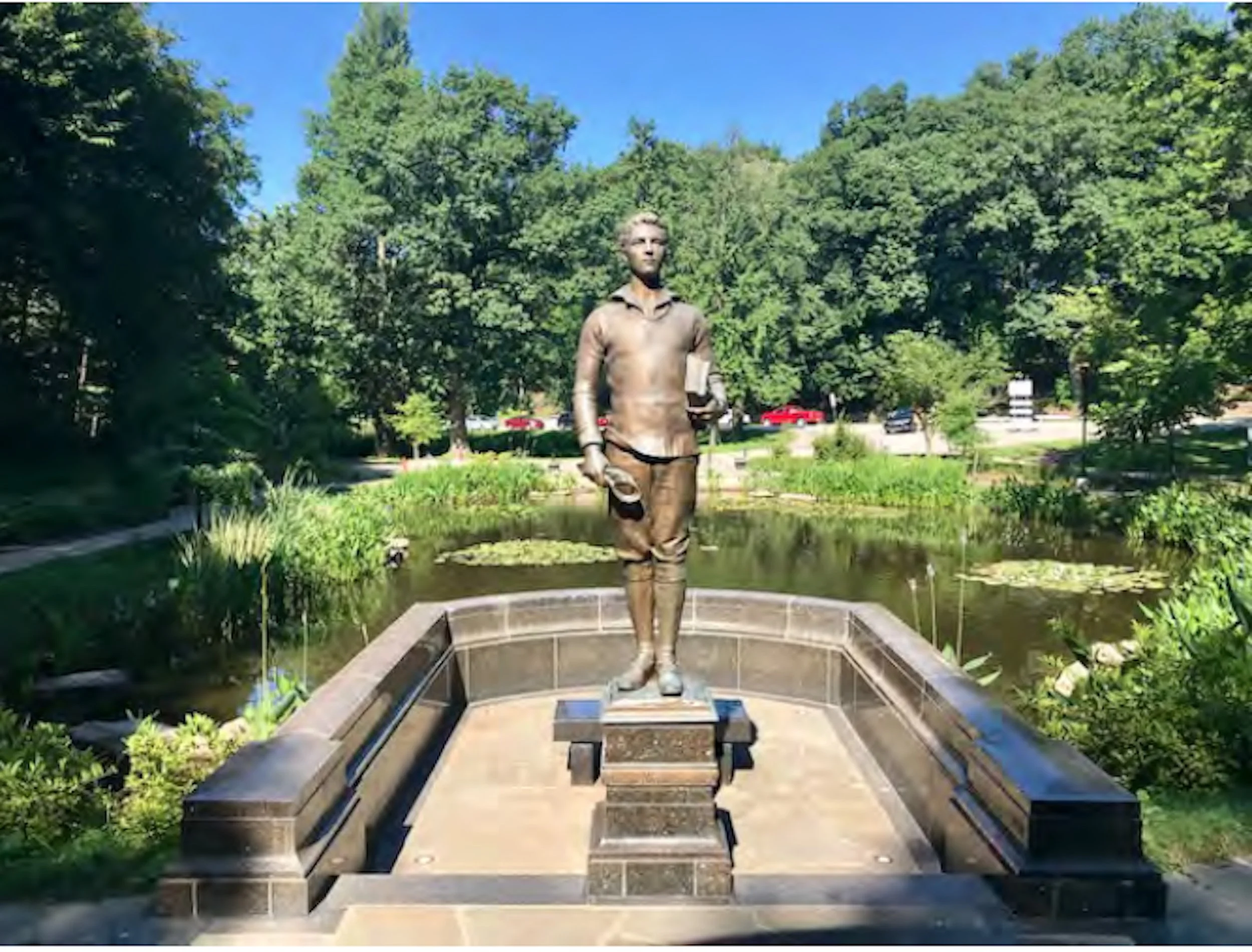
The George Westinghouse Memorial is situated in Pittsburgh on a curve along Schenley Park Drive in the city’s East End, between Carnegie Mellon University and Phipps Conservatory, as tagged below.
The George Westinghouse Memorial was dedicated at a grand event on October 6, 1930, the 94th anniversary of its namesake’s birth.
The memorial was paid for by contributions from nearly 60,000 employees of Westinghouse companies around the world.
But Schenley Park was not the site originally proposed for the George Westinghouse Memorial.
That was Westinghouse Park, located on the right side of the map above. The next chapter explains how that happened.
Solitude - The Westinghouse Estate
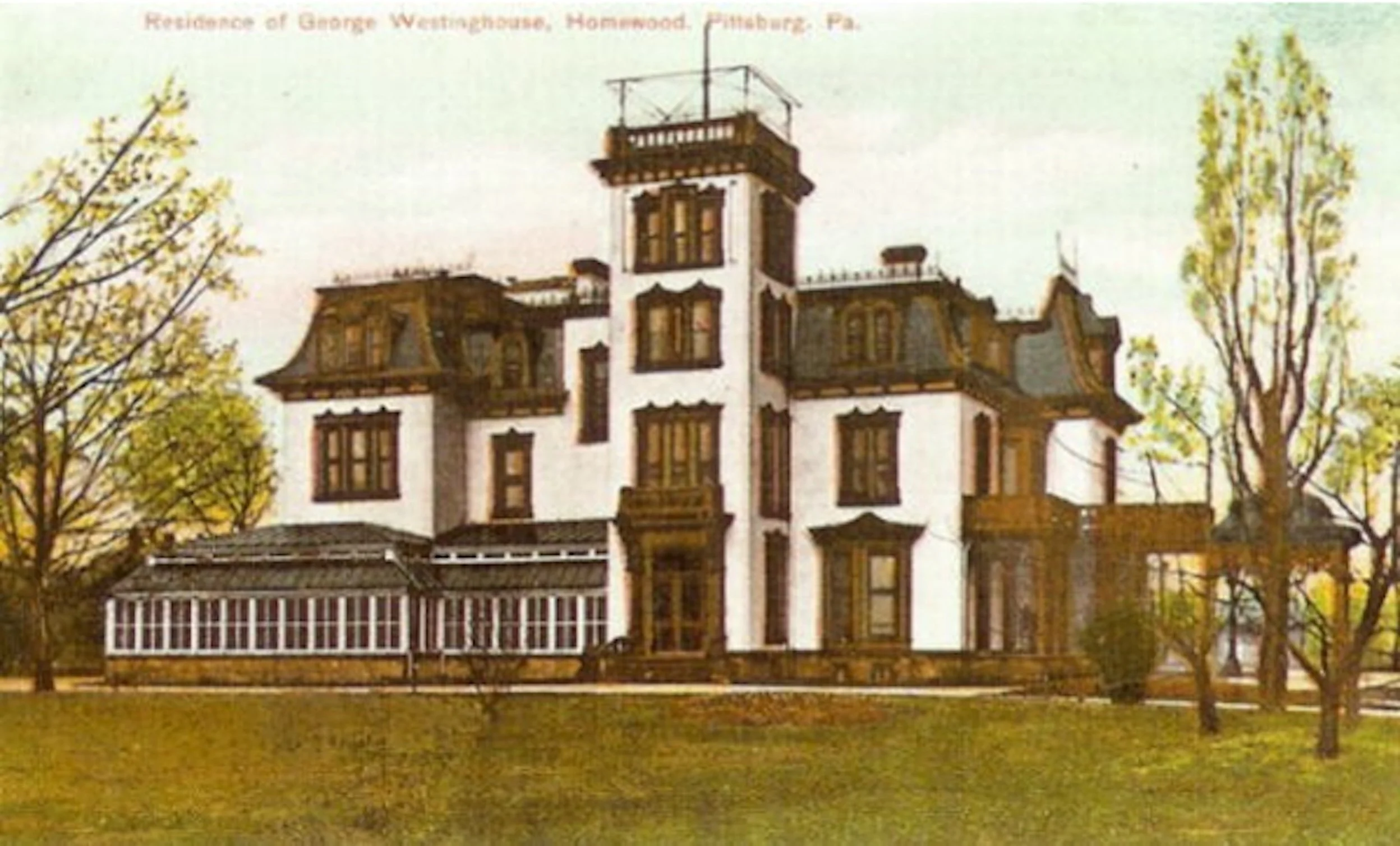
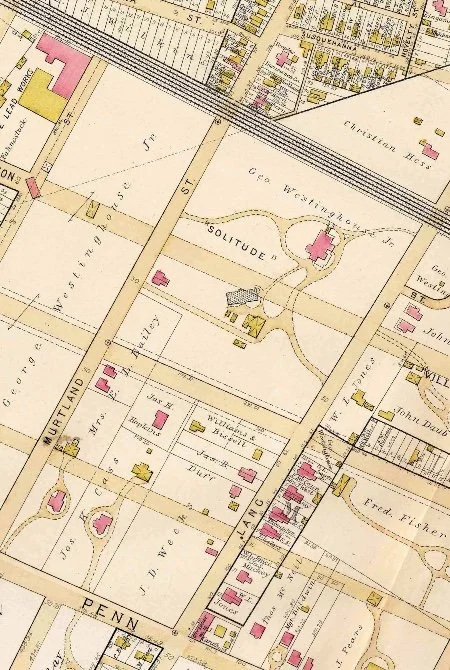
In 1871, 23-year-old George Westinghouse purchased a house and five acres in the still rural East Liberty Valley along the main line of the Pennsylvania Railroad as a birthday surprise for his wife Marguerite. She named it “Solitude.” Over the next decade, George and Marguerite expanded both the house and their estate to ten acres. Although they eventually also had other homes elsewhere, Solitude remained the center of their creative world for the rest of their lives.
In 1914, when George and Marguerite both died three months apart, Solitude was inheited by their only child, George Westinghouse III.
Four years later, George III sold the estate to the Western Pennsylvania Engineering Society for $150,000, which was raised by contributions from several Westinghouse companies. The Society immediately transferred ownership of the estate to the city for $1.00, on the stipulations that the mansion be torn down at the city’s expense within six months, that the property become a public park named after George Westinghouse, and that a memorial be built there in his honor.
Here’s the section of the actual deed transfer that details those provisions.
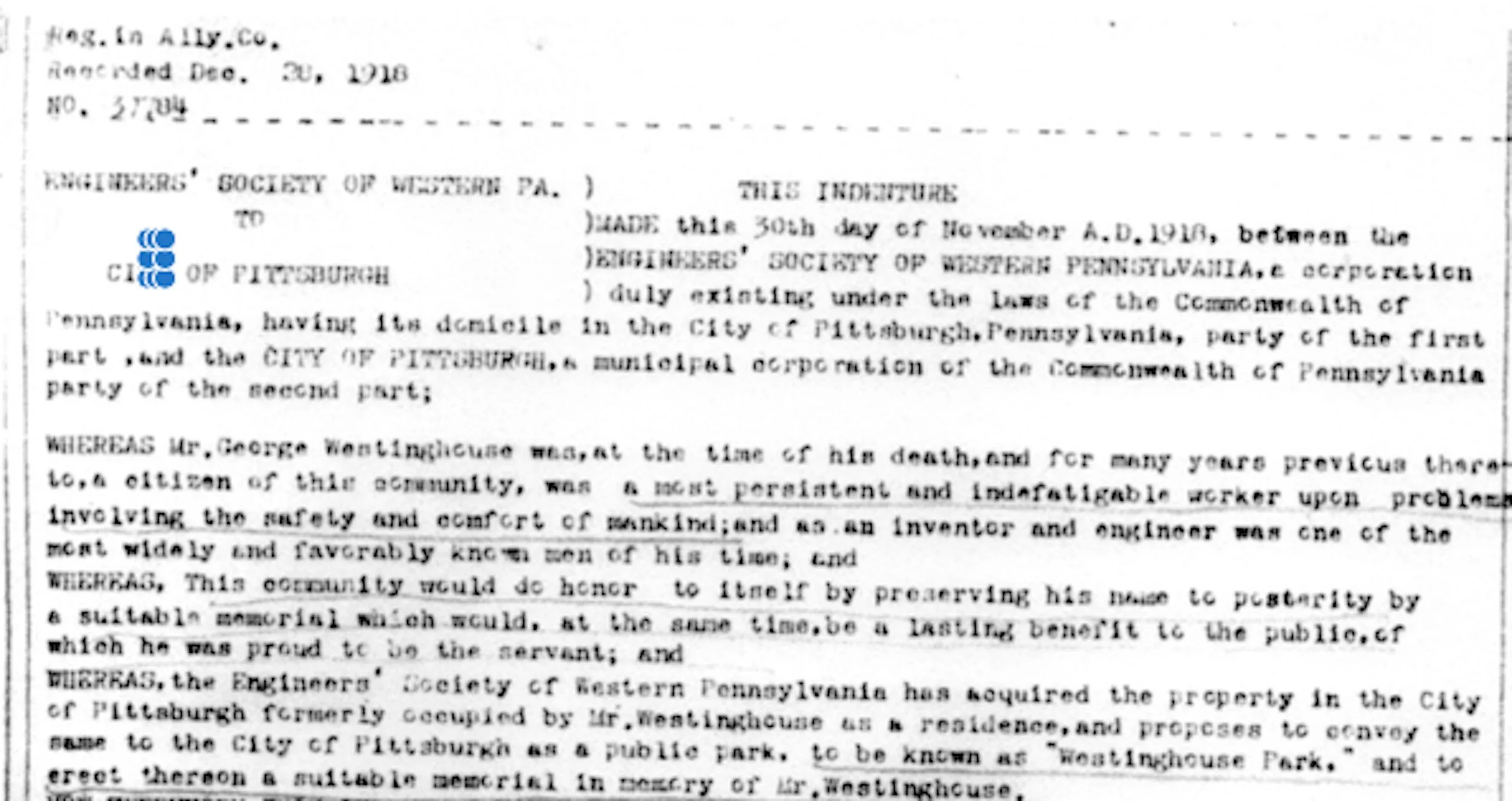
The property transfer was completed on November 30, 1918, and the following summer the mansion was unceremoniously collapsed into its two-story basement, a consequence of post-World War I economics and the deadly flu pandemic. The demolition site was then covered with soil and seeded with grass. Solitude was now Westinghouse Park.
But the erection of the memorial to George Westinghouse did not proceed as expeditiously. Seven more years elapsed before the idea began to take shape.
In 1925, a commission was formed to build the George Westinghouse Memorial. It was decided the site should be shifted to the larger and more centrally located Schenley Park.
On September 22, 1926, Pittsburgh City Council granted the commission’s request to place the proposed George Westinghouse Memorial in Schenley Park and referred the matter to the city’s art department and department of public works, “as a matter of routine.”
This following letter from A. L. Humphrey, President of Westinghouse Air Brake and Chairman of the Memorial Commission, sent to Daniel Winters, president of Pittsburgh City Council, on December 4, 1926 noted progress on the memorial’s design.
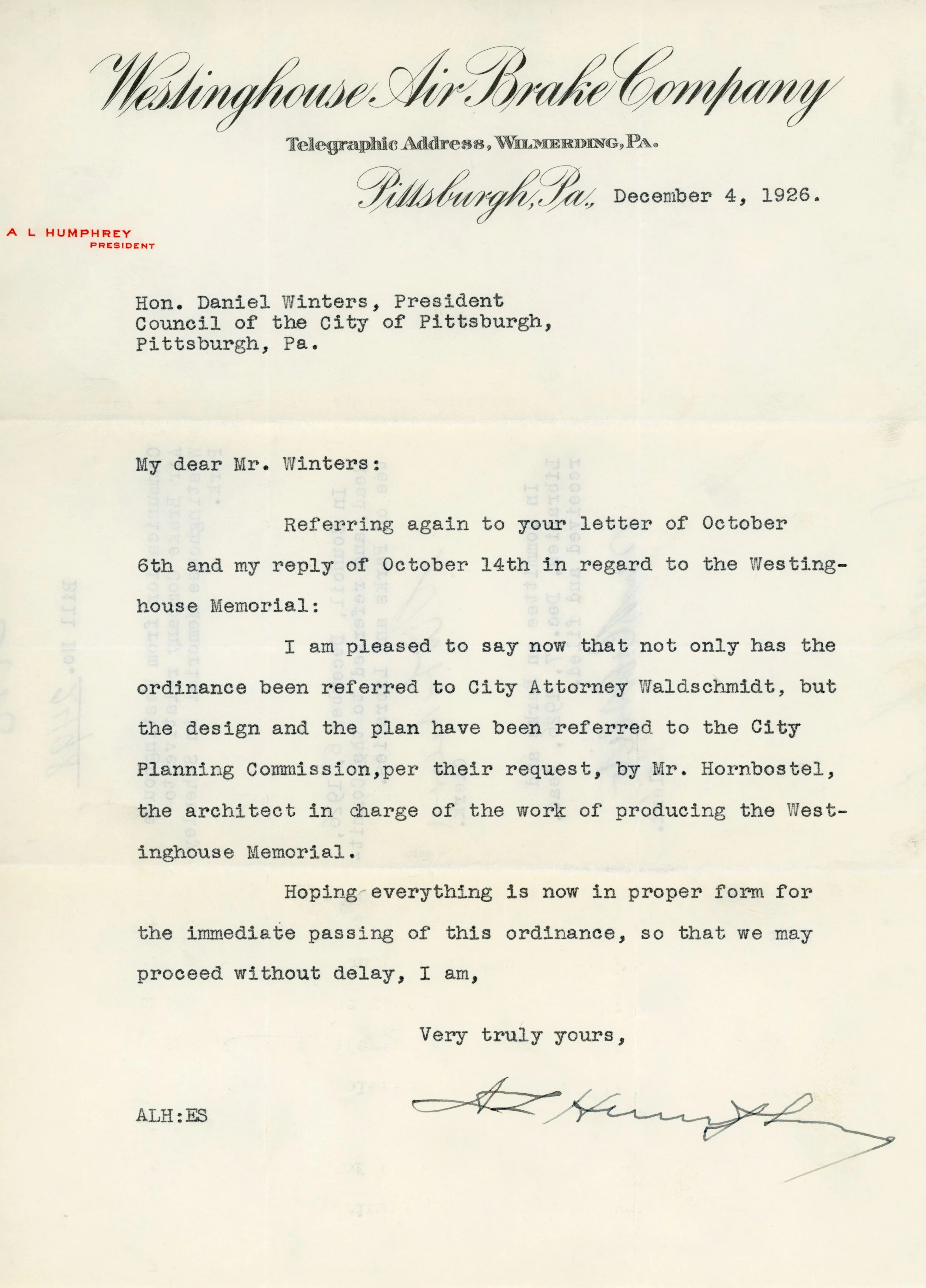
Finally, on December 28, 1926 the Pittsburgh Art Commission approved the memorial’s site selection in Schenley Park. Construction began the following year.
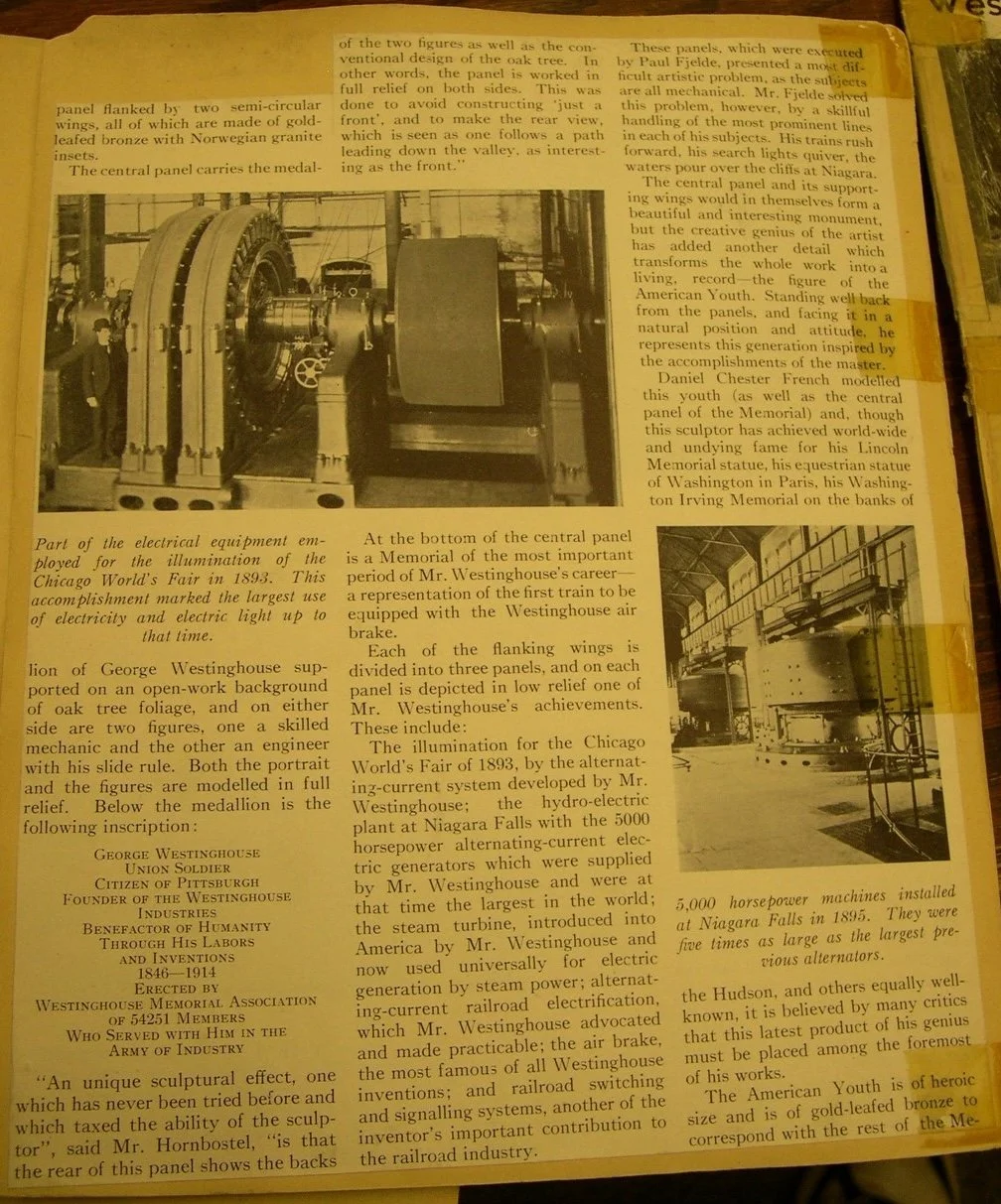
The next section on the history of the George Westinghouse Memorial starts with this 1983 book.

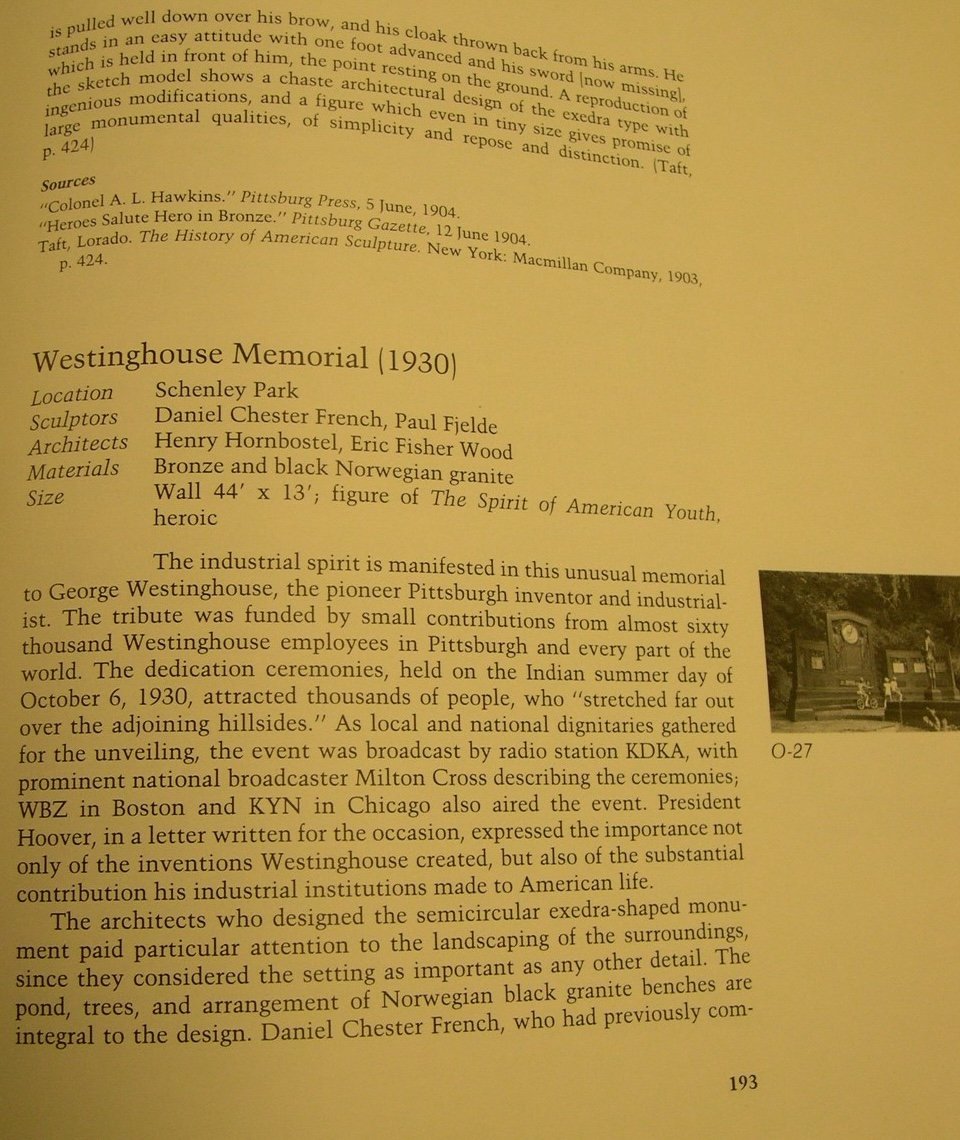
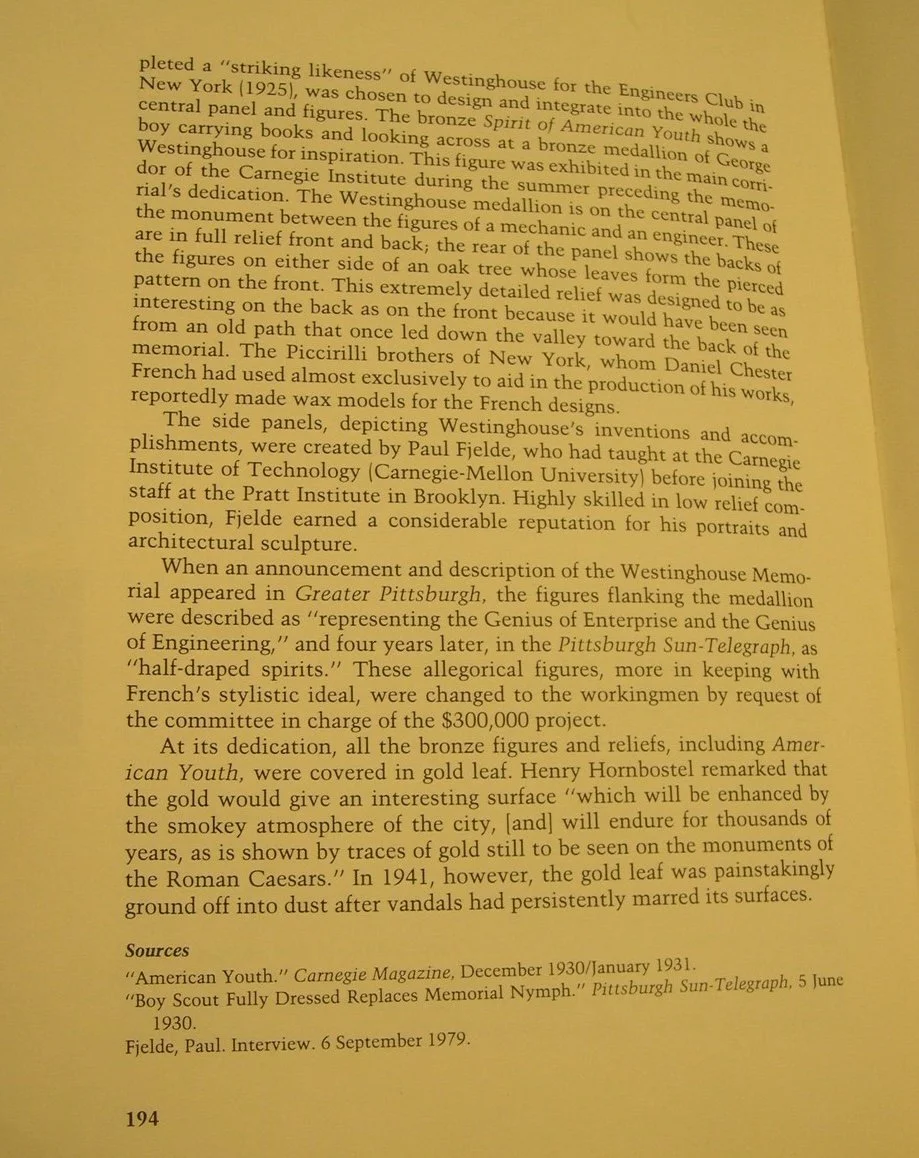
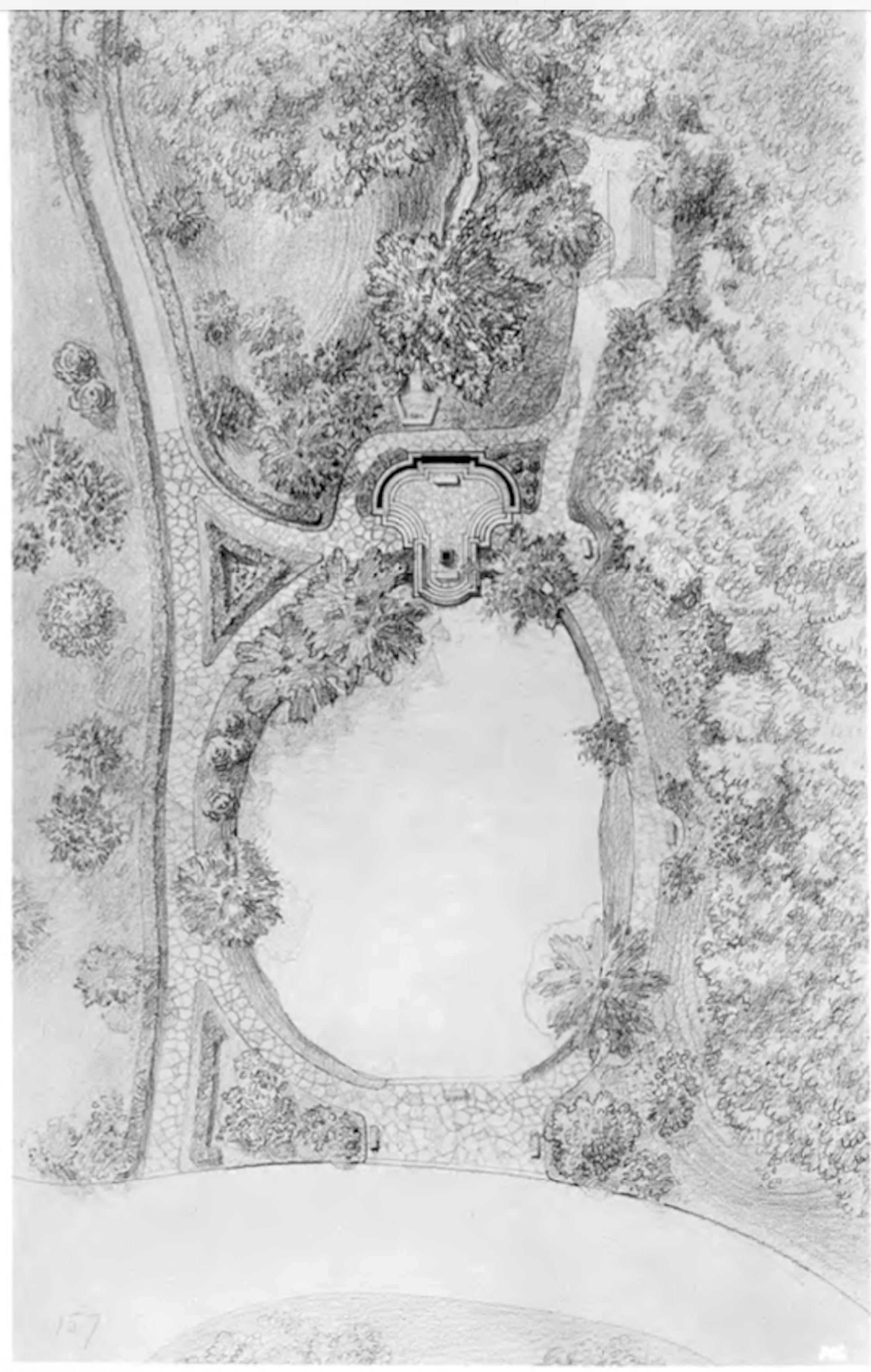
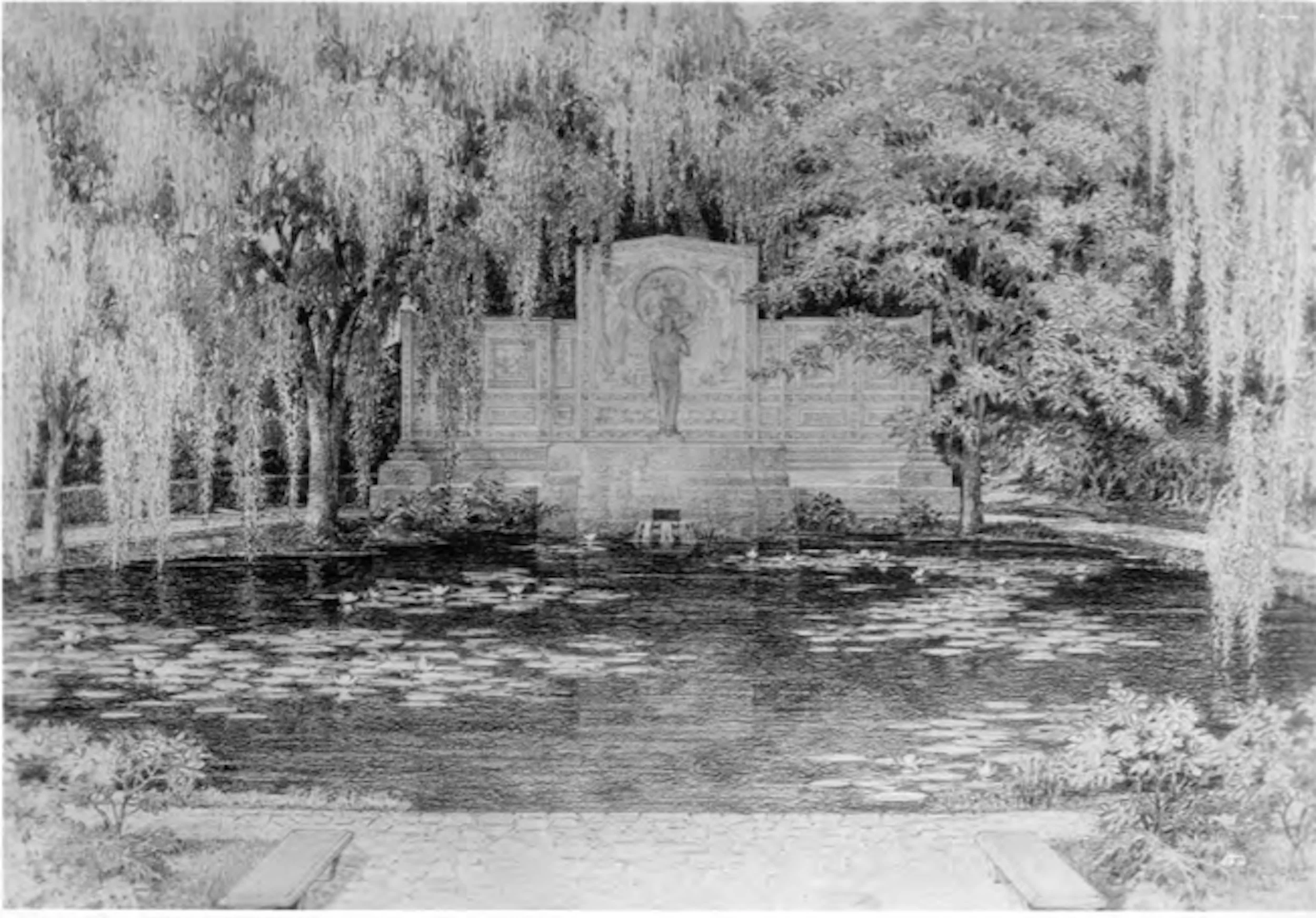
As the article explains, the architect Henry Hornbostel was selected to design the memorial. Hornbostel had a clear vision for the memorial. Here are the two sketches he submitted for consideration.
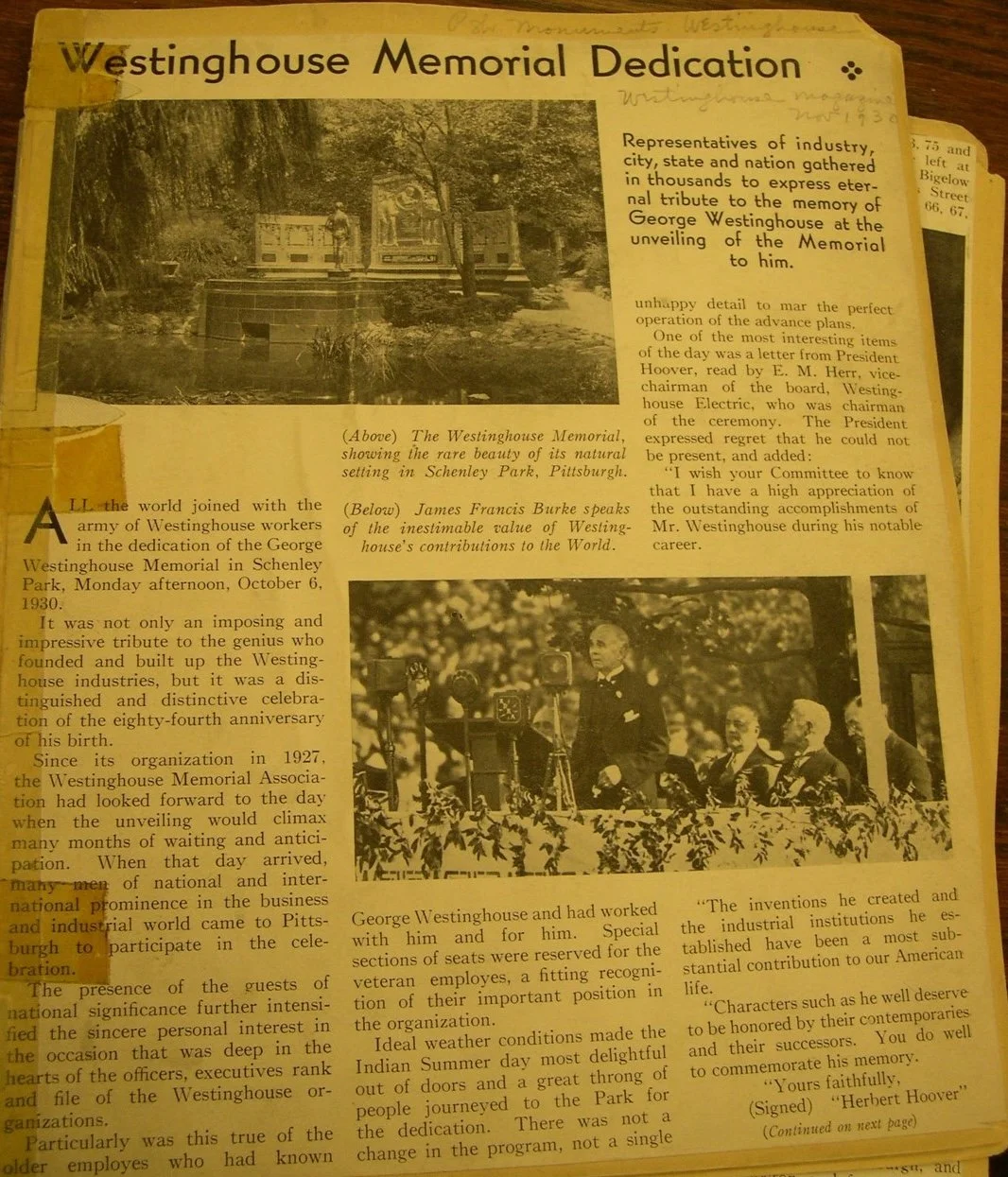
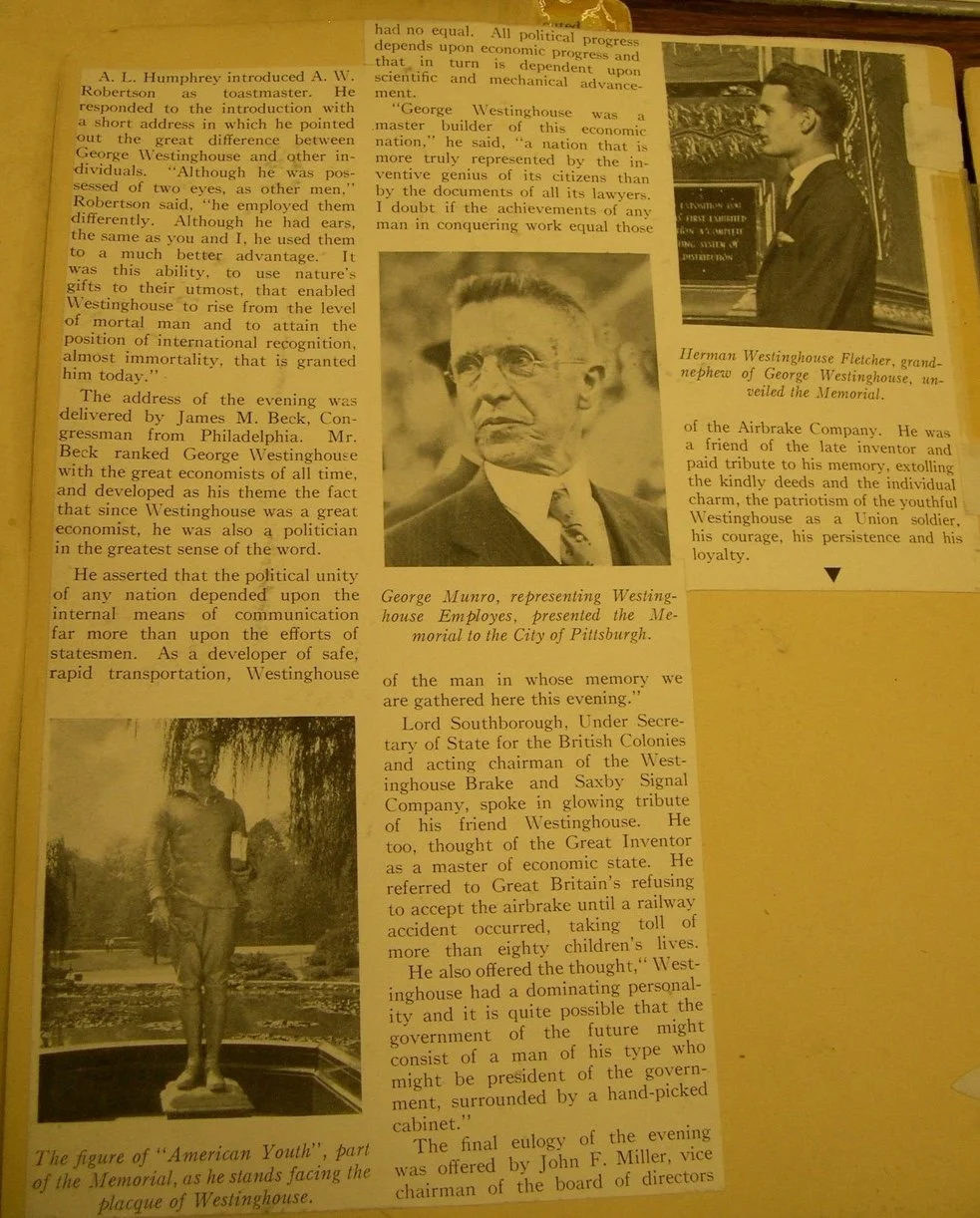
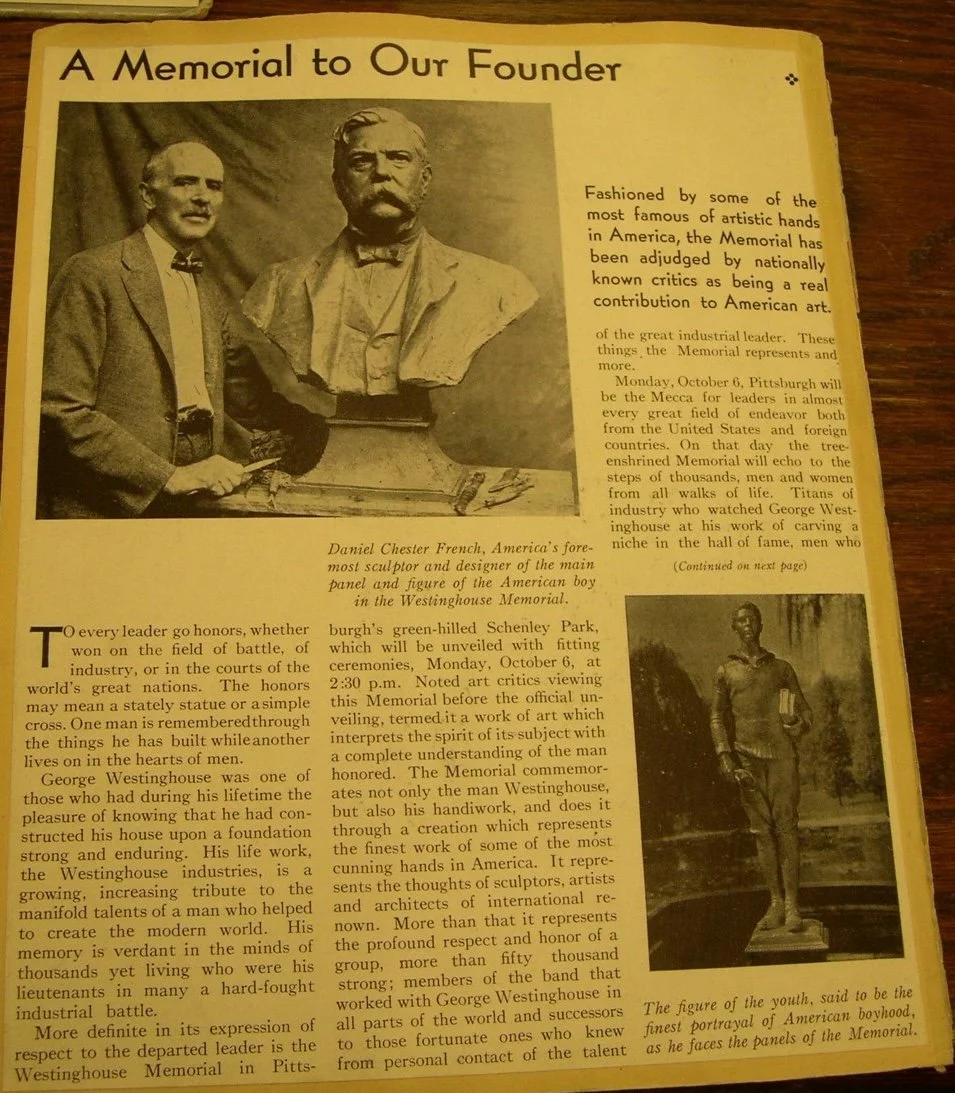
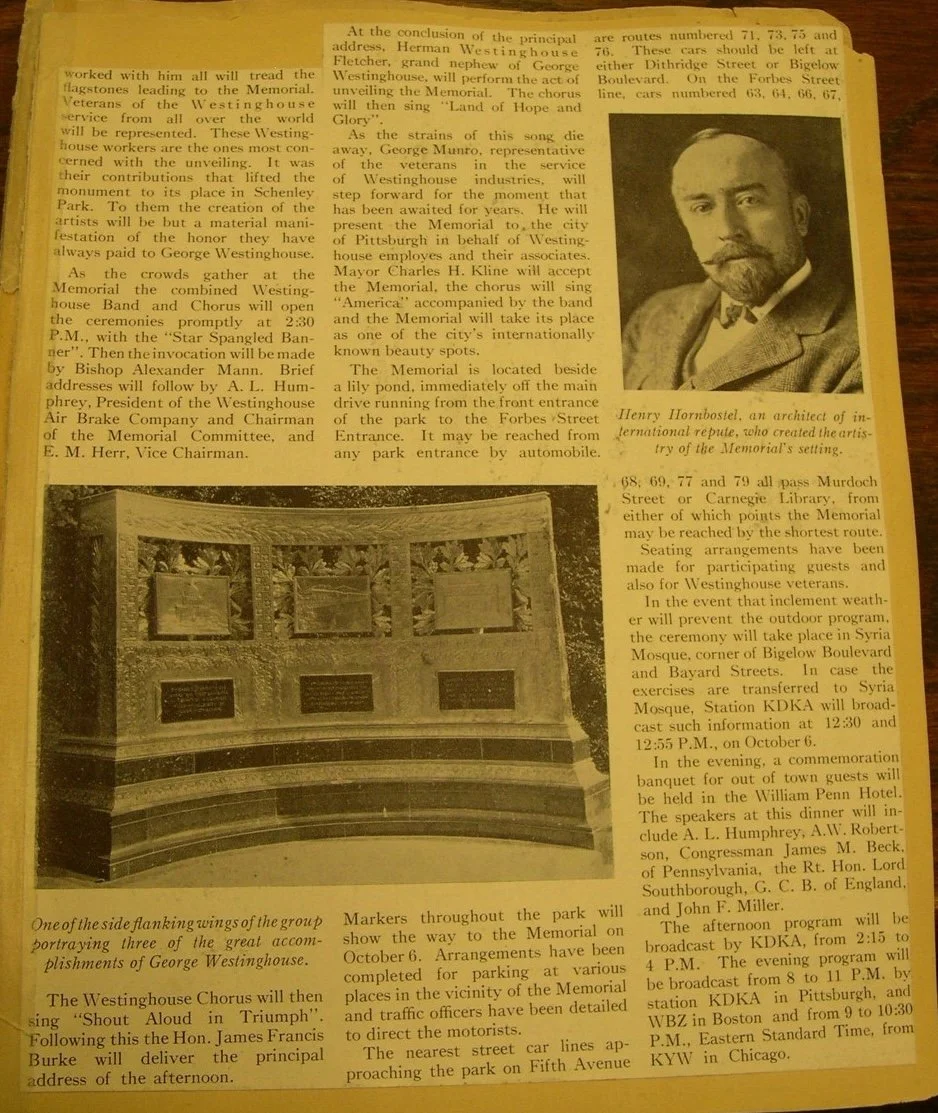
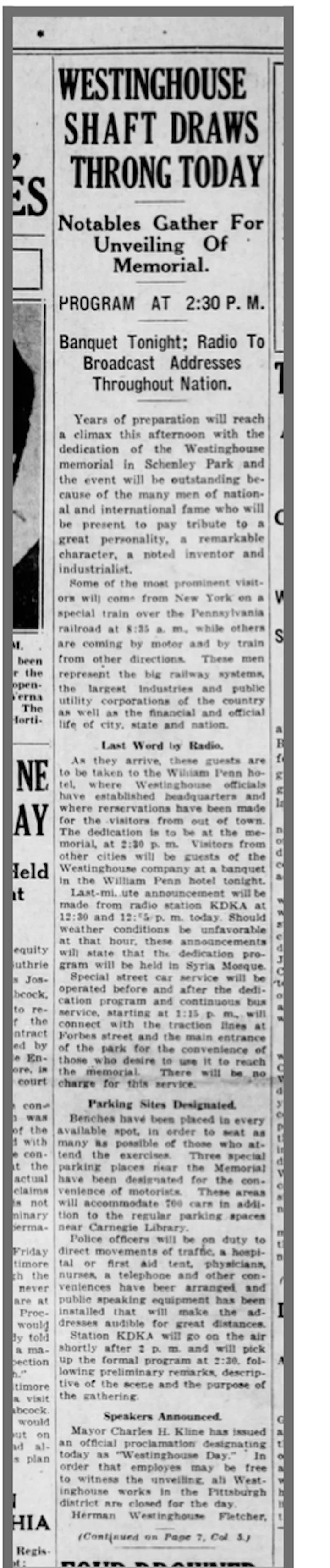
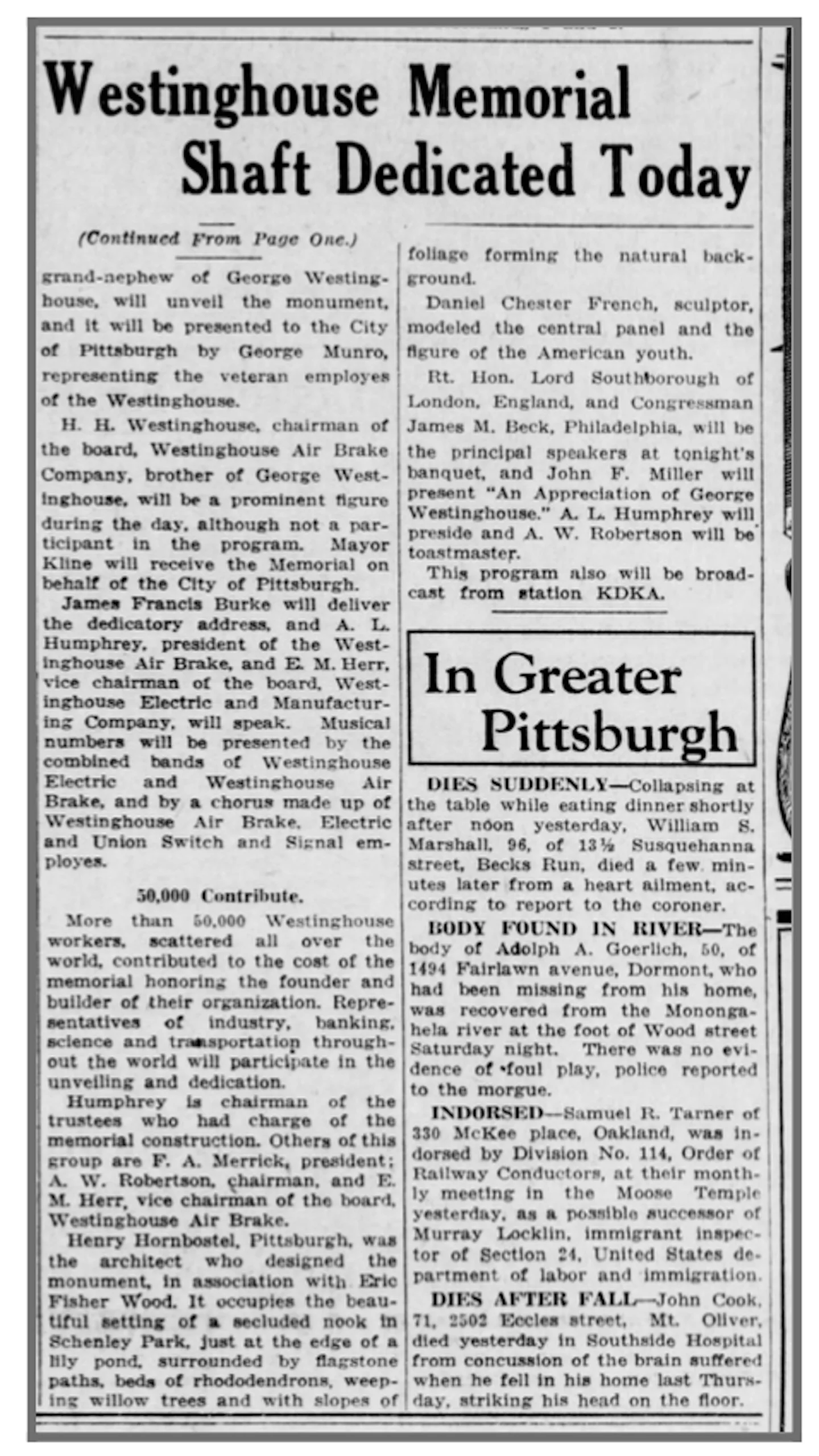
And this one on the October 6, 1930 dedication.
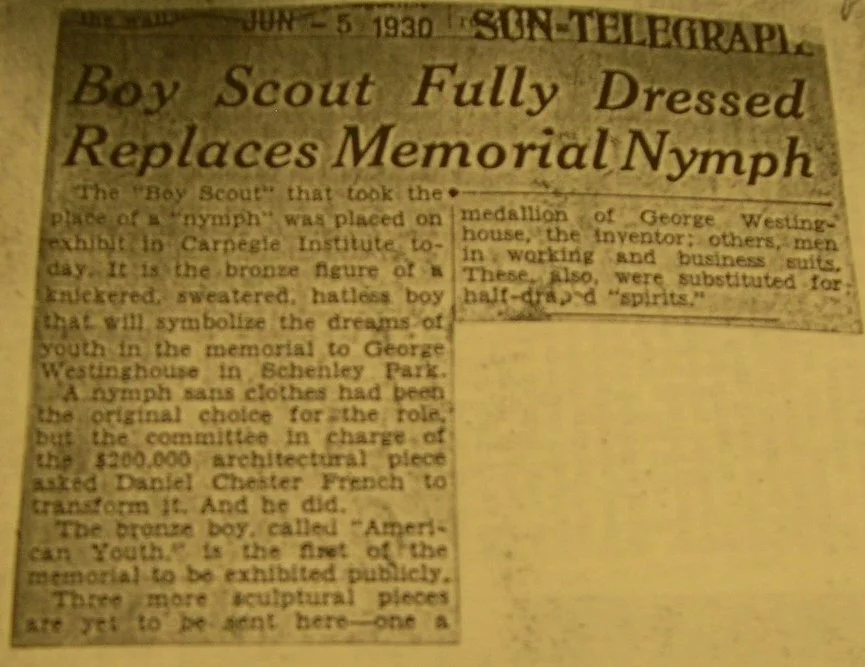
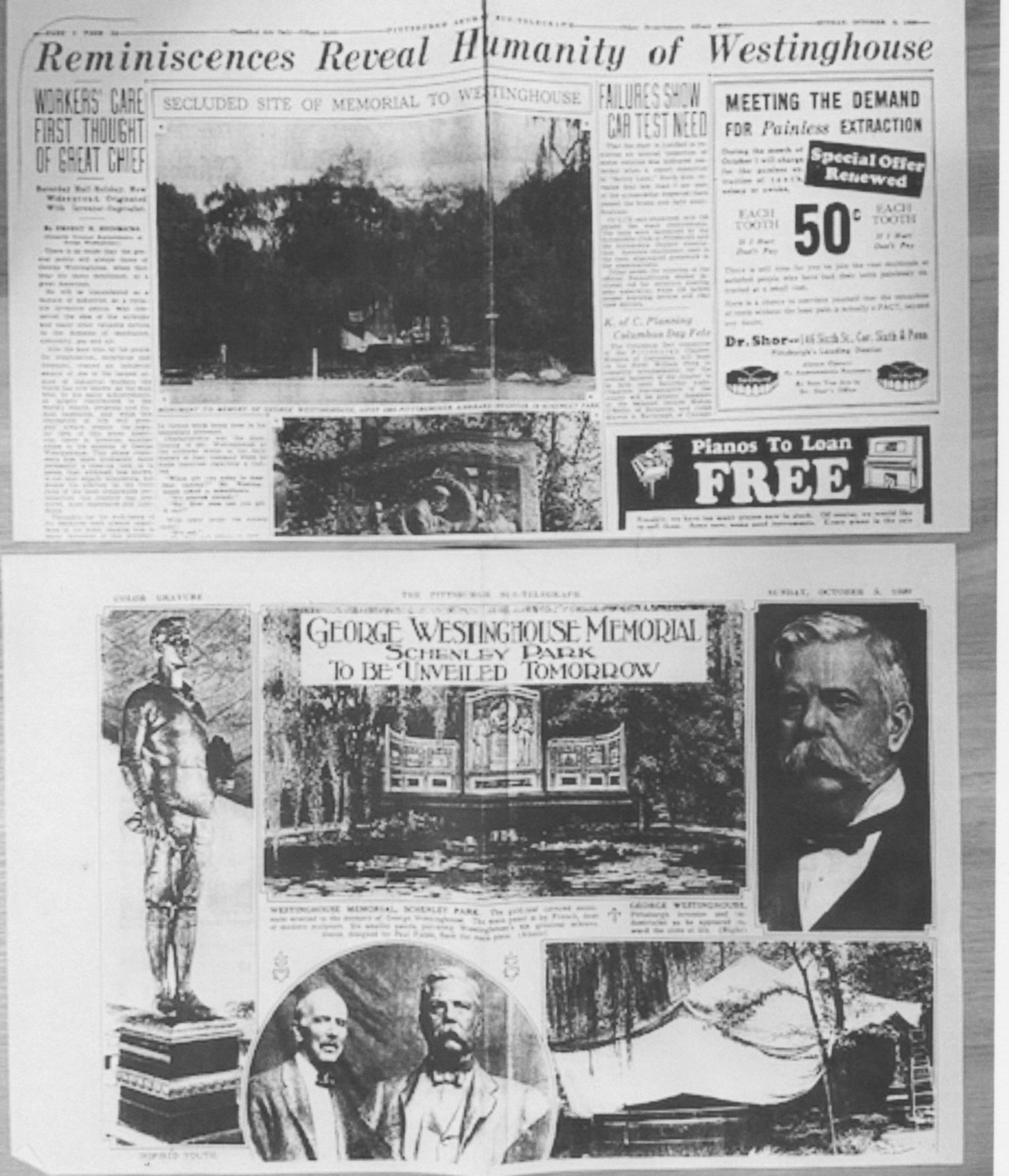
Renown sculptor Daniel Chester French was engaged to craft the memorial’s central figure, but, as this Pittsburgh Sun-Telegraph article reported, French’s initial creative conception had to be changed.
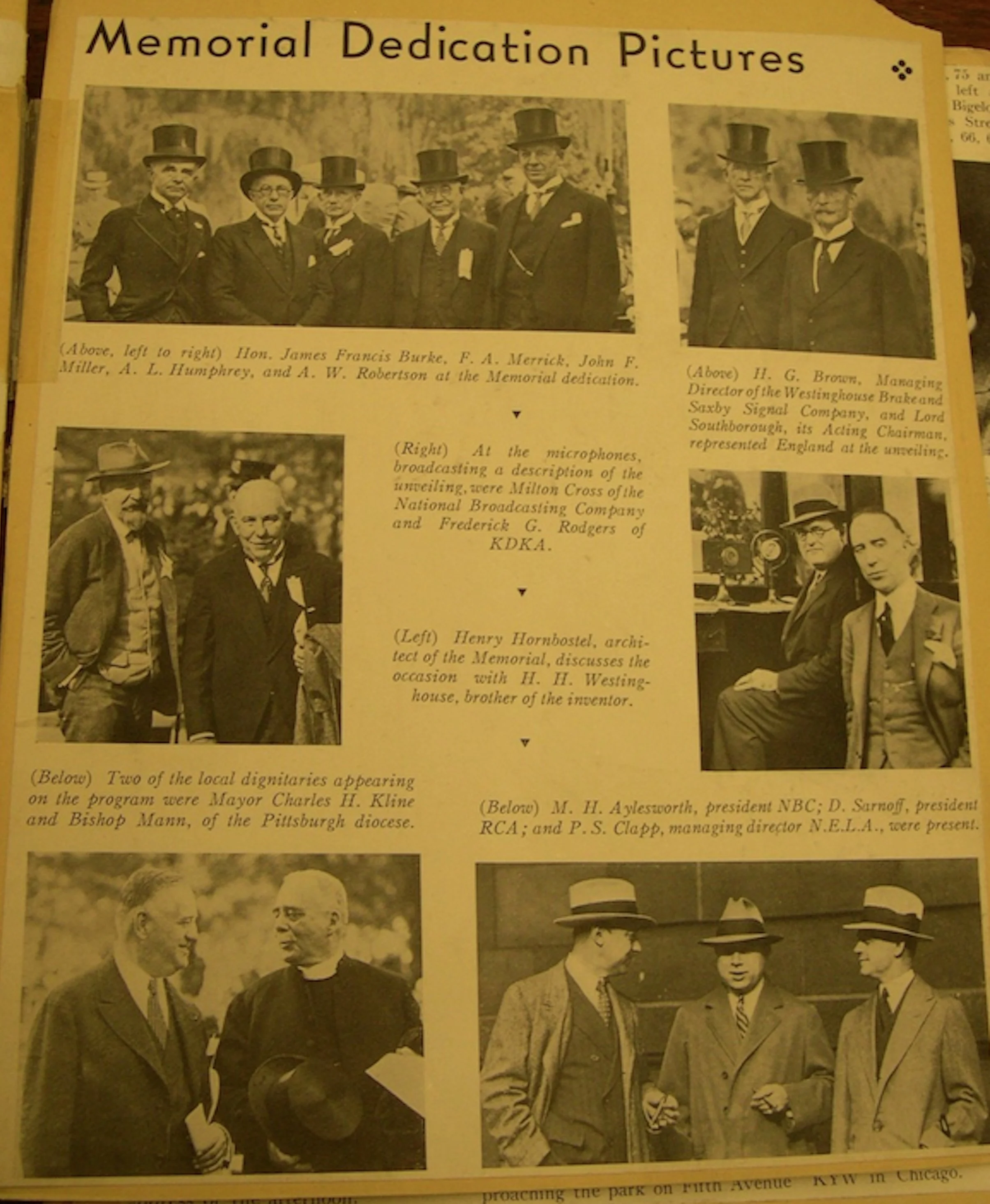
Here are two articles about the memorial from a Westinghouse Electric Company publication.
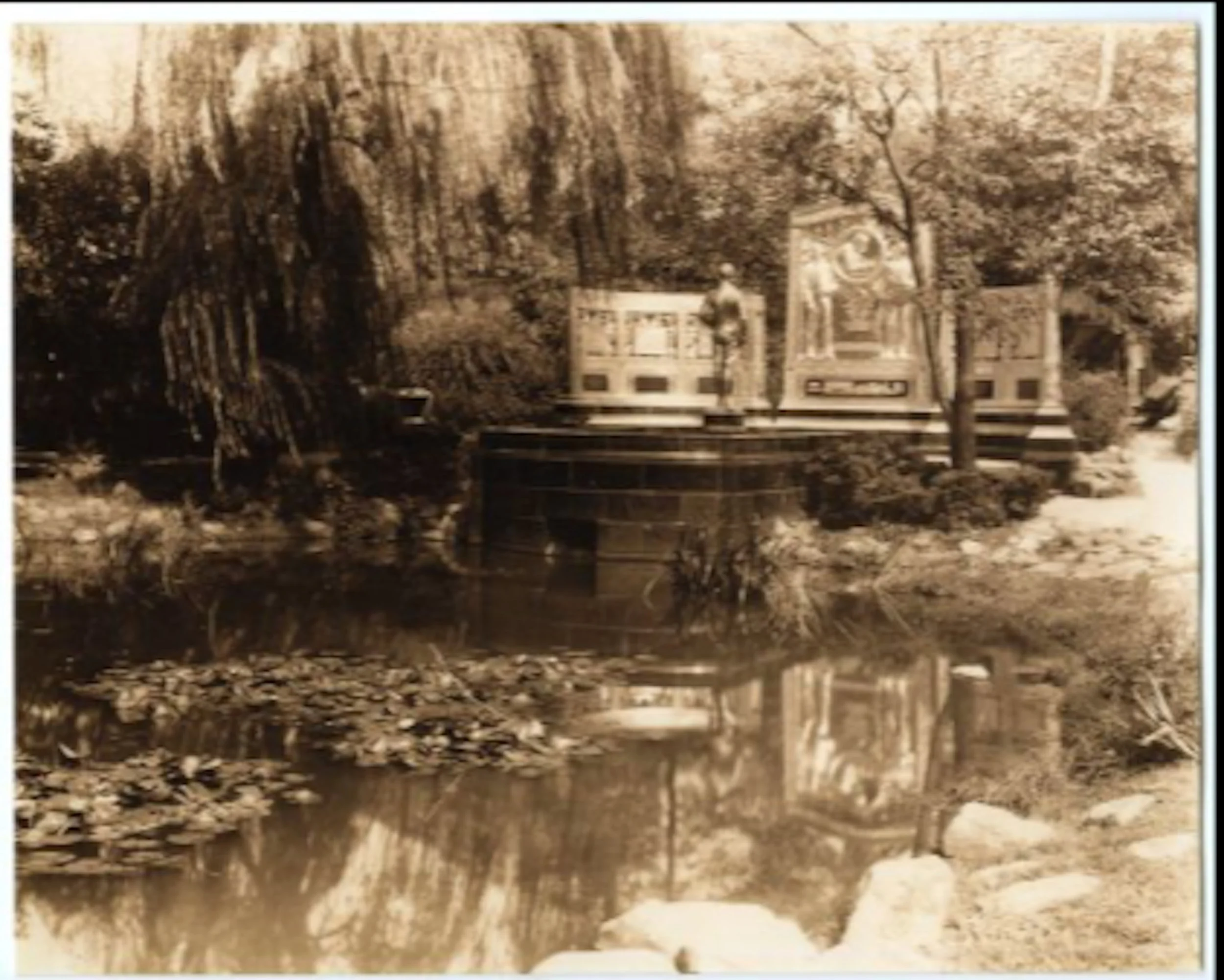
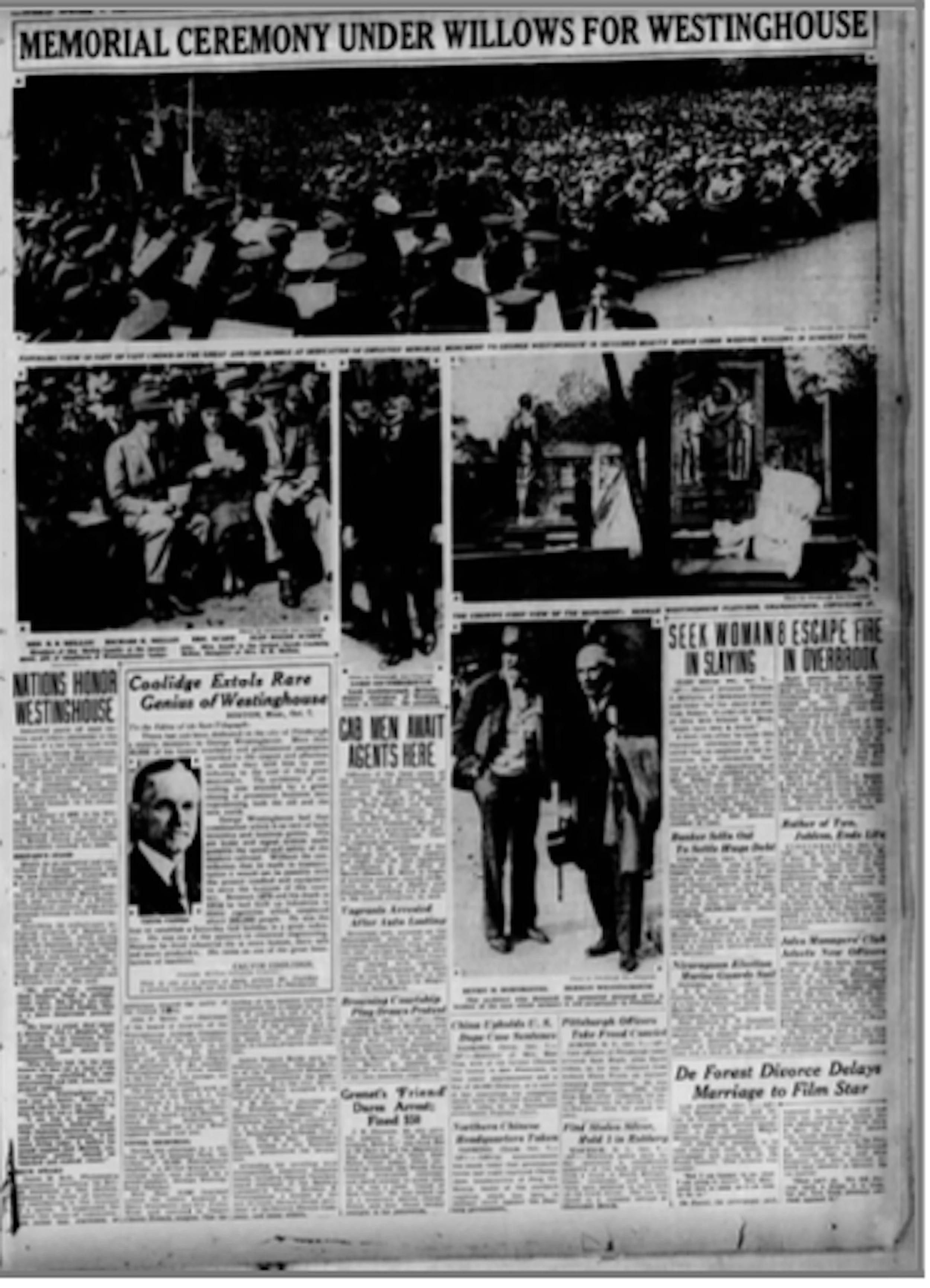
Here’s picture from the dedication,
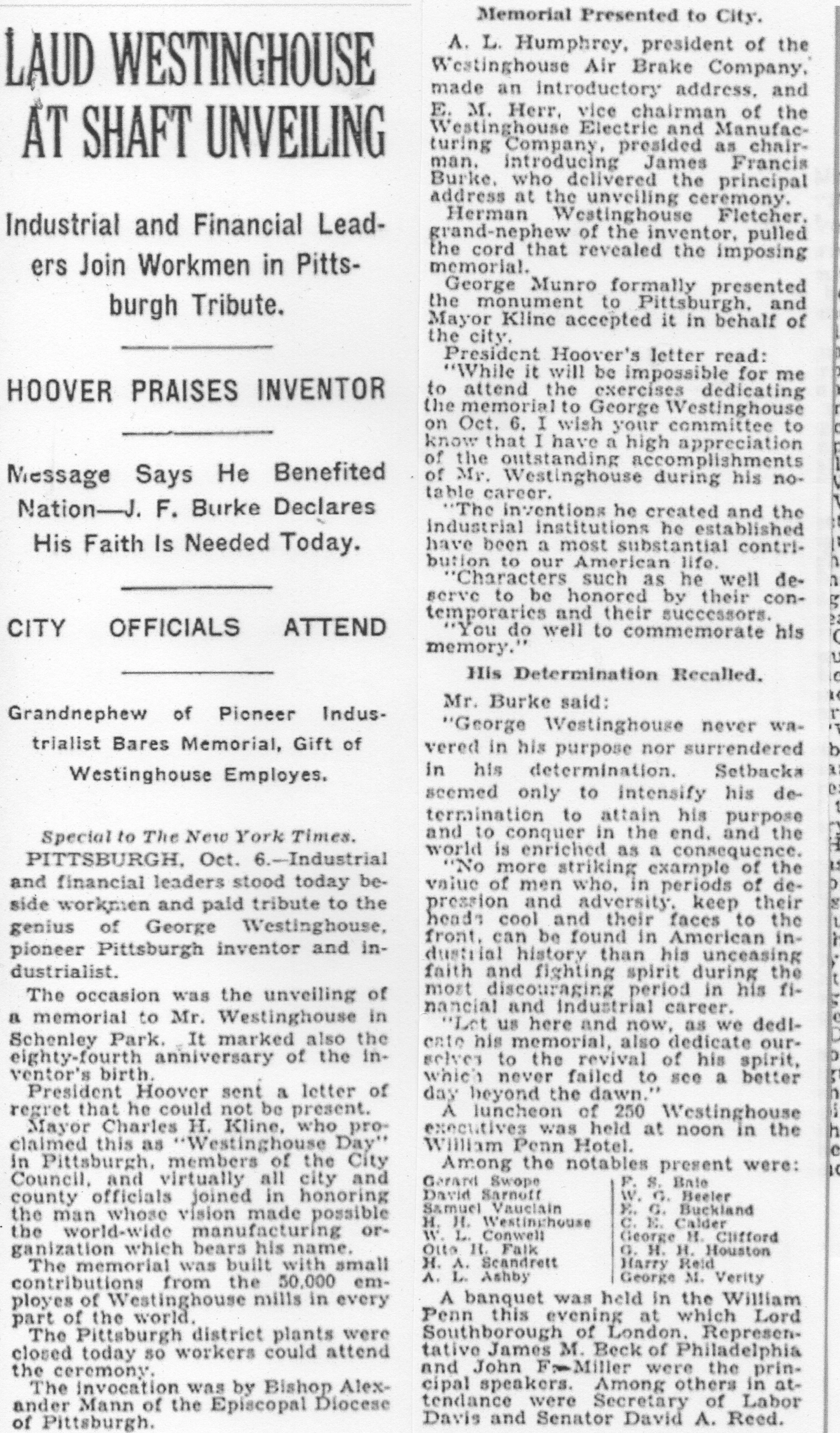
And this report from The New York Times.
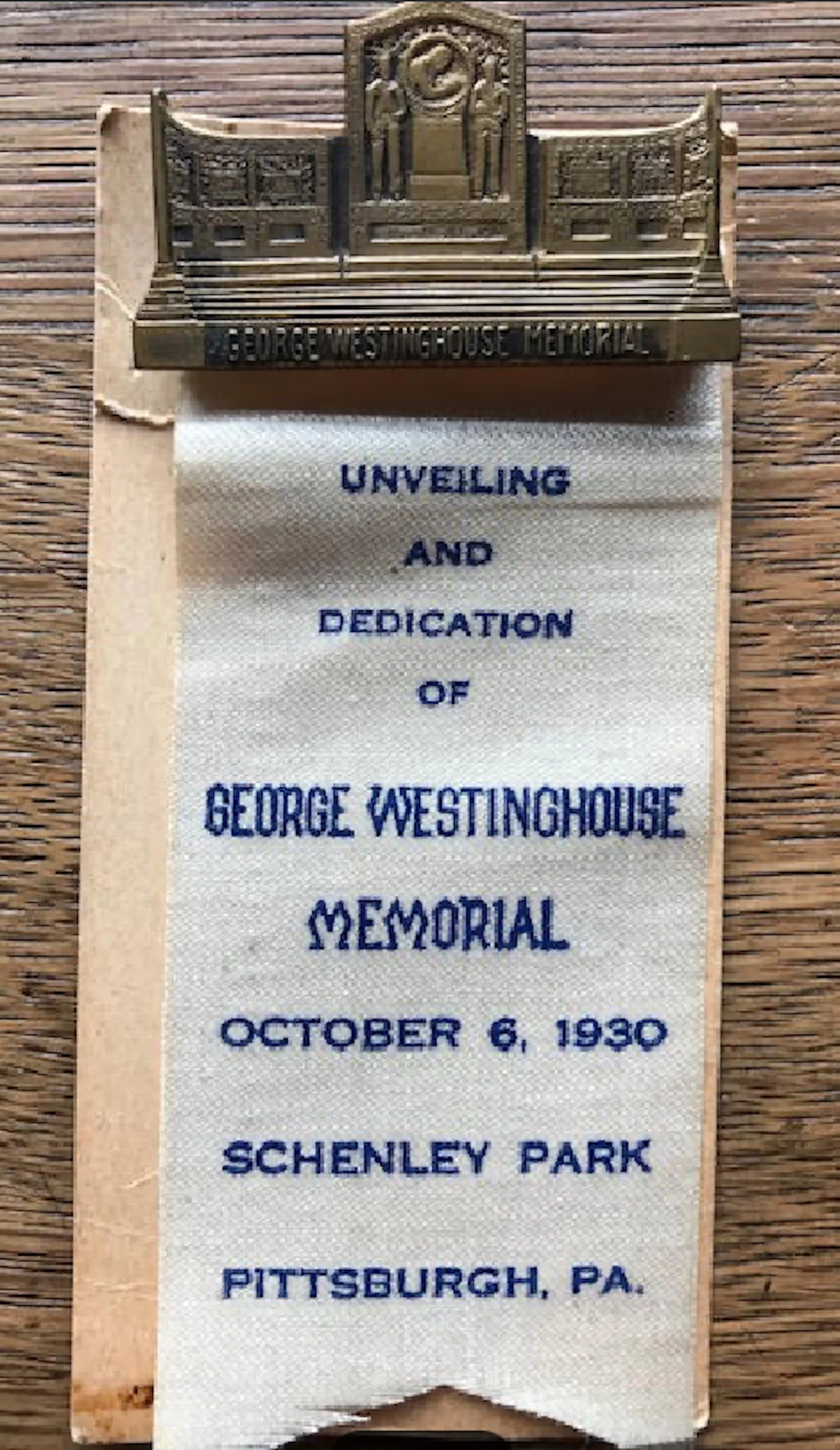
Here is commemorative ribbon from the dedication.
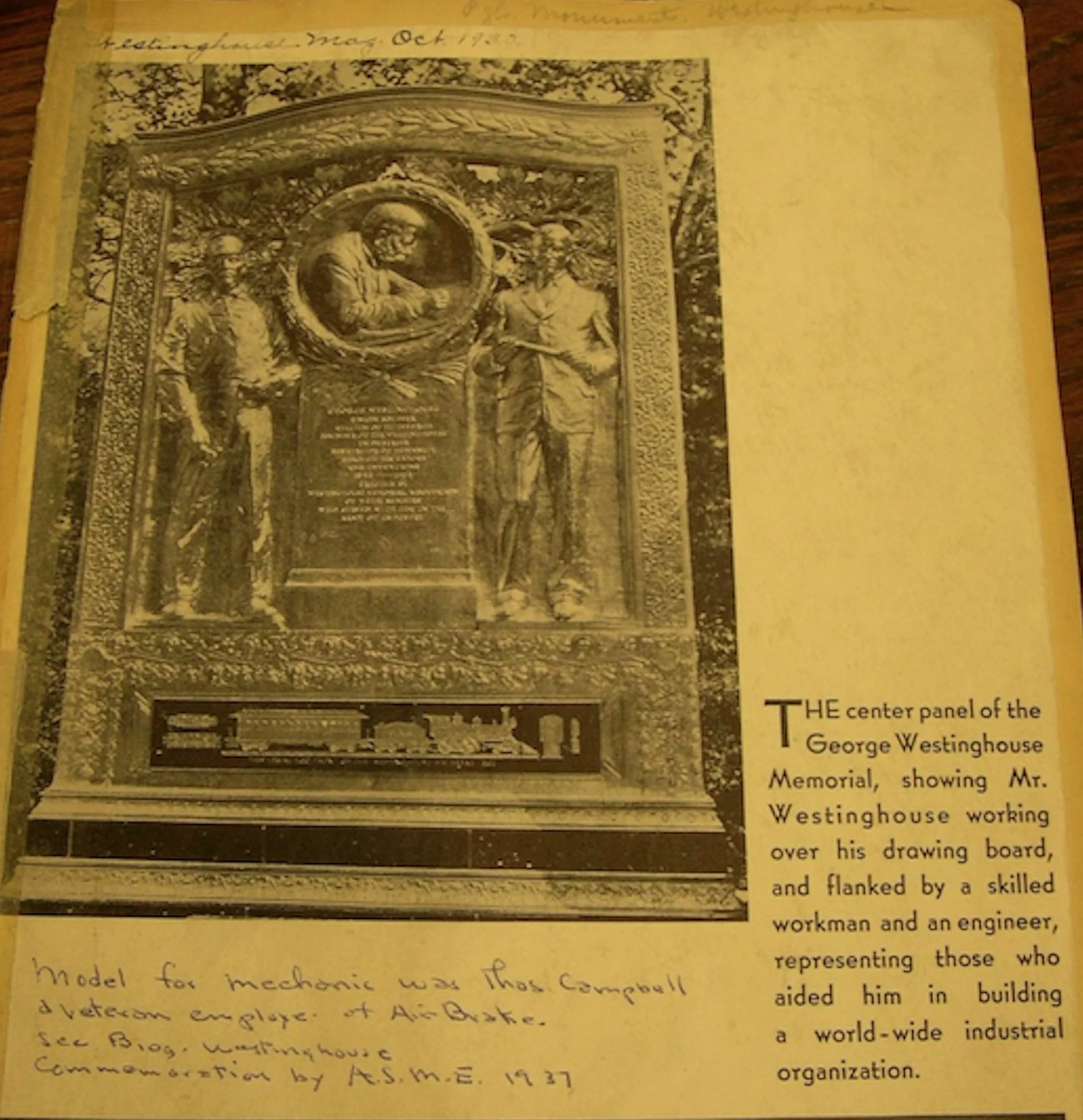
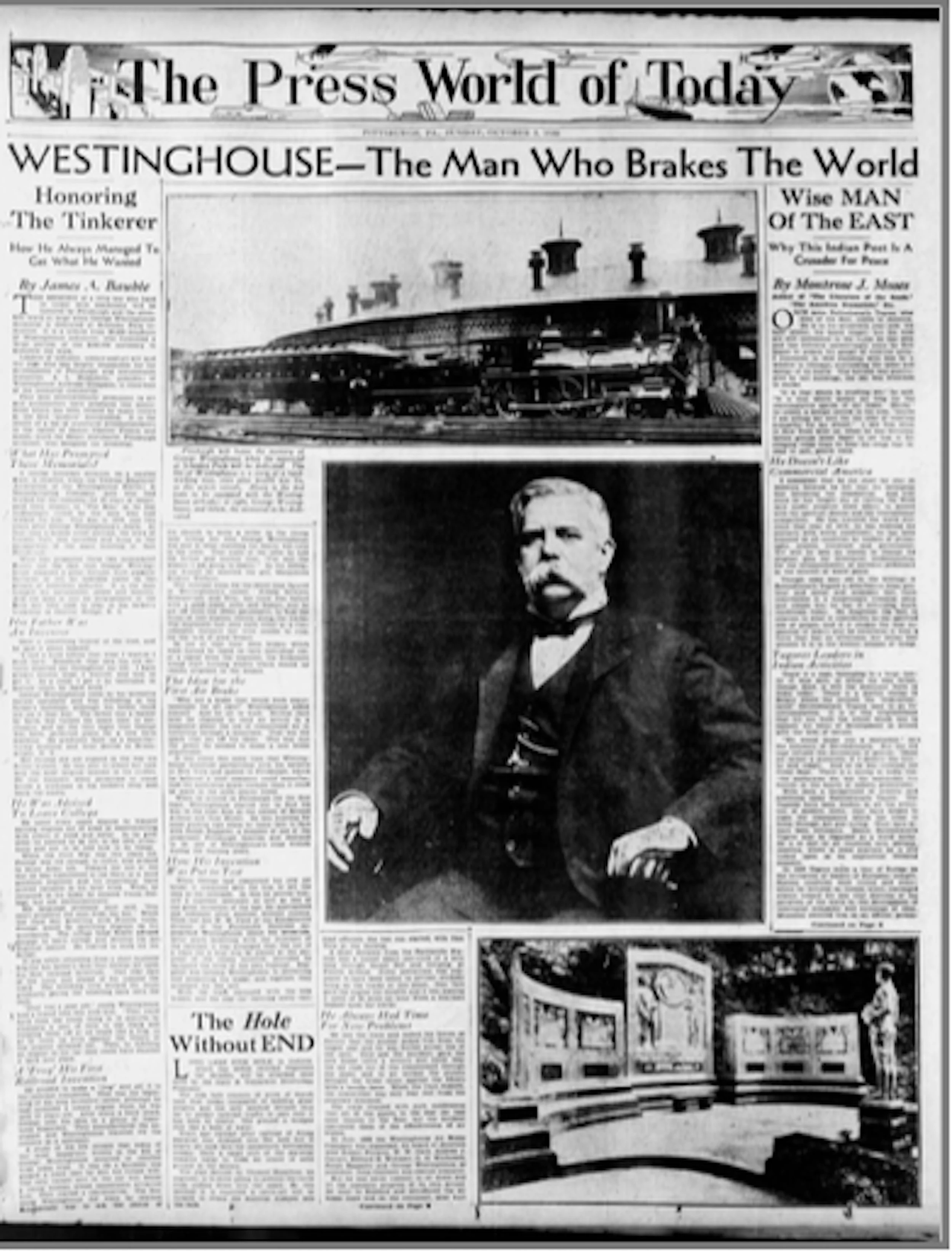
Here’s a selection of Pittsburgh newspaper coverage of the dedication.
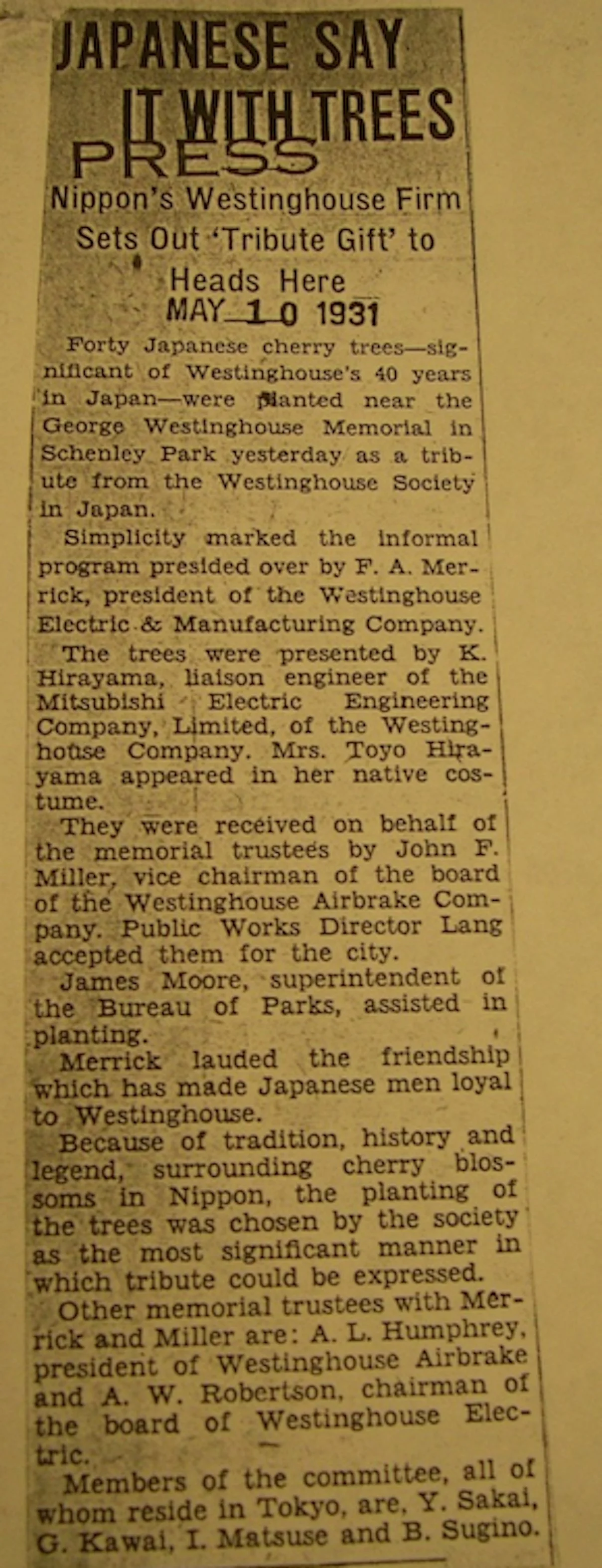
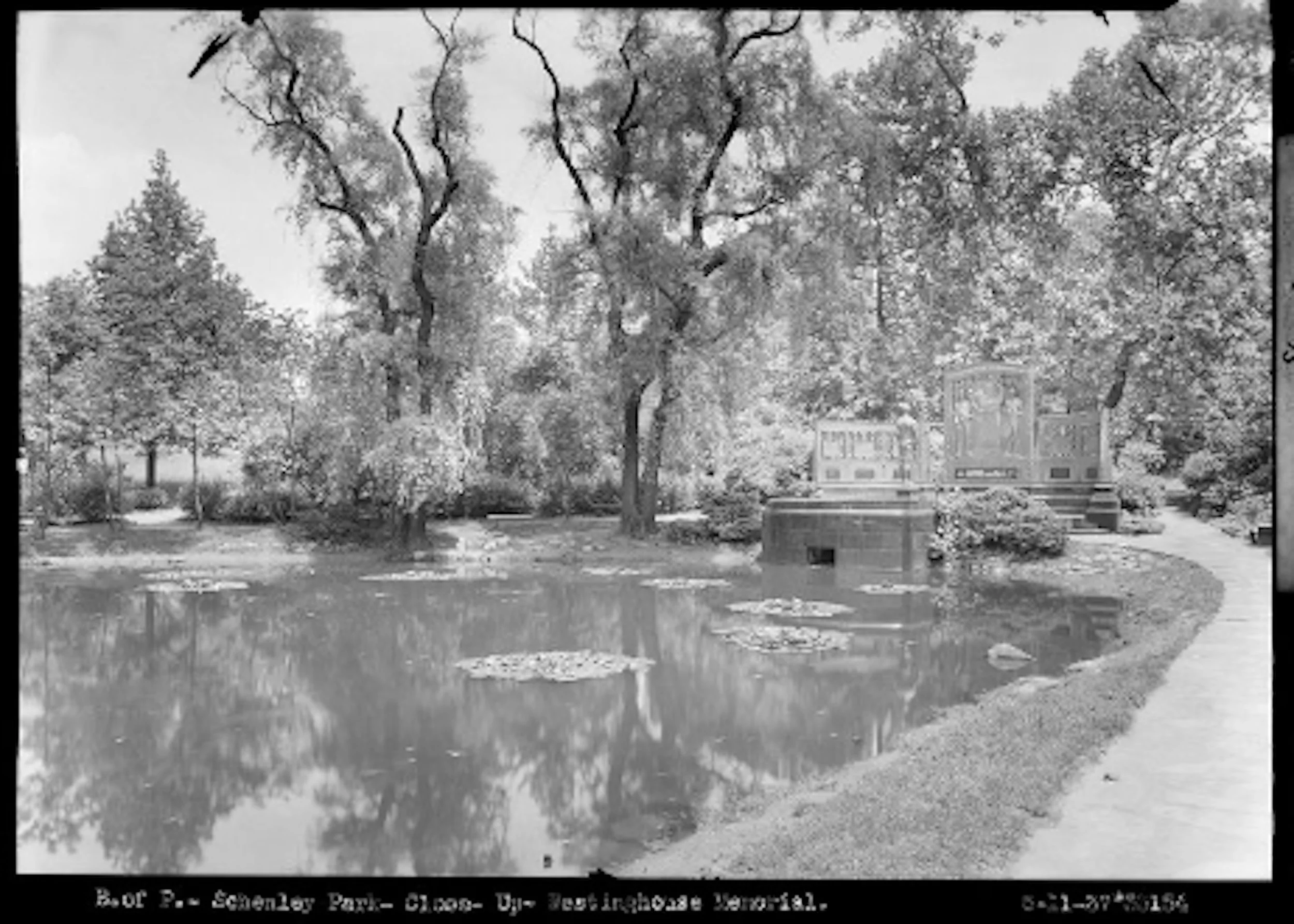
and another view taken in 1932.
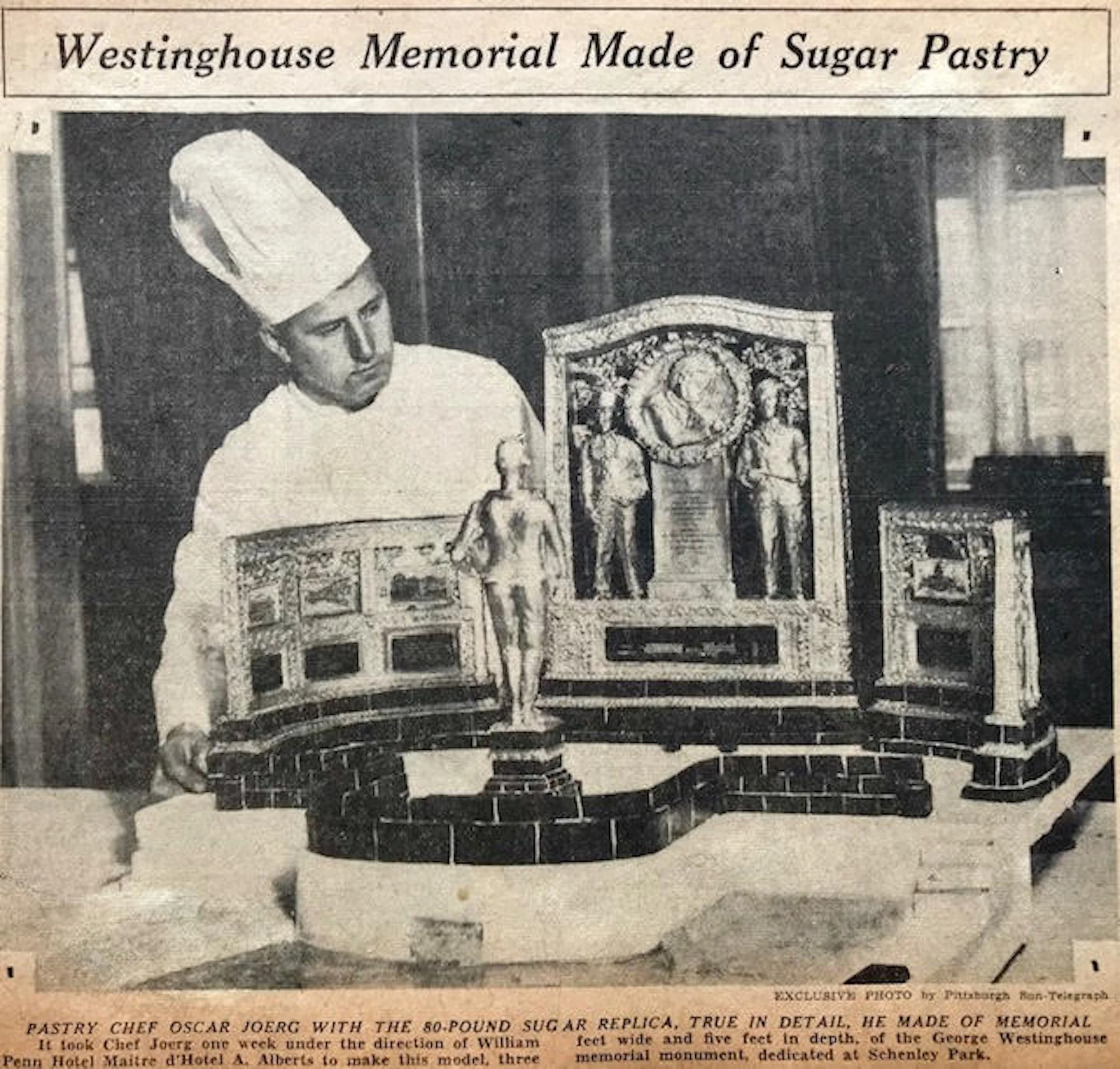
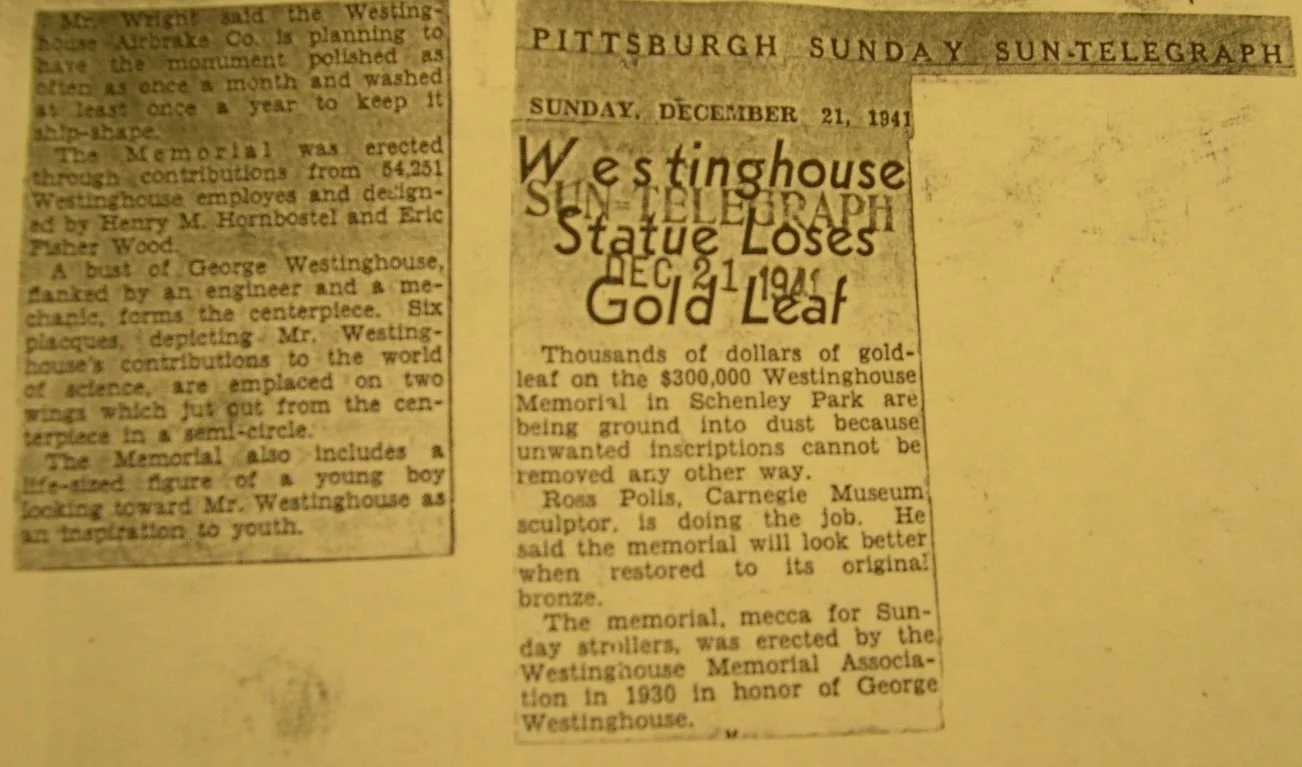
Apart from problems with the pond, the gold leaf that originally covered the memorial was quickly scratched away. The gold was recoated in 1937, but four years later, as reported in this Sun-Telegraph article, the decision was made to remove the gilt entirely.
The memorial was celebrated, both in sugar and in cherries when the Westinghouse Society of Japan, planted 40 cherry trees along the paths by the pond.
But maintainace of the memorial was an issue almost immediately.
In the 1950s, to avoid frequent flood damage, Phipps Run, the stream that fed the pond, was routed through a drain pipe beneath it. Thereafter, the pond was filled with water from the city system.
In the 1980s, the memorial and its plantings received a much-needed refurbishment by a joint effort of the Seeders and Weeders Garden Club, the Westinghouse Electric Corporation Foundation, the Richard King Mellon Foundation, and the City of Pittsburgh.
However, over the ensuing decades with reduced city resources for maintenance, the memorial and its grounds again fell into significant disrepair.
In 1982, vandals broke off the figure of American Youth at its base and carted it away. The statue was eventually recovered but kept in storage. Lighting was removed in the 1990s.
The pond failed again in 2009, when the pipe conveying Phipps Run beneath the pond collapsed.
Finally, in 2015, the City of Pittsburgh and the Pittsburgh Parks Conservancy agreed to partner in a comprehensive restoration of the memorial and its long-term maintenance.
In addition to the memorial itself, the Panther Hollow Watershed Restoration Plan included the green ecosystem around it.
Rather than piping Phipps Run under the pond, it was diverted around it. Deep-rooted plantings above the memorial absorb water and direct runoff toward infiltration trenches into a large rain garden. A smaller rain garden next to the pond is filled by storm water from Phipps Run when it overflows the basin behind the memorial. Some water flows into a cistern which is used for filling the pond. These investments also support regional efforts to reduce the sewer overflow, flooding, and erosion problems that are larger goals of restoring the Panther Hollow/Four Mile Run Watershed.
The $2.7 million, 14-month project was completed in time for a re-dedication ceremony on October 6, 2016, the 170th anniversary of George Westinghouse’s birth. The event was attended by 14 Westinghouse descendants, as reported in this article from the Pittsburgh Tribune-Review:
Restored Westinghouse Memorial unveiled in Schenley Park
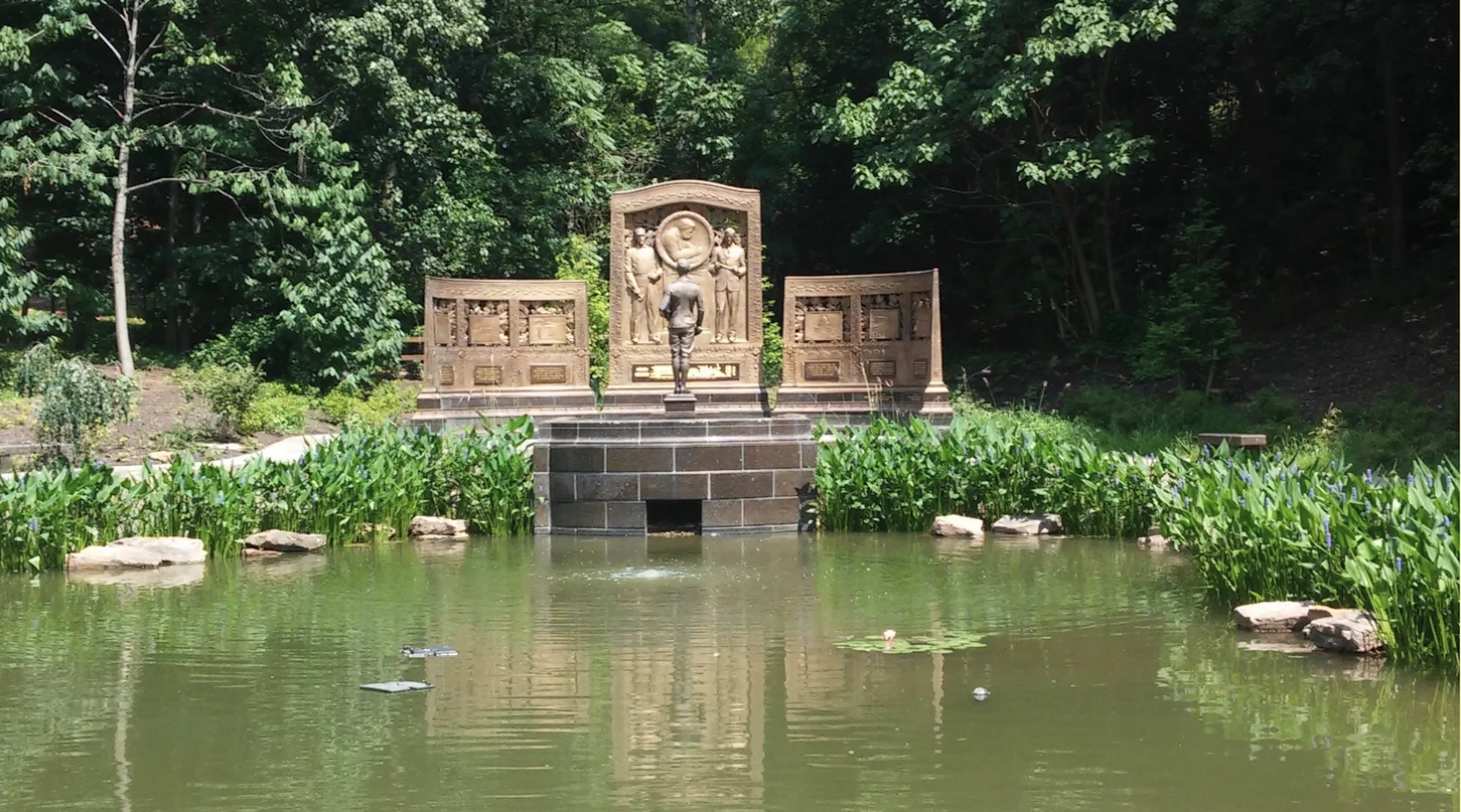
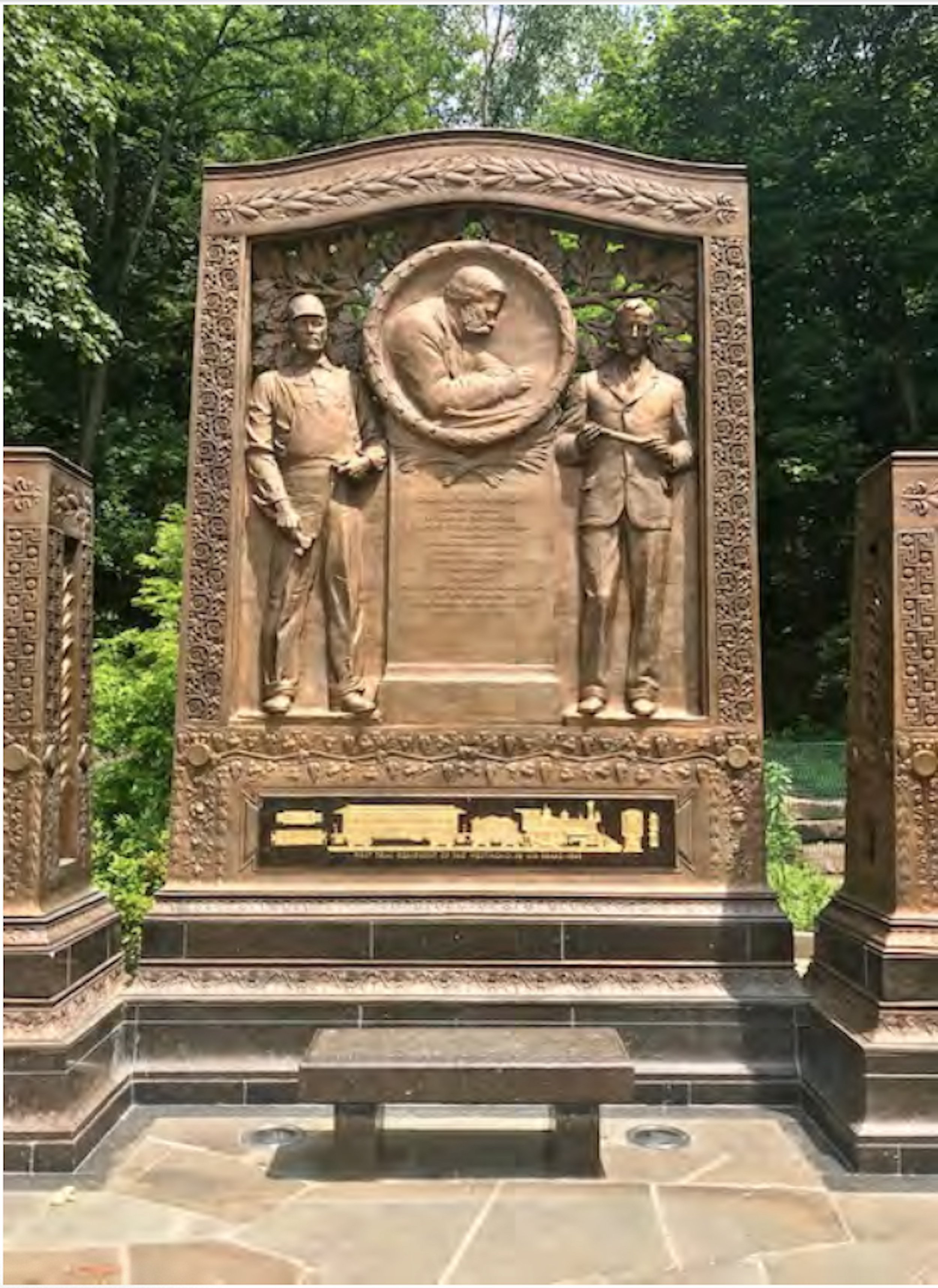
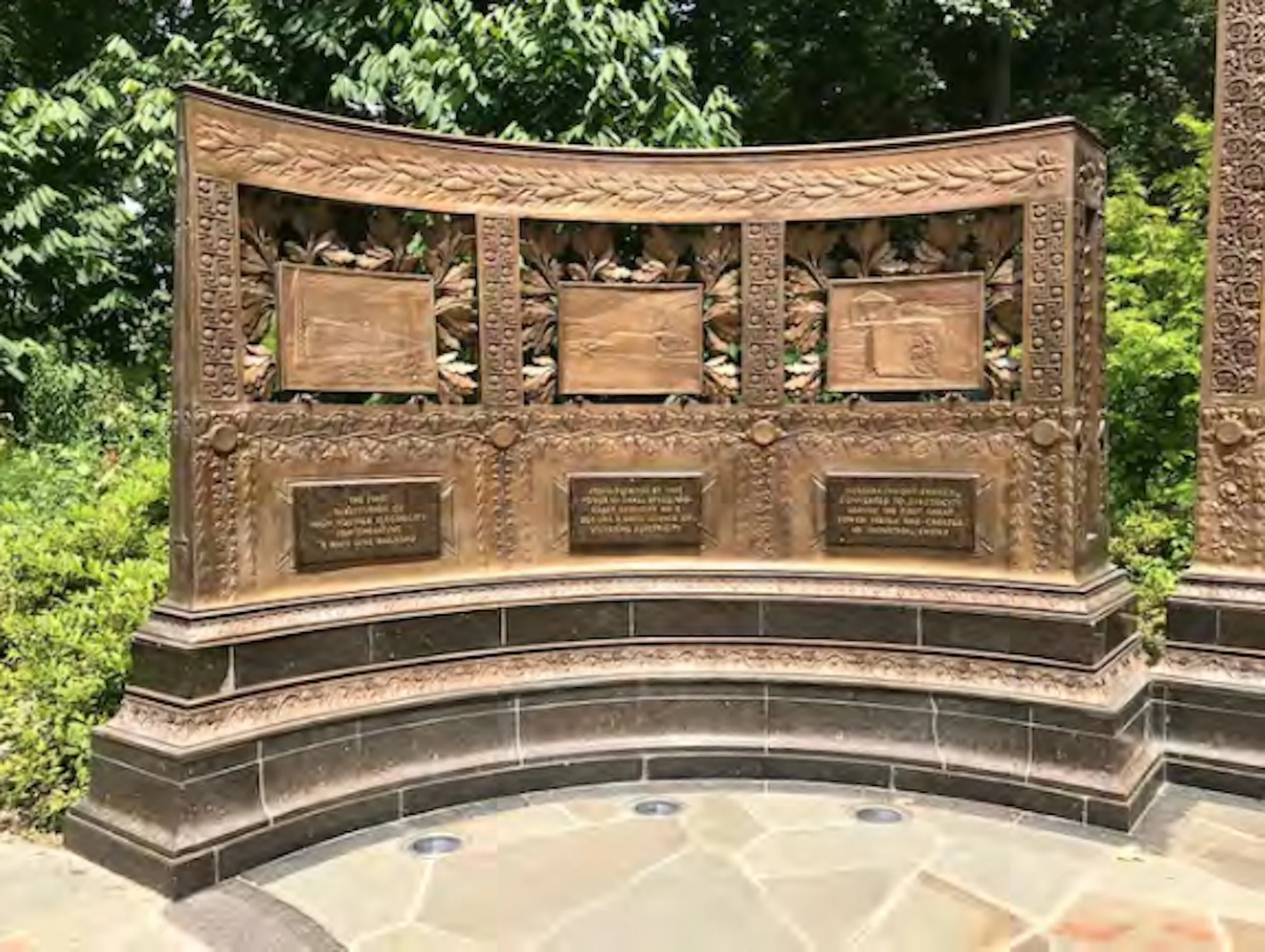
The Left Panel
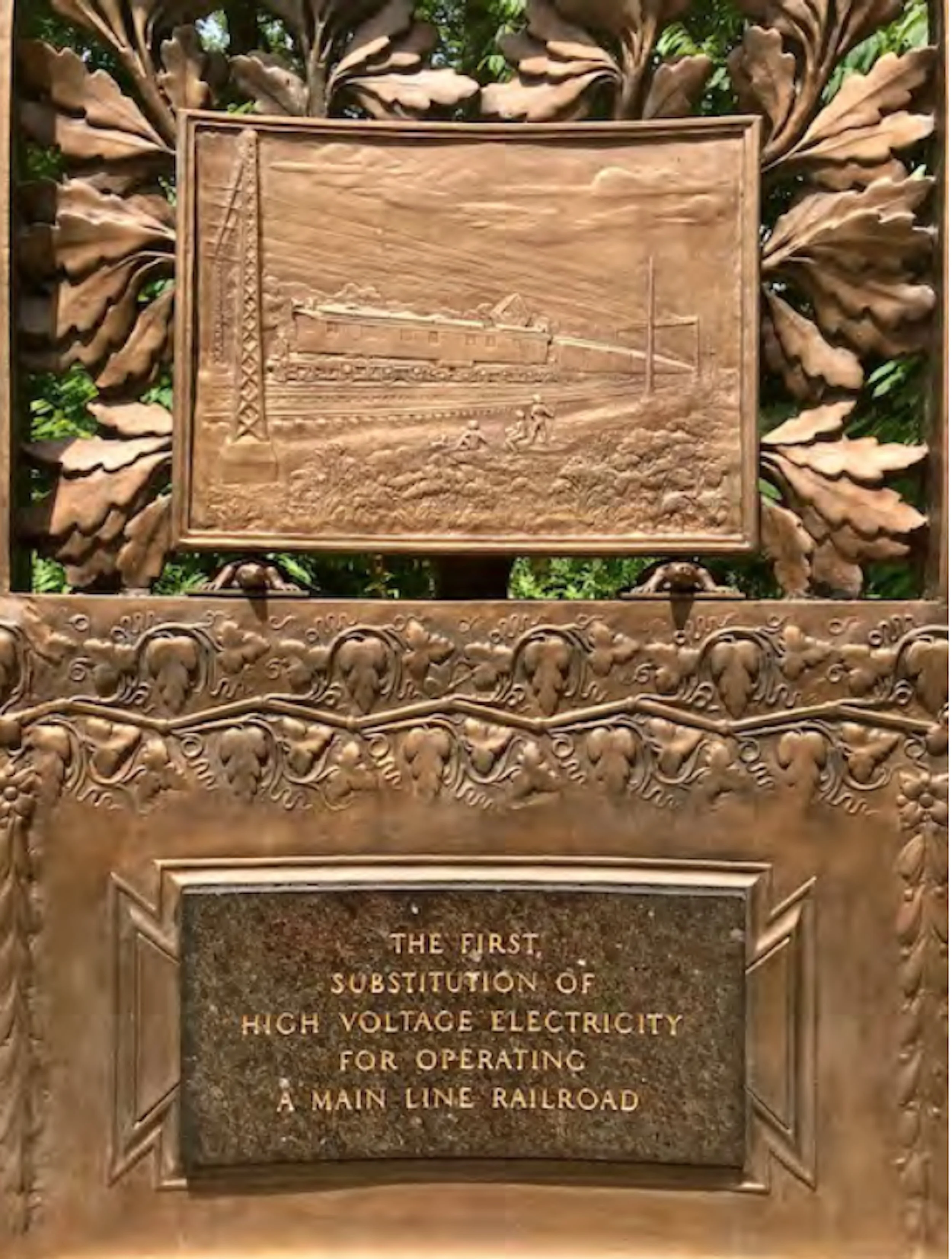
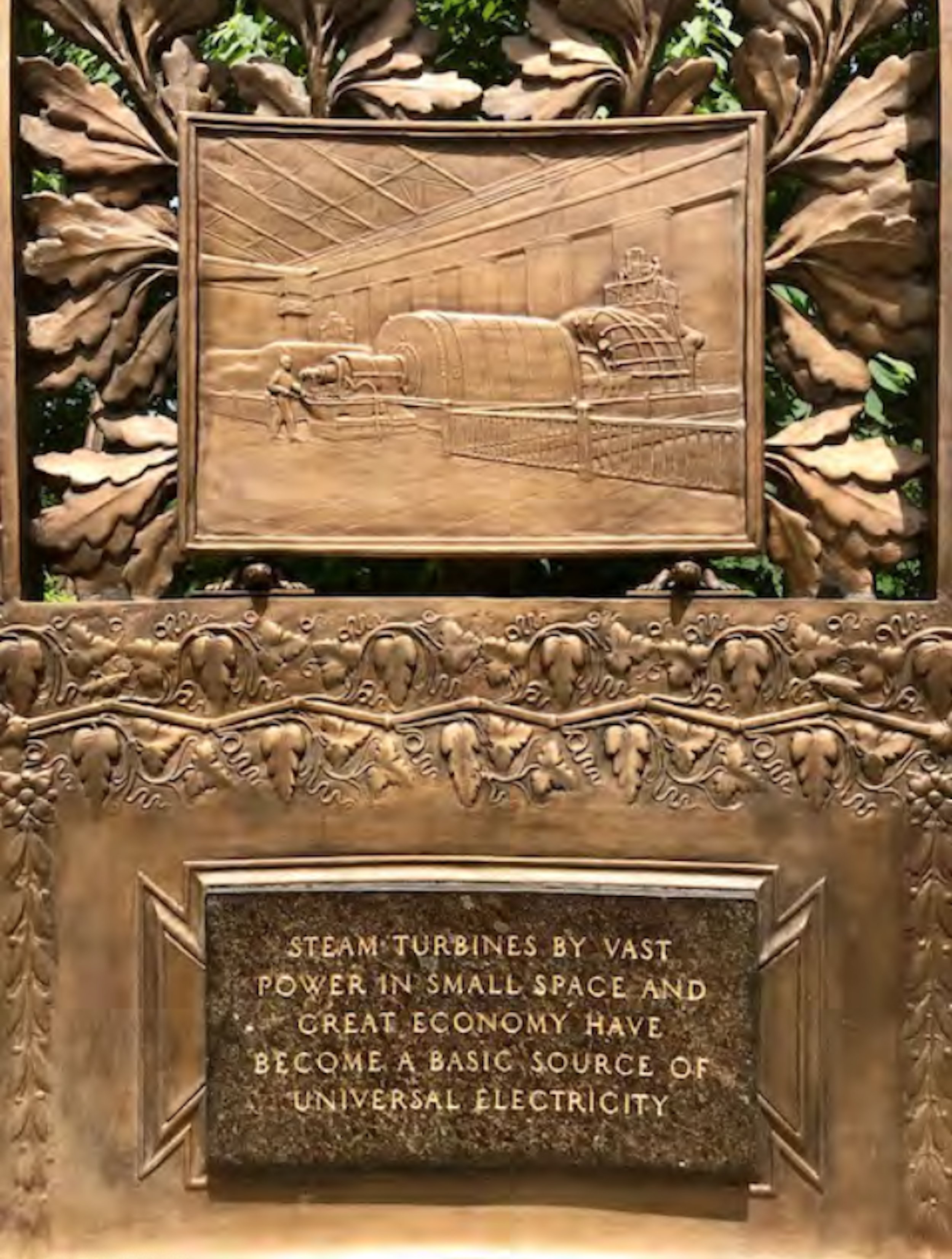
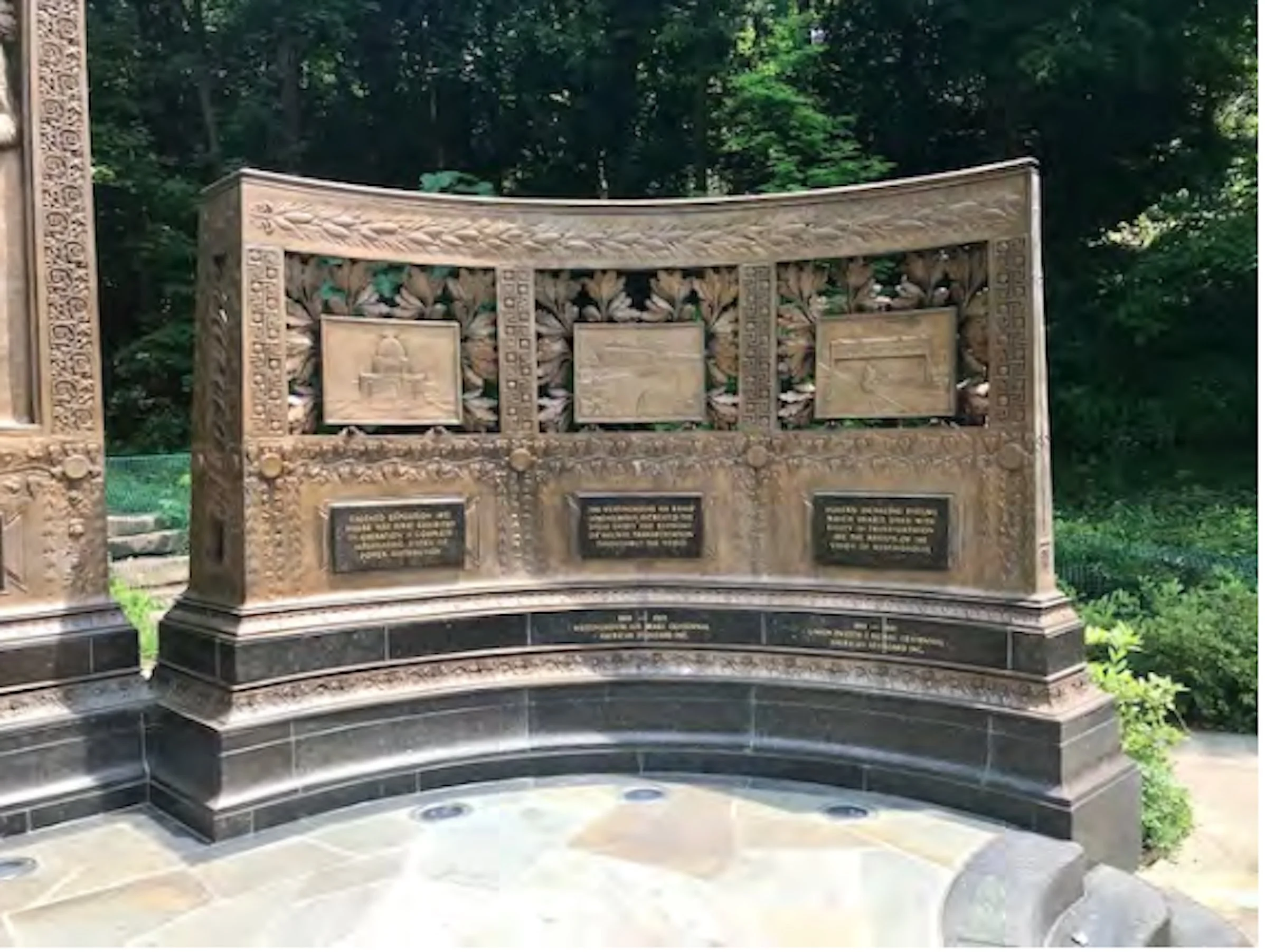
The Right Panel
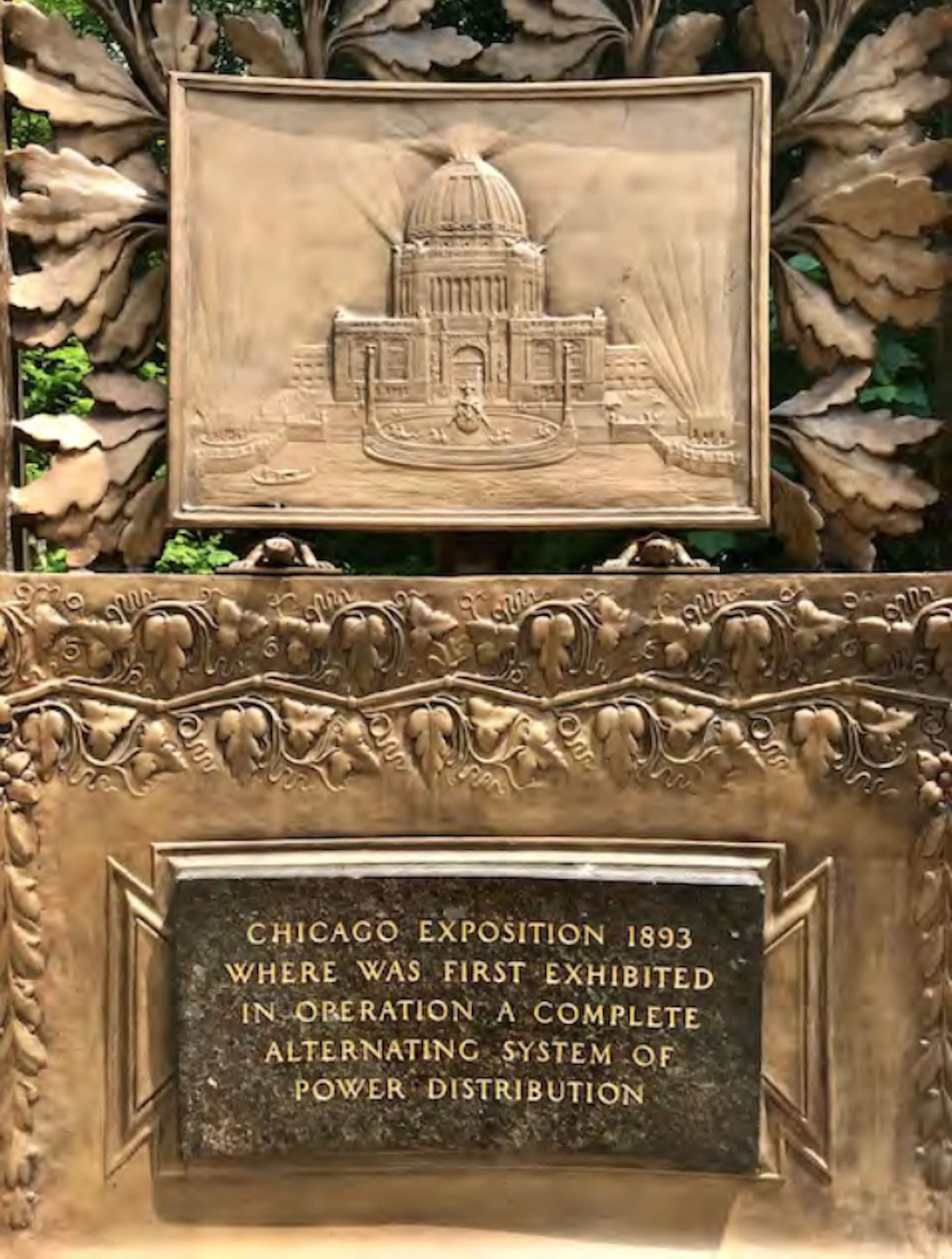
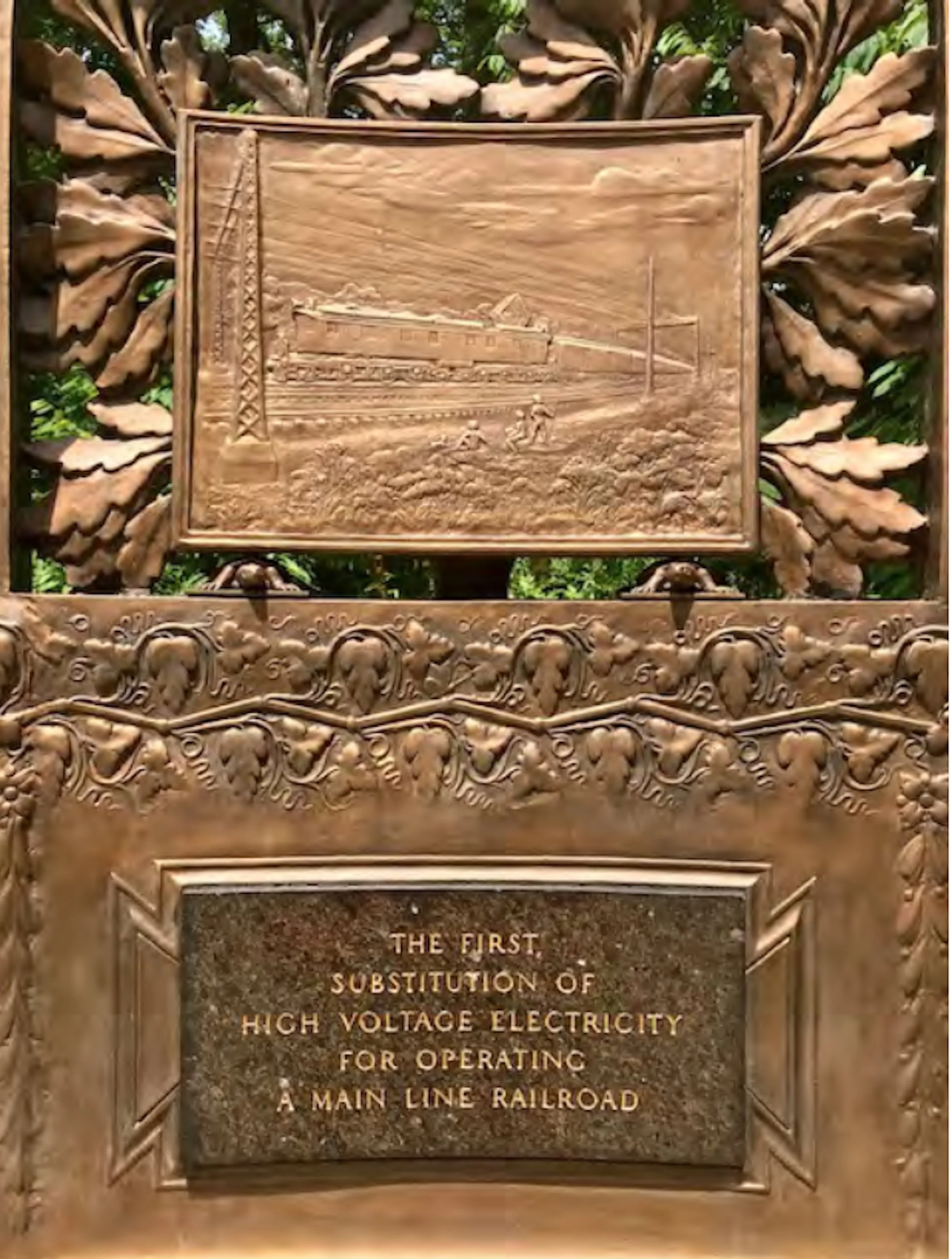
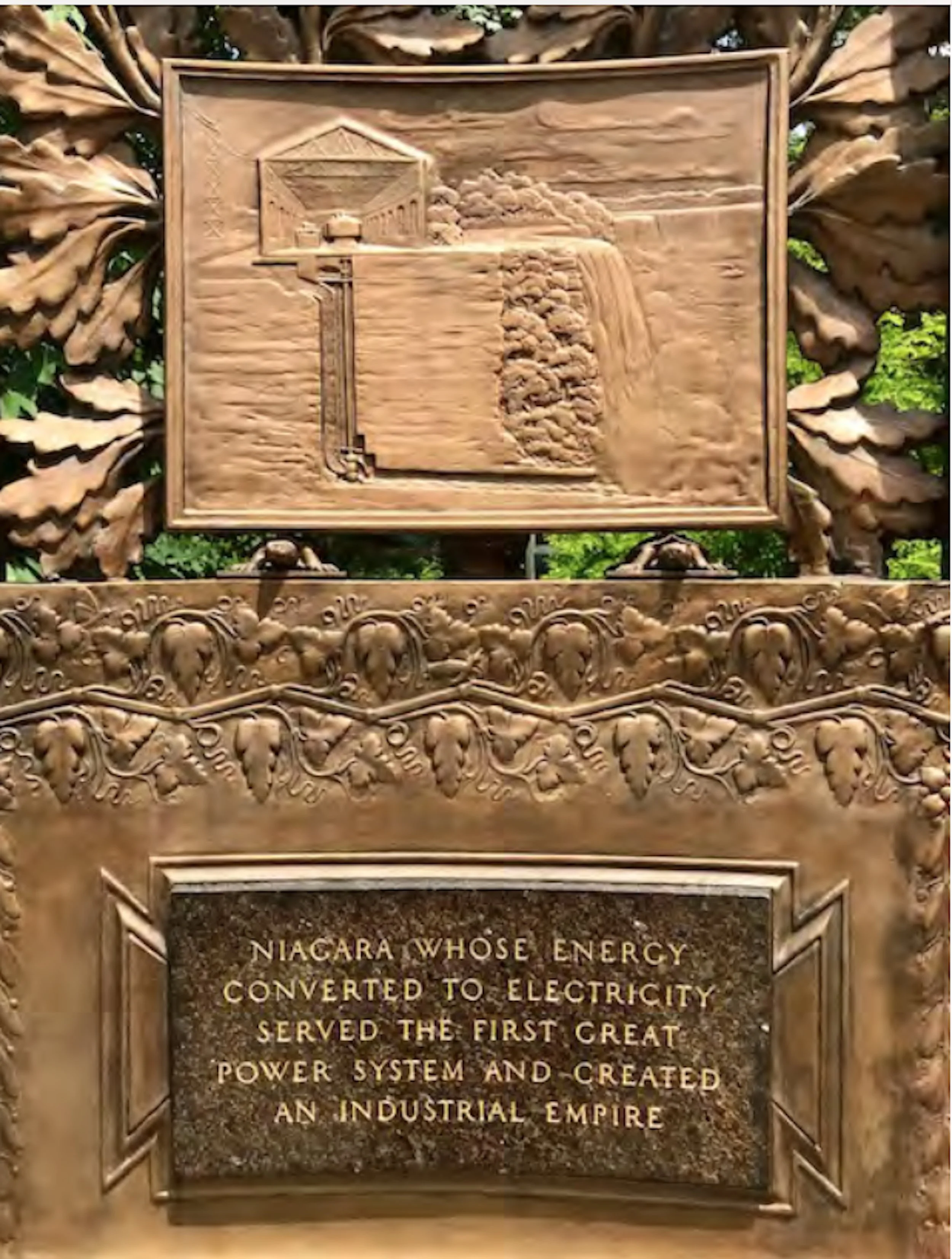
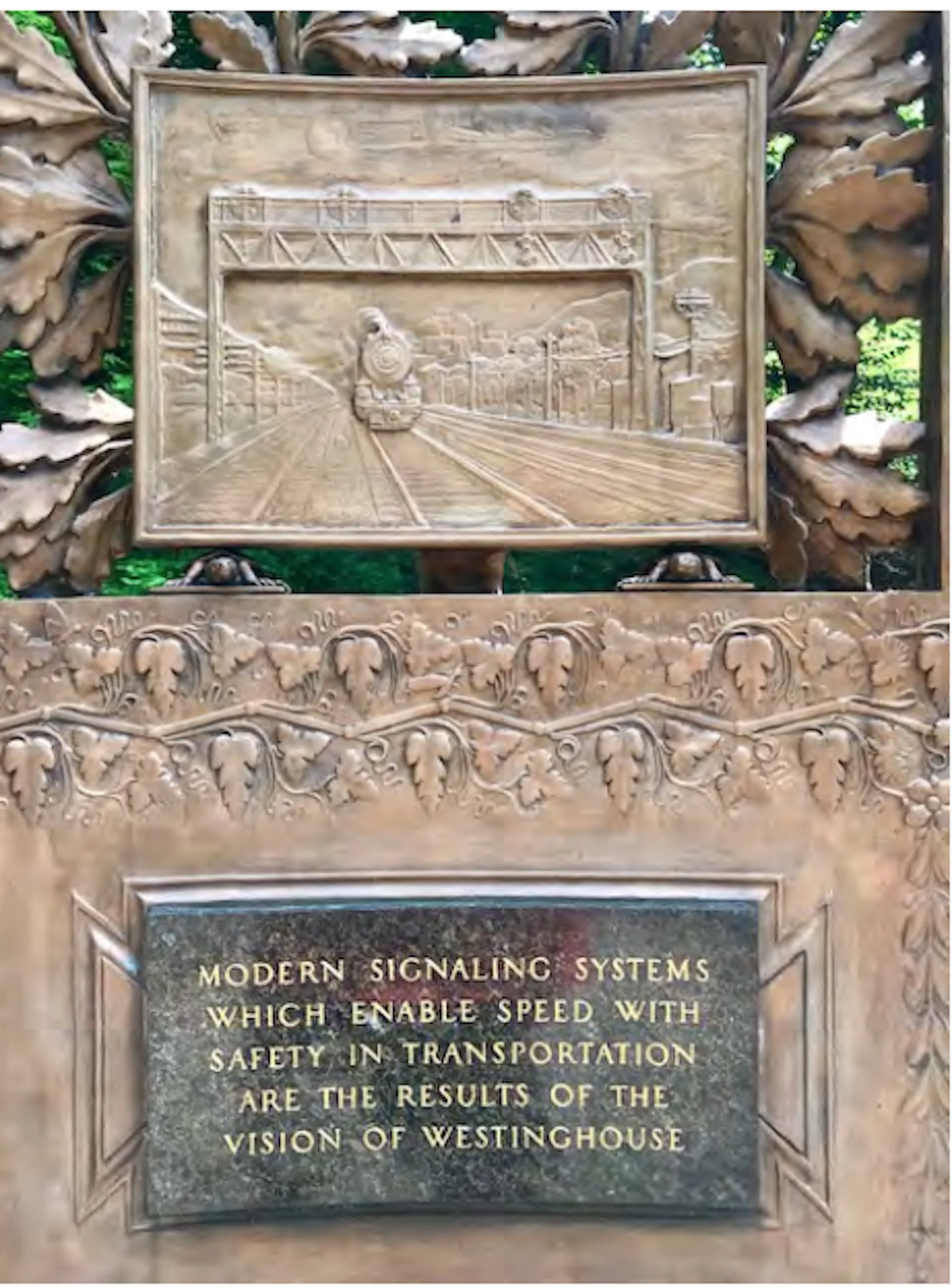
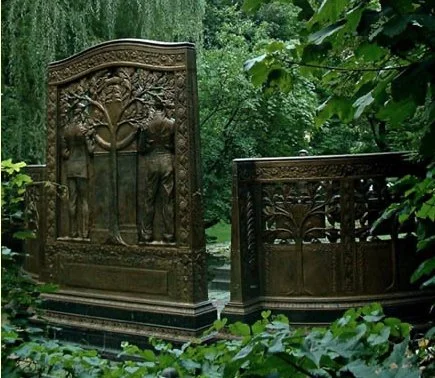
The rear side of the memorial with its dedication
This memorial unveiled October 6, 1930, in honor of George Westinghouse is an enduring testimonial to the esteem, affection, and loyalty of 60,000 employees of the great industrial organizations of which he was the founder. In his later years, rightly called "The Greatest Living Engineer," George Westinghouse accomplished much of first importance to mankind through his ingenuity, persistence, courage, integrity, and leadership. By the invention of the air brake and of automatic signaling devices, he led the world in the development of appliances for the promotion of speed, safety, and economy of transportation. By his early vision of the value the alternating current electric system, he brought about a revolution in the transmission of electric power. His achievements were great, his energy and enthusiasm boundless, and his character beyond reproach; a shining mark for the guidance and encouragement of American youth.
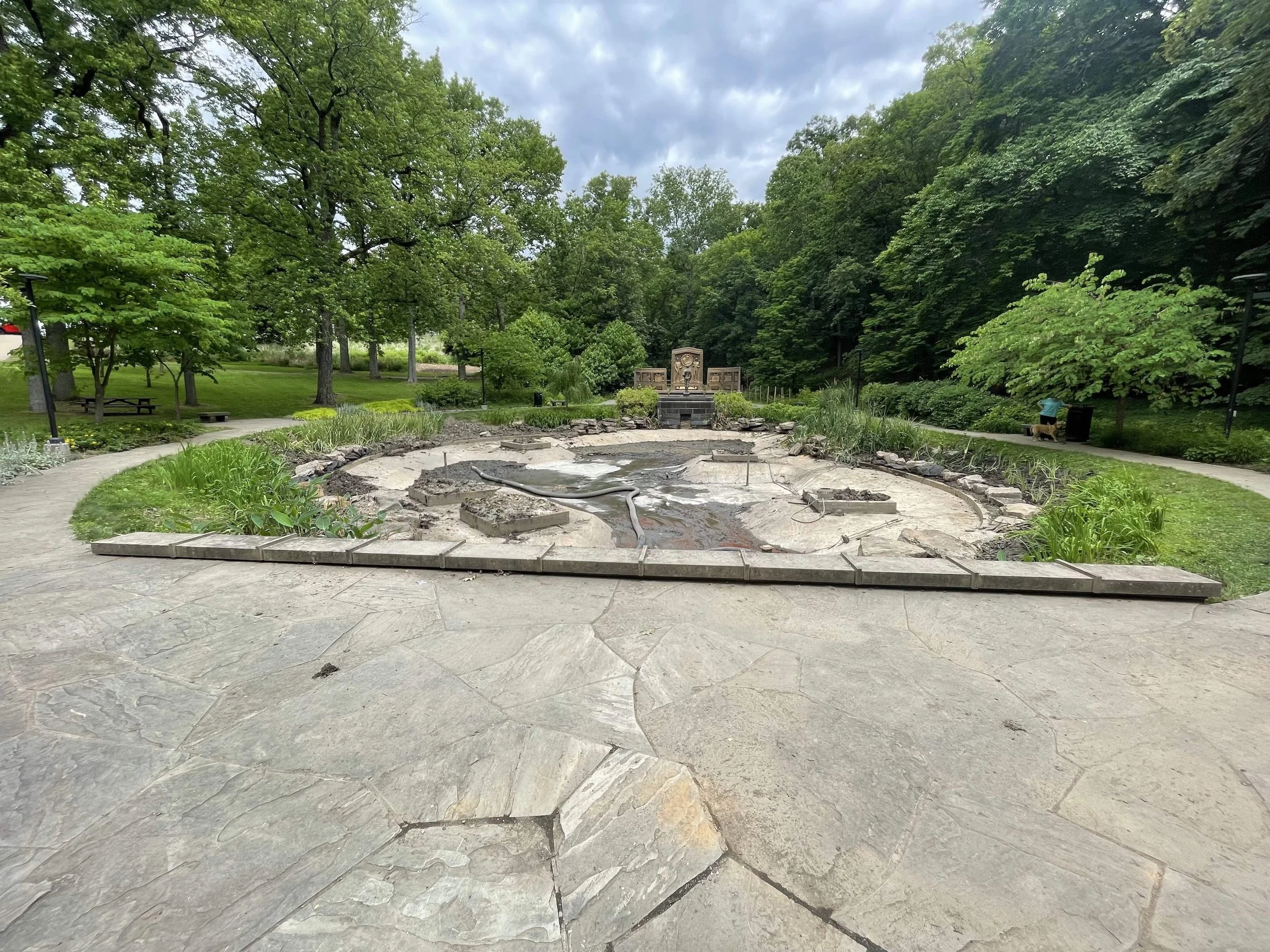
Regular maintenance is a constant necessity, as shown in these pictures from the summer of 2024 when the pond was drained, cleaned, replanted, and re-sealed.
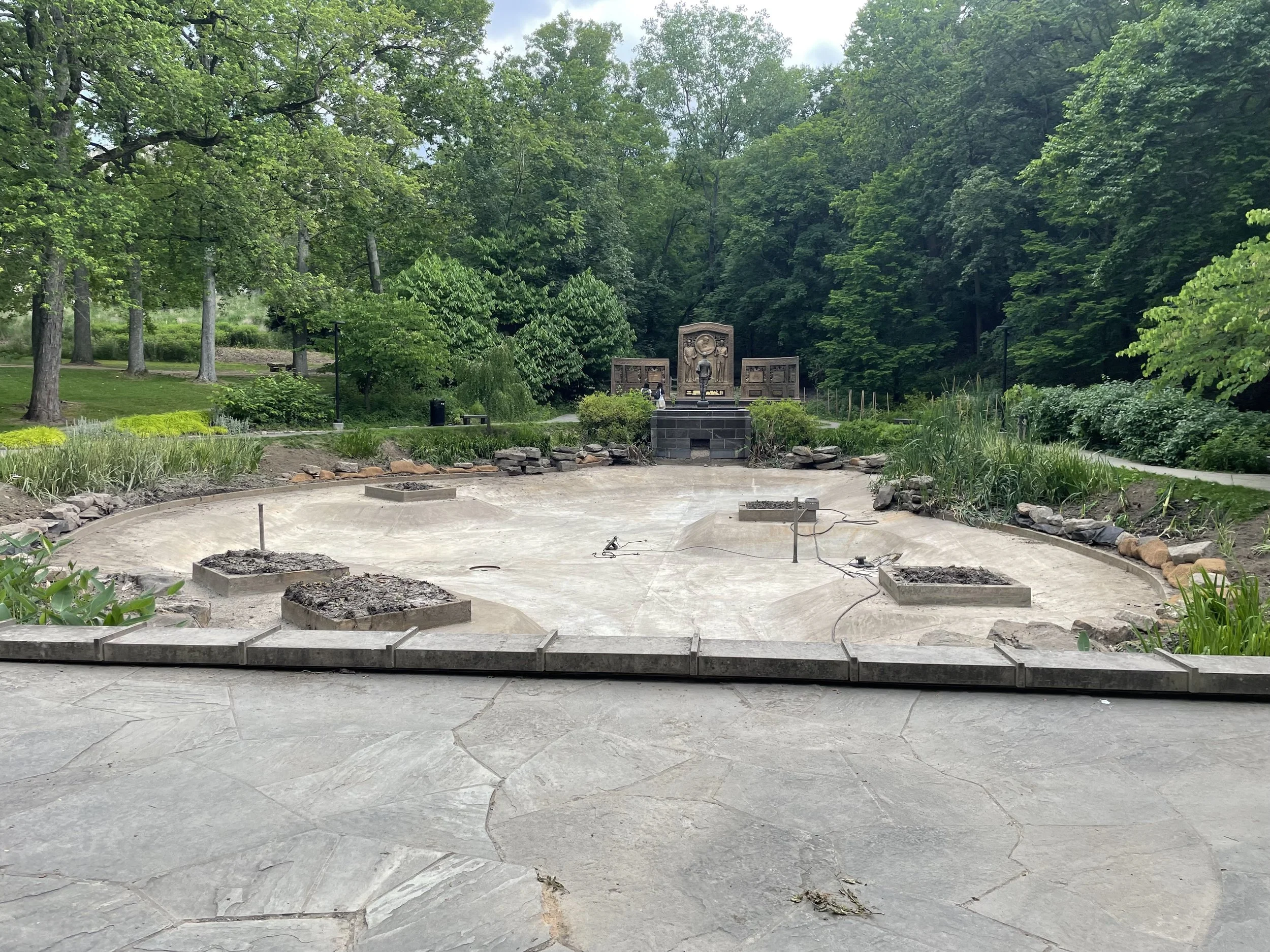
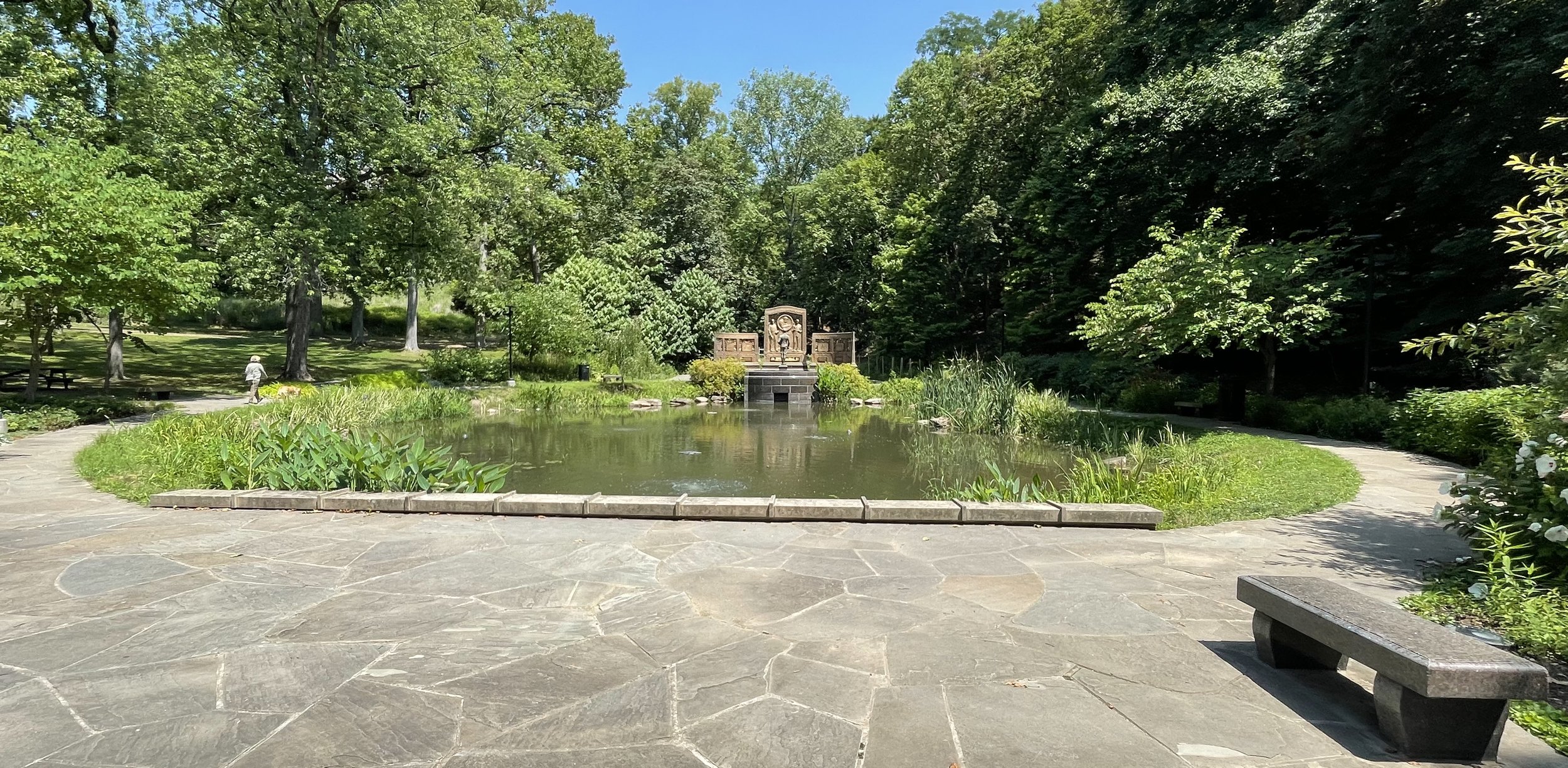
June 7 June 14
July 27
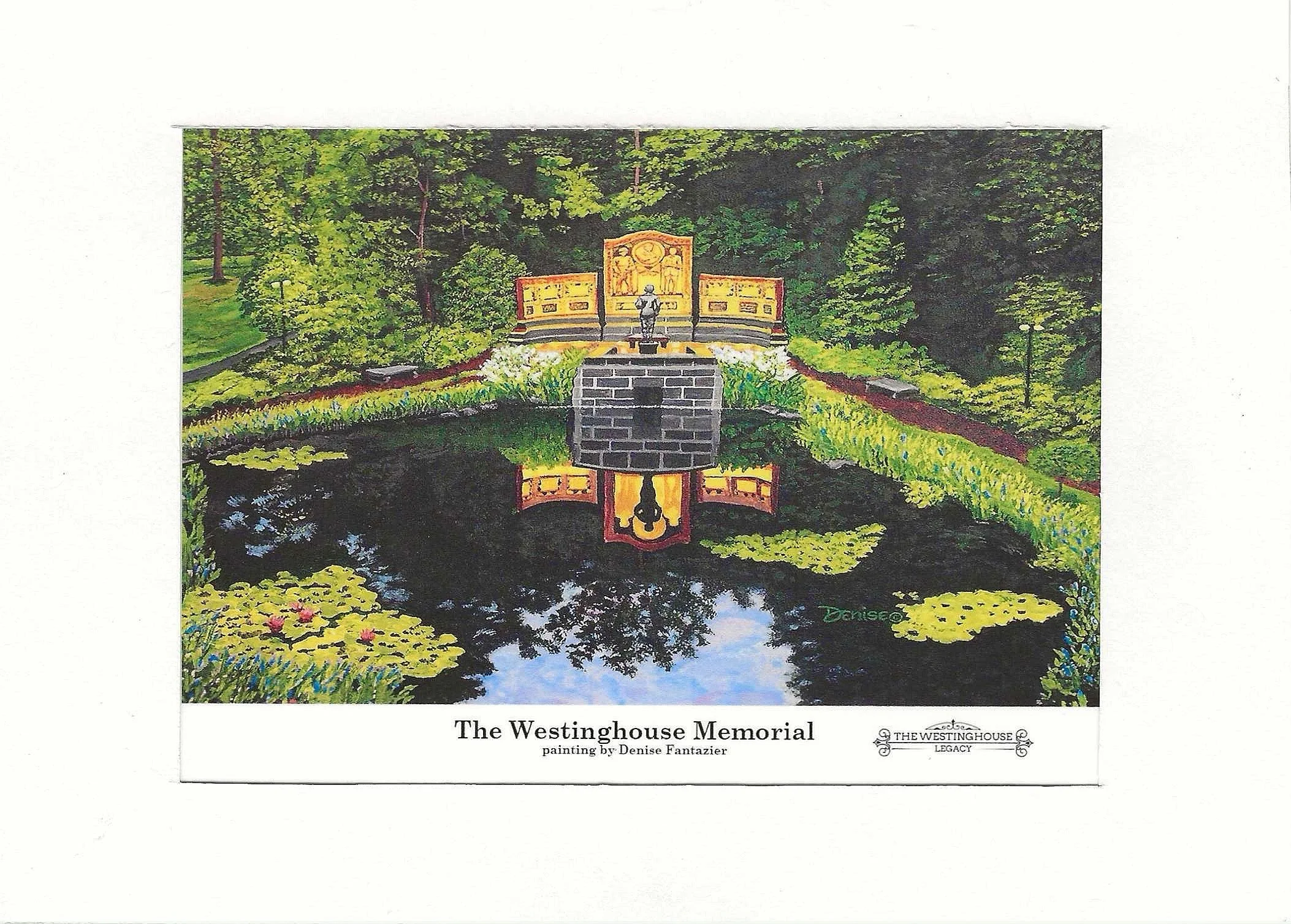
Finally, this painting of the George Westinghouse Memorial by Denise Fantazier was commissioned by The Westinghouse Legacy.
Copies are available both in portrait sizes and as gift cards through Denise’s ETSY site at PGHArtDen.