On June 12, 1913 in Stamford, Connecticut, the second section of the westbound New York, New Haven & Hartford Express rammed into the rear of the first section, which was stopped waiting to be coupled to an electric locomotive.
The collision occurred in broad daylight on a straight stretch of track, when the engineer of the second section ran past a stop signal. He jammed on the brakes, but it was too late.
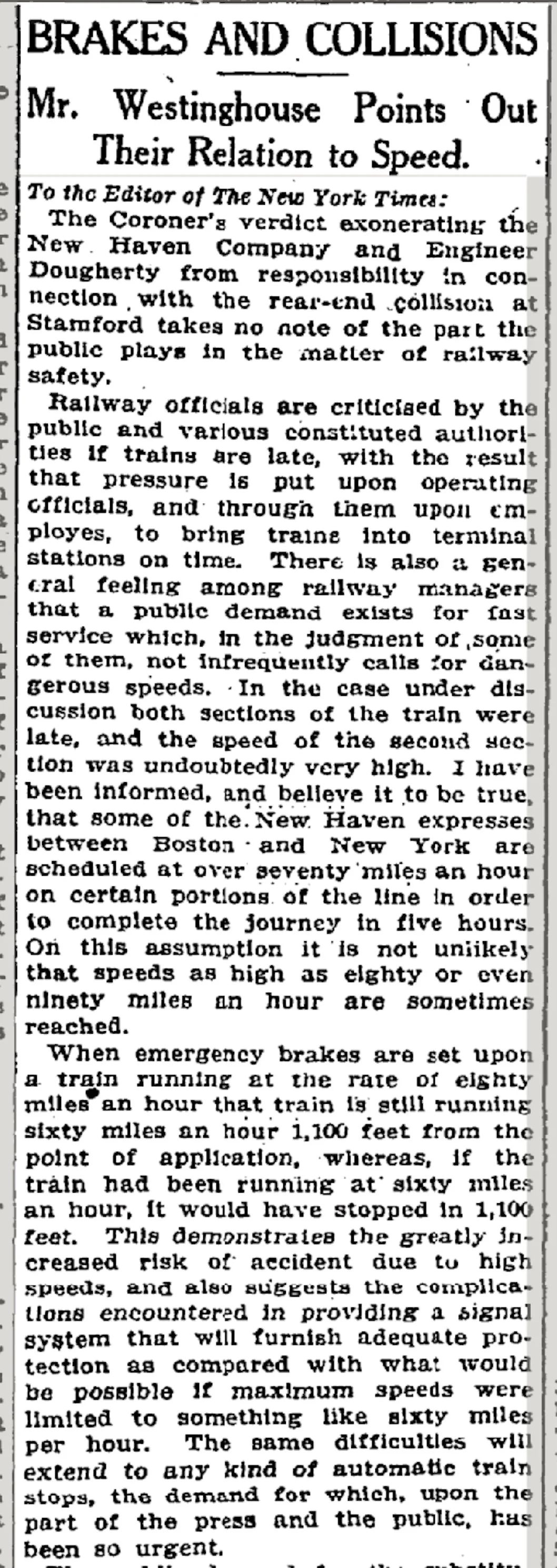
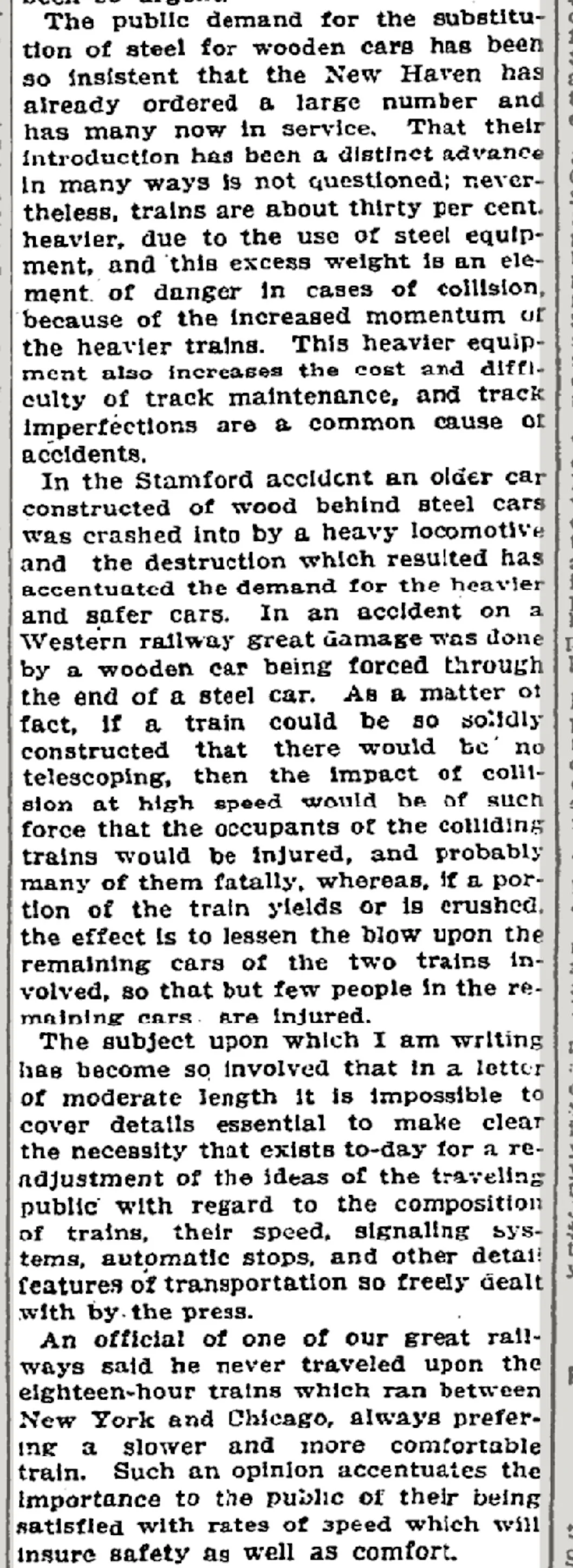
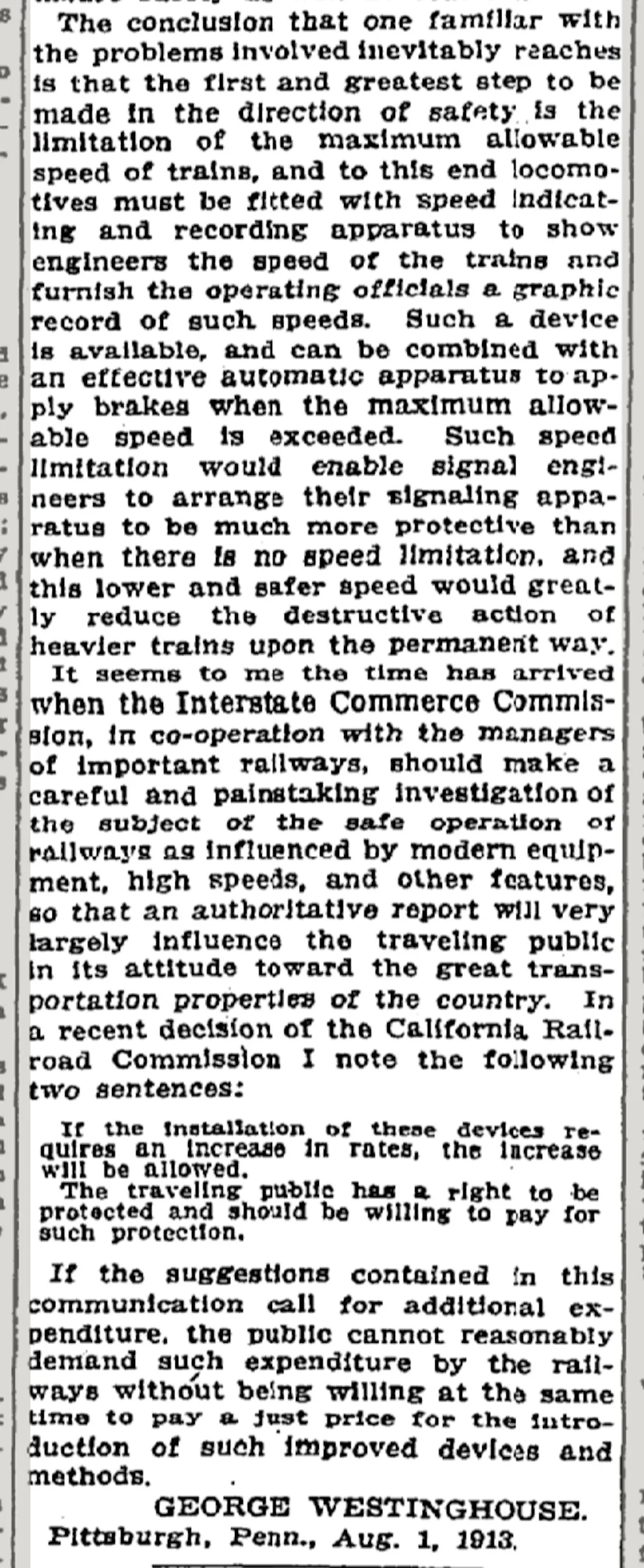
The accident prompted this letter from George Westinghouse, which appeared in The New York Times on August 4, 1913. He provides a cogent analysis of the physics of railroad transportation and also sounds a clarion call for new national standards and speed limits which don’t compromise public safety for the sake of profitability.
Considering that Westinghouse had largely retired from business and was in the last year of his life, the letter also provides clear evidence of his high mind and moral standards.