The Case of William Kemmler
This is the first of three posts about William Francis Kemmler, a 28-year old vegetable peddler from Buffalo, New York, who played an inadvertent supporting role in the struggle between George Westinghouse and Thomas Edison commonly referred to as the War of the Currents.
In a concerted campaign to demonstrate that AC electricity was lethally dangerous, Edison designed the world’s first electric chair. Kemmler would become the first person to be executed by electricity, or as Edison labeled it, being Westinghoused.
As indicated in the following series of items and articles published in The New York Times, Kemmler’s case attracted considerable attention and comment as it moved its way through the courts and state legislature right into the execution chamber.
Taken together, they provide a chronological and contemporaneous third-party account of the legal, practical, and ethical proceedings.
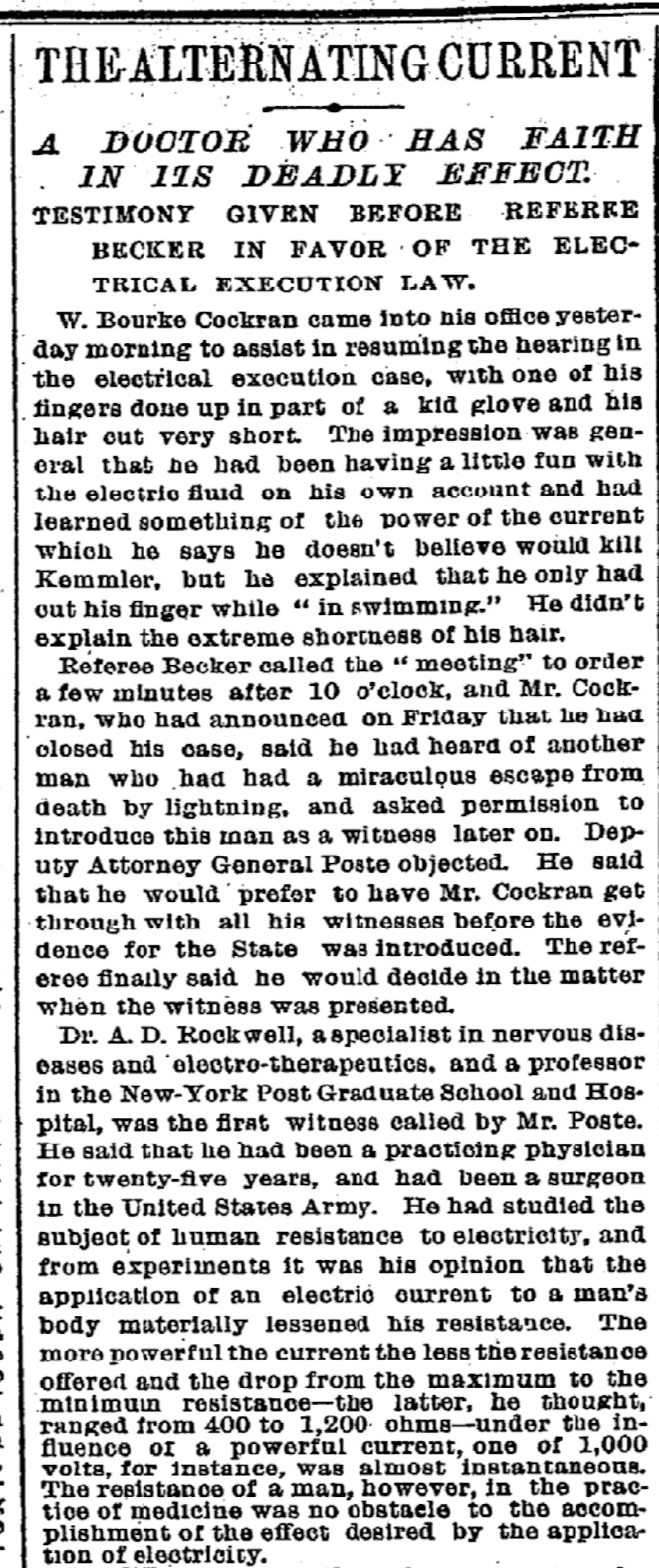
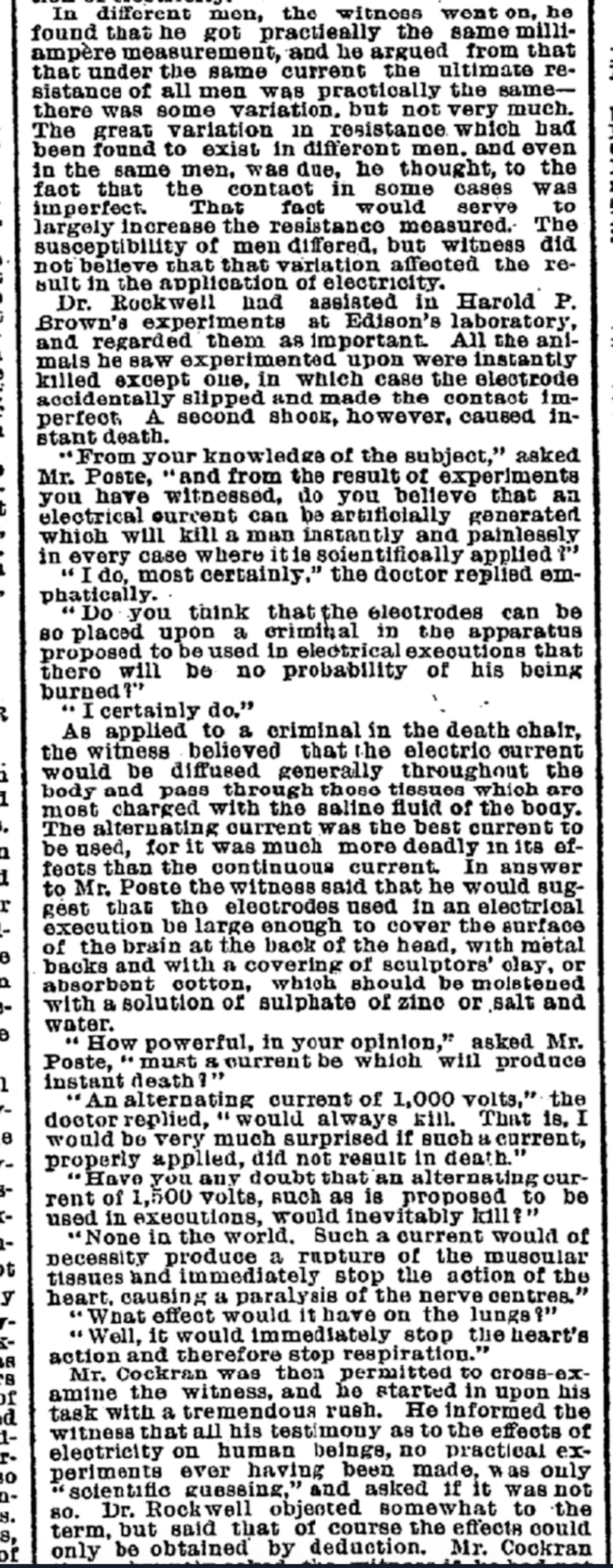
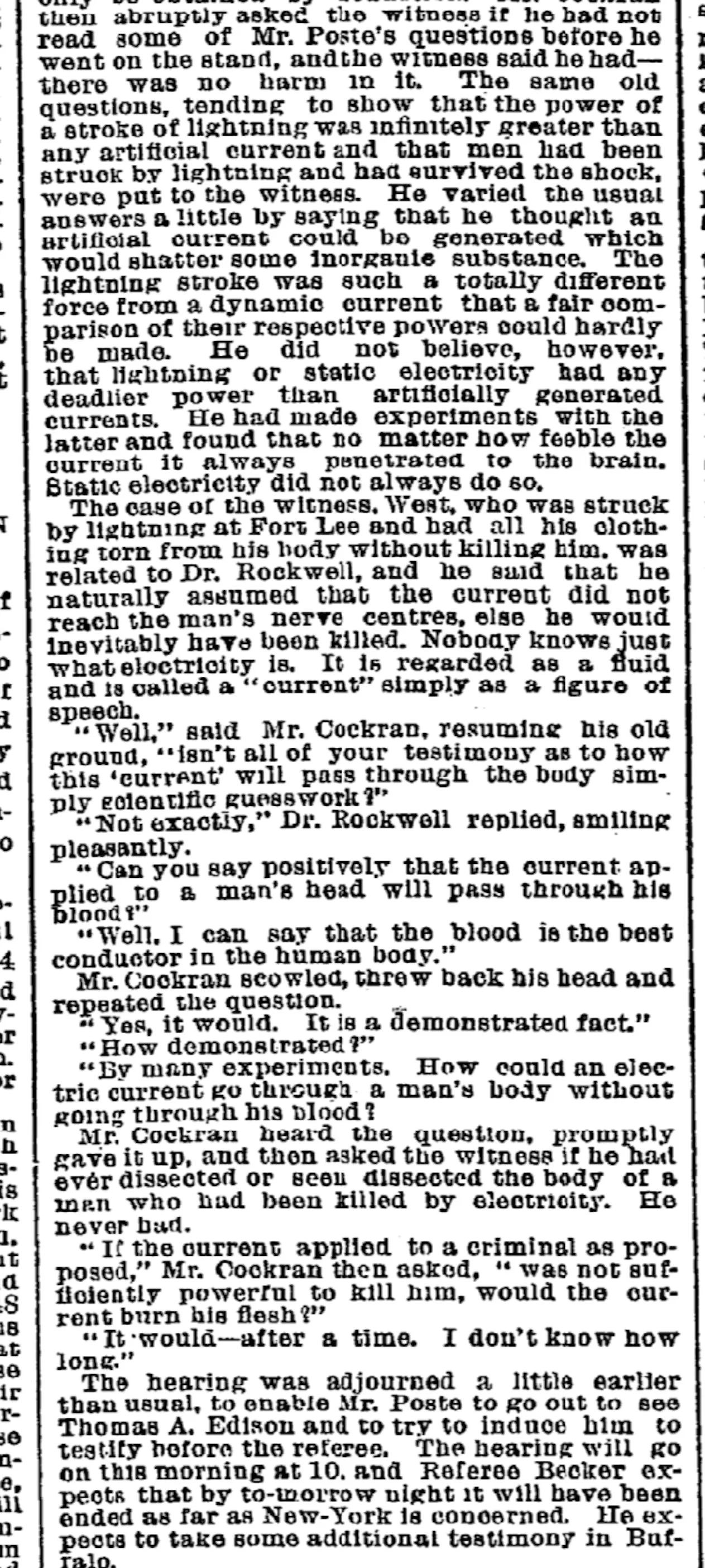
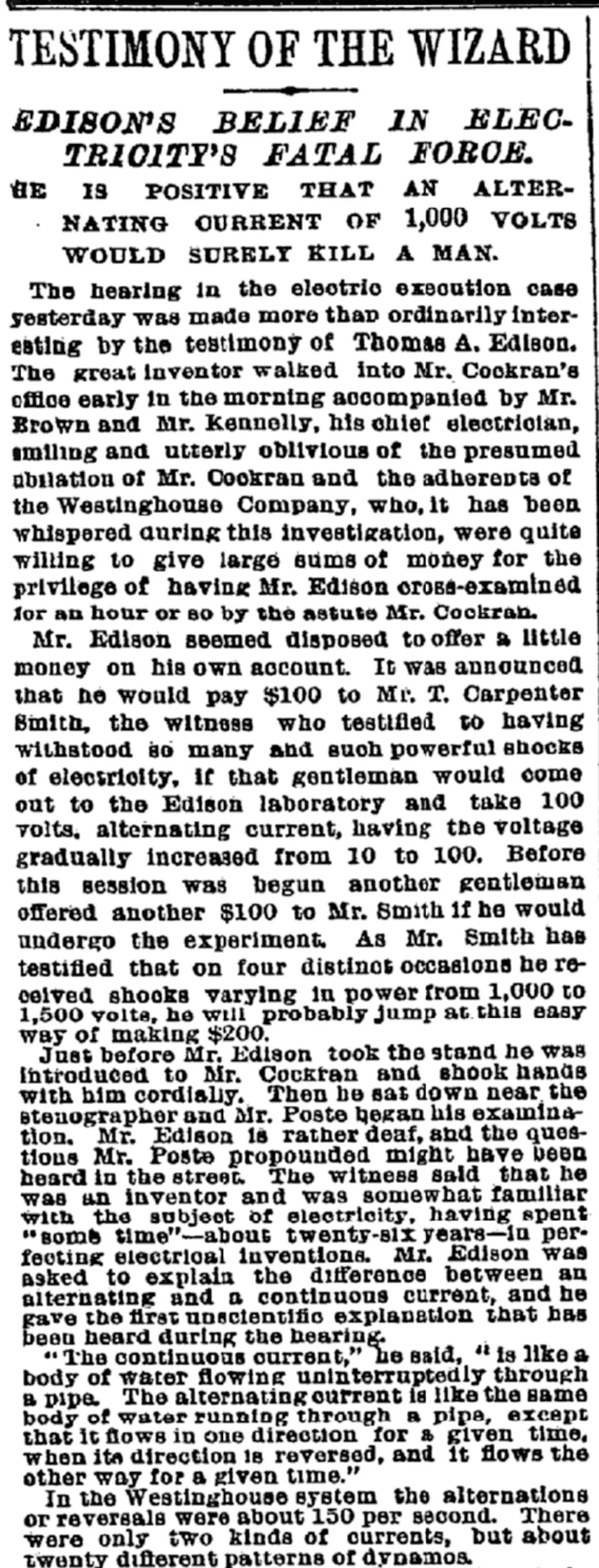
Throughout, you have the option of reading the articles or viewing them in the actual paper.
The story continues in:
The Appeals of William Kemmler
The Execution of William Kemmler
This first tranche of articles starts with the first mention of Kemmler’s name, a small item on page one under Telegraphic Breveties on page one of The New York Times, March 30, 1889. Note that Kemmler’s middle initial was mis-reported.

March 30, 1889
Then this next item appeared on May 15, 1889. Convicted of capital murder, Kemmler would be the first person to be executed using electricity.
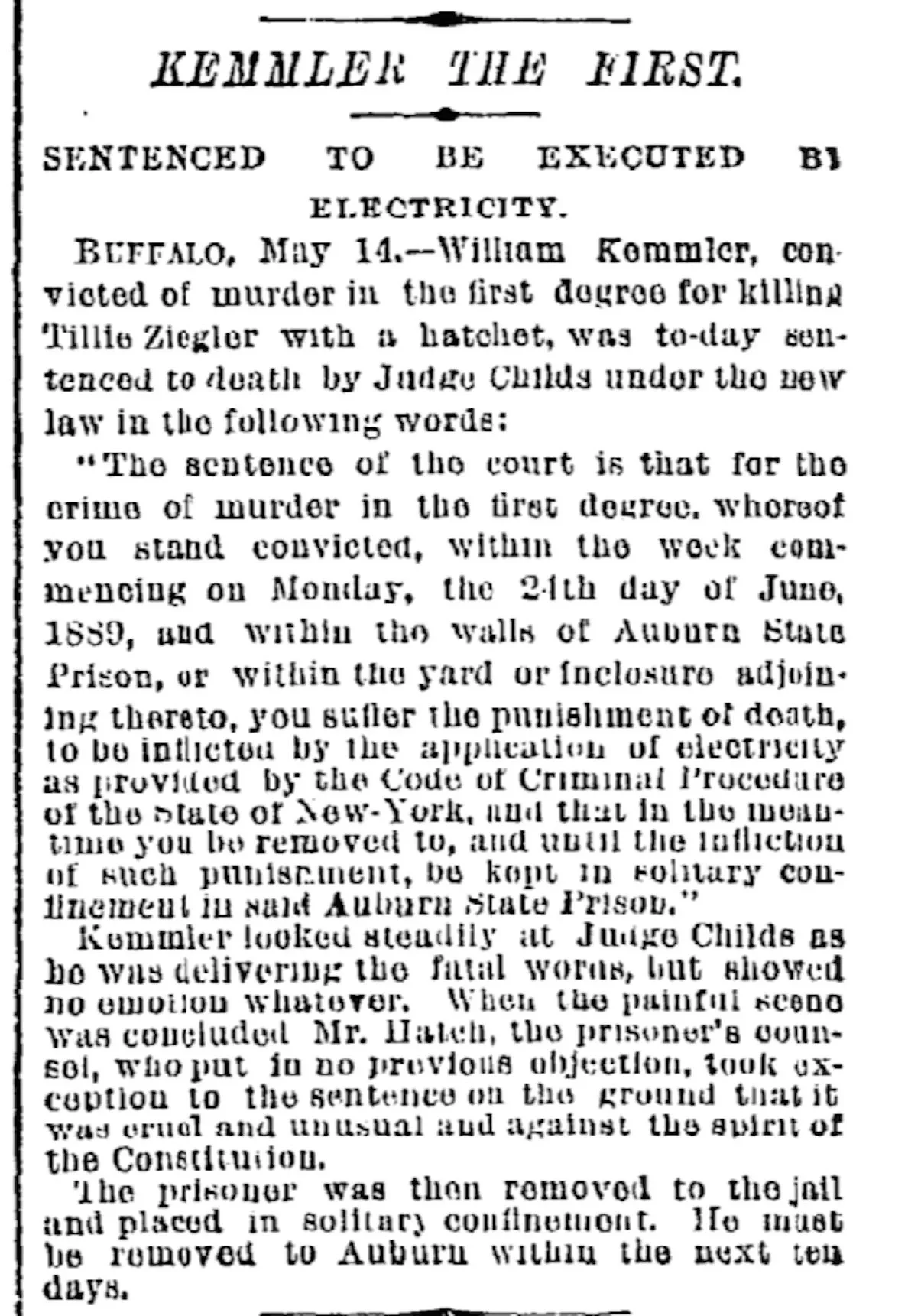
May 15, 1889
However, Kemmler’s case did not go smoothly.
A stay of execution was issued, as this item the Times reprinted on June 10, 1889 from the Buffalo Courier that ran the day before.
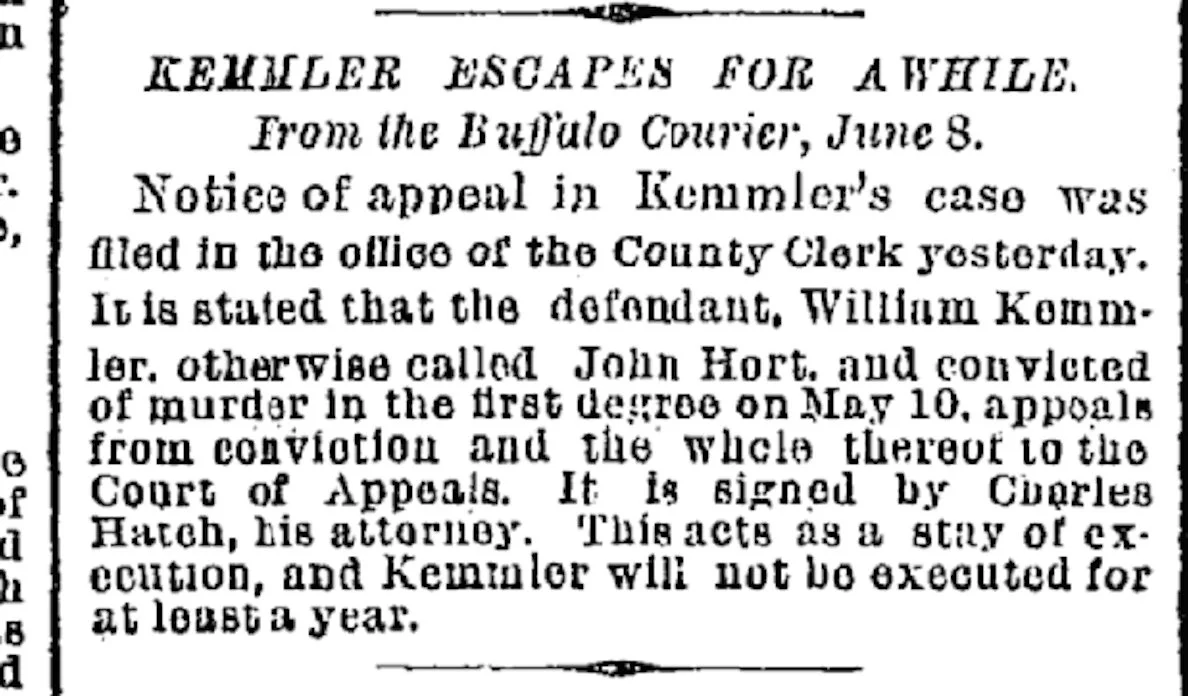
June 9, 1889
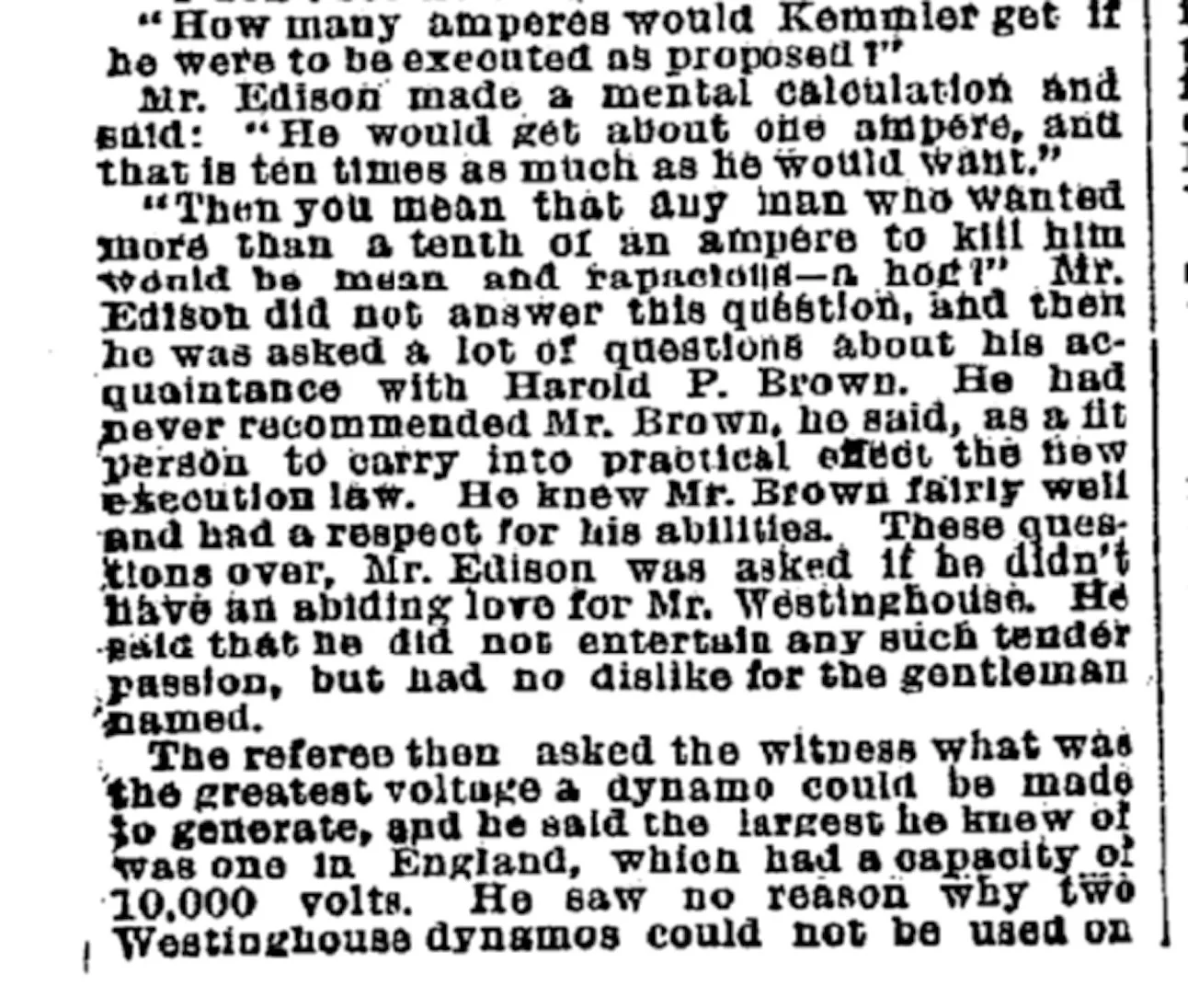
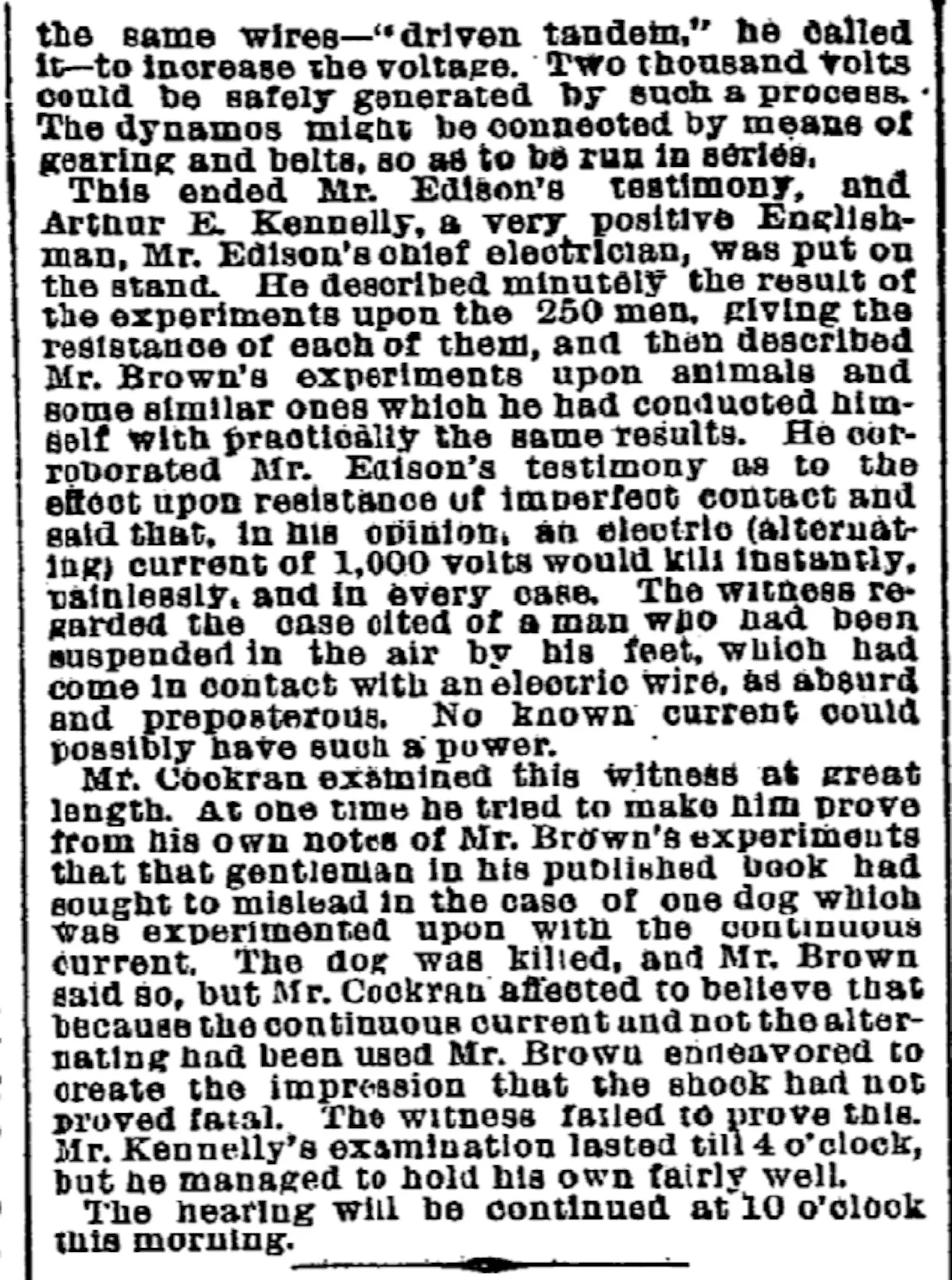
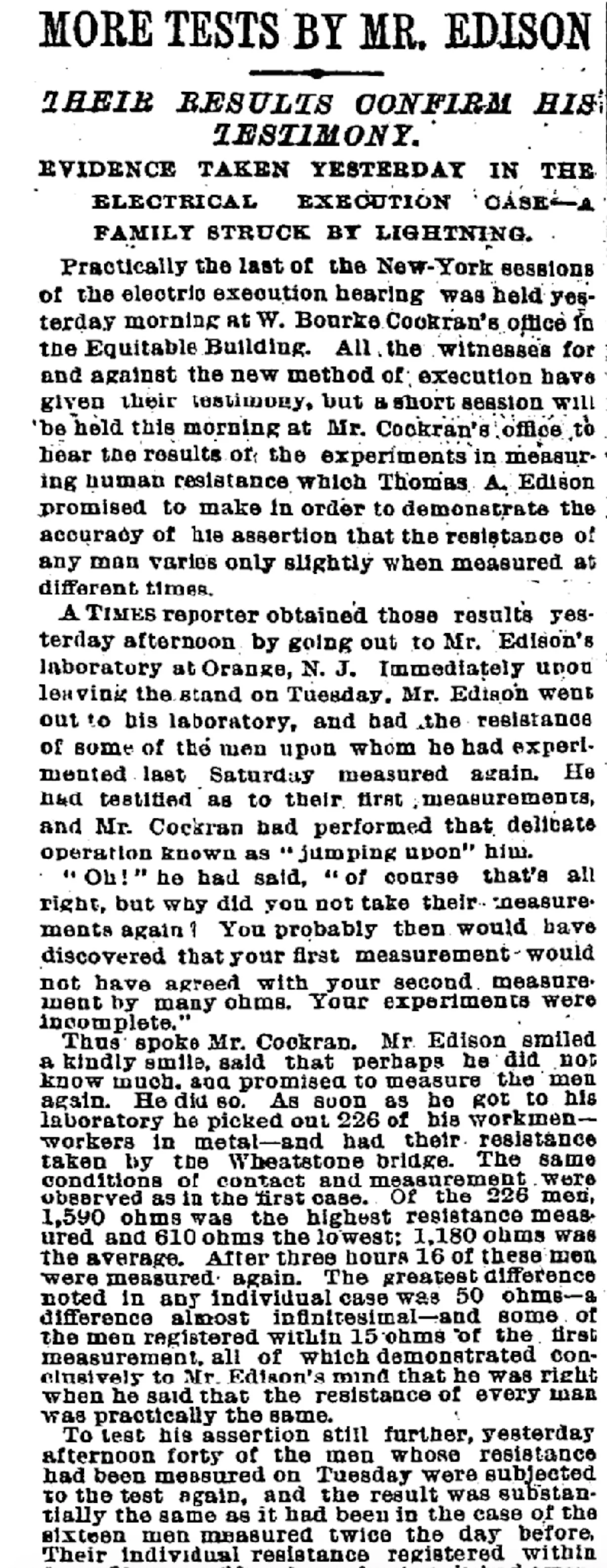
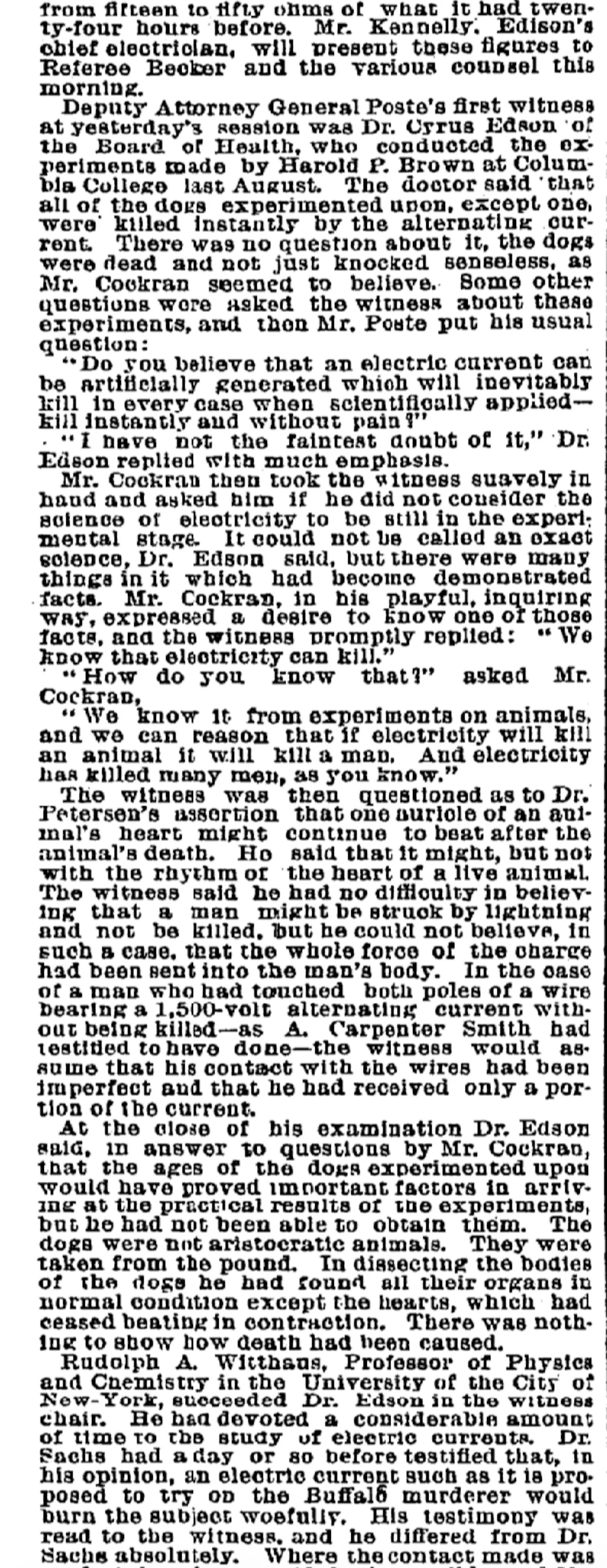
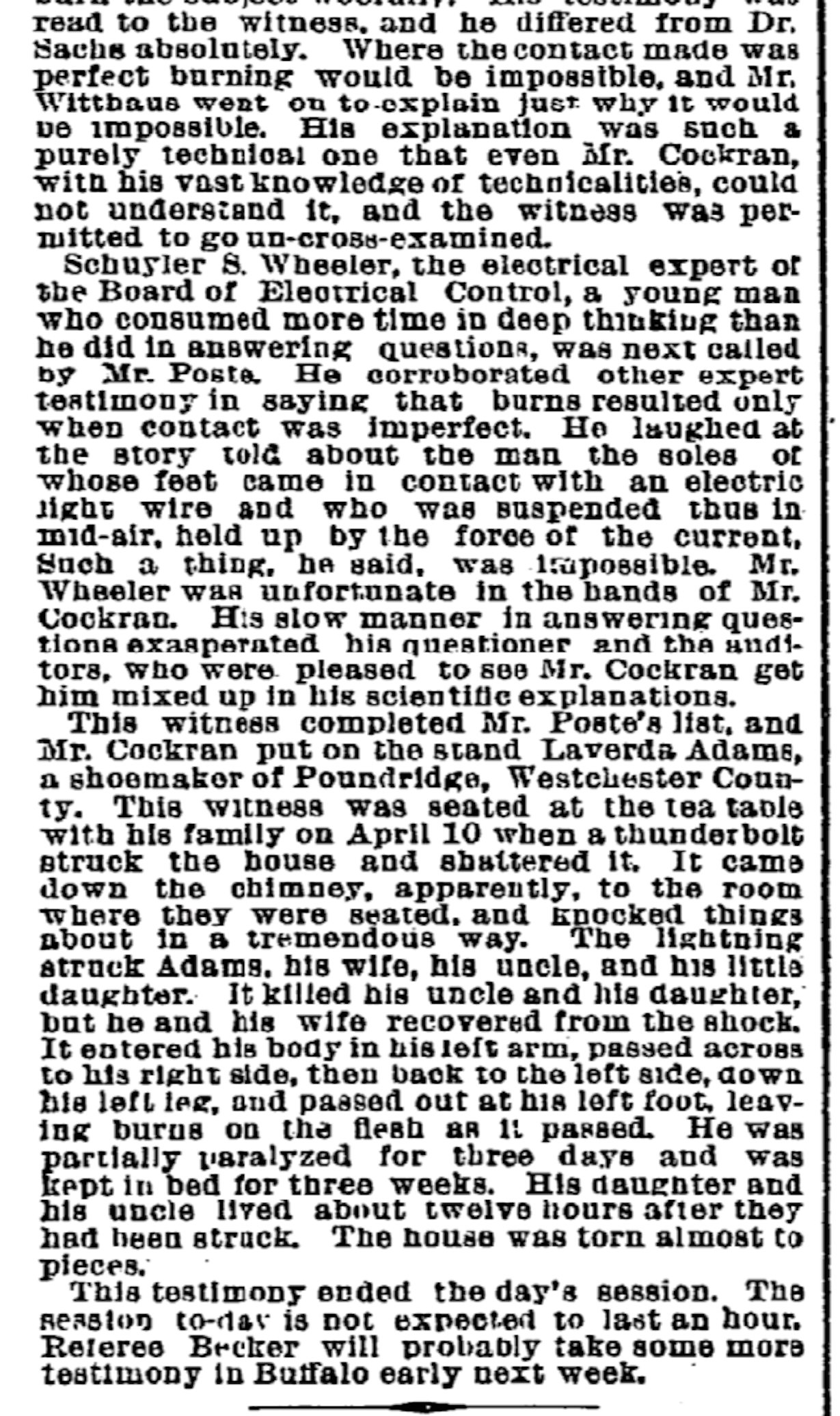
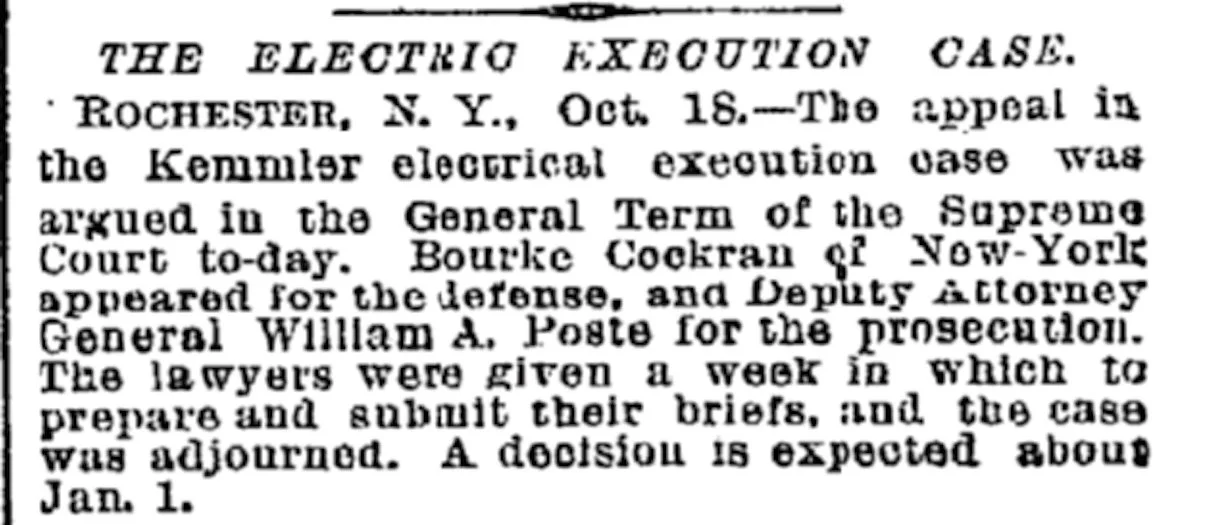
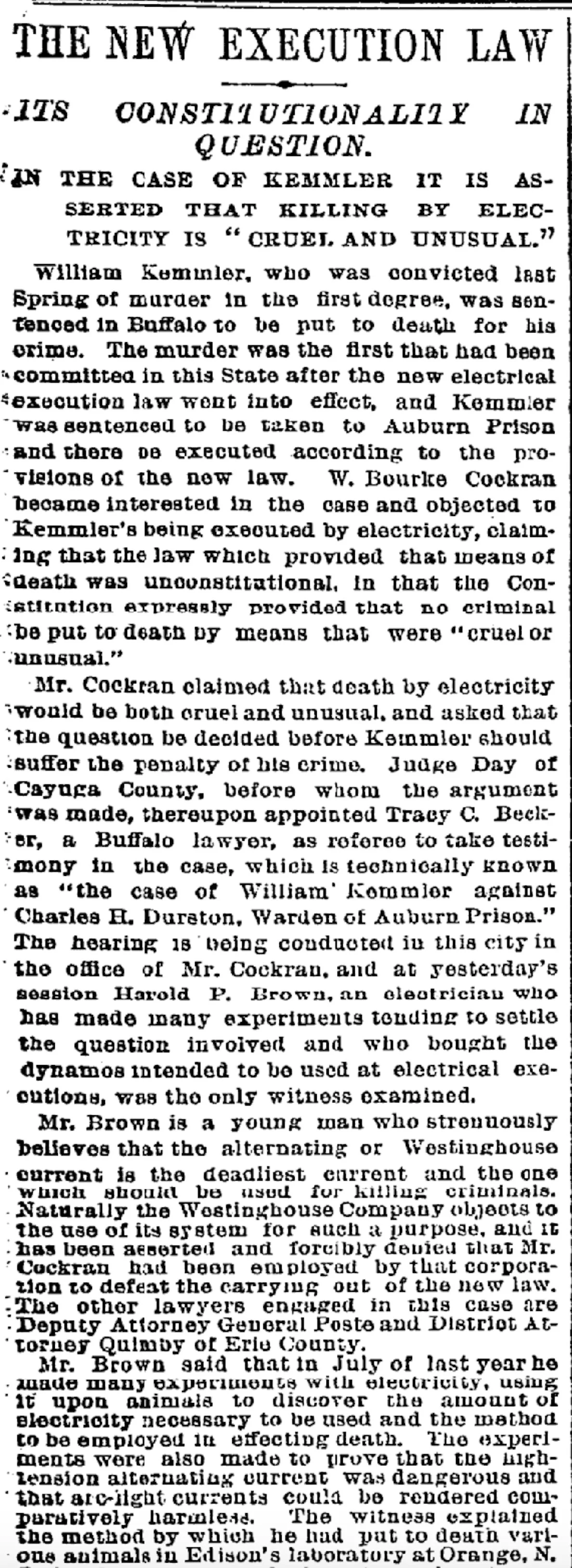
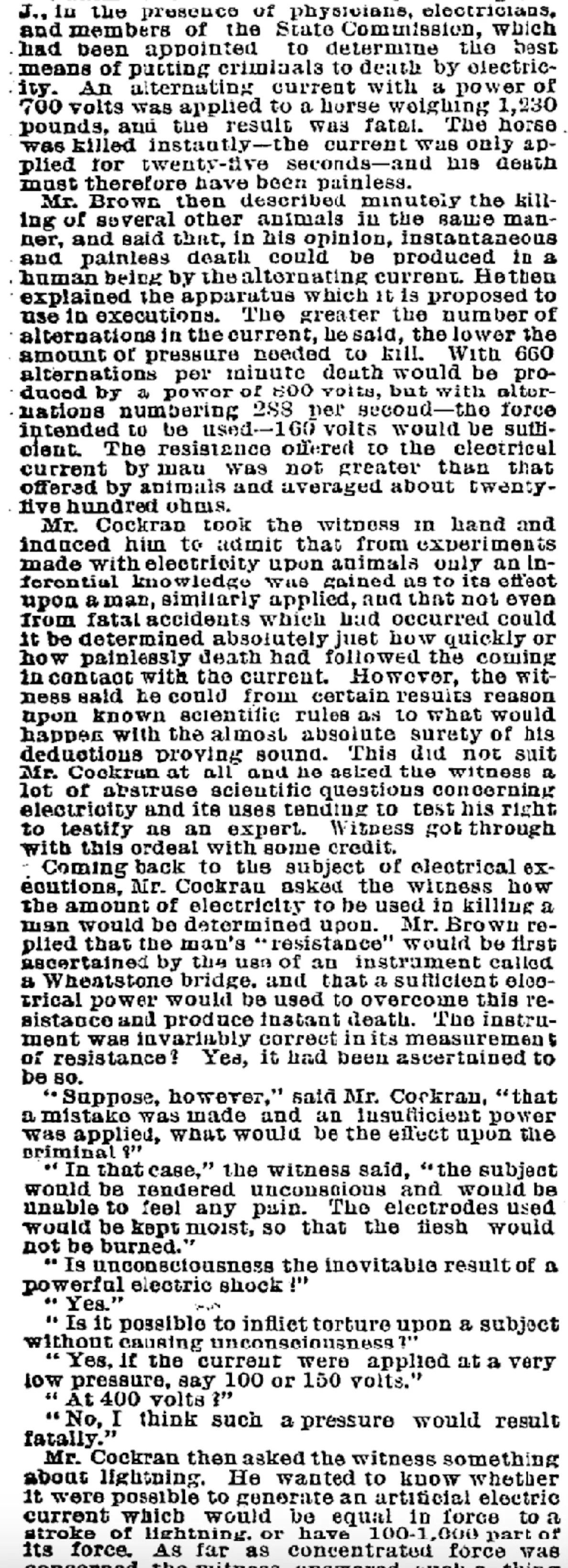
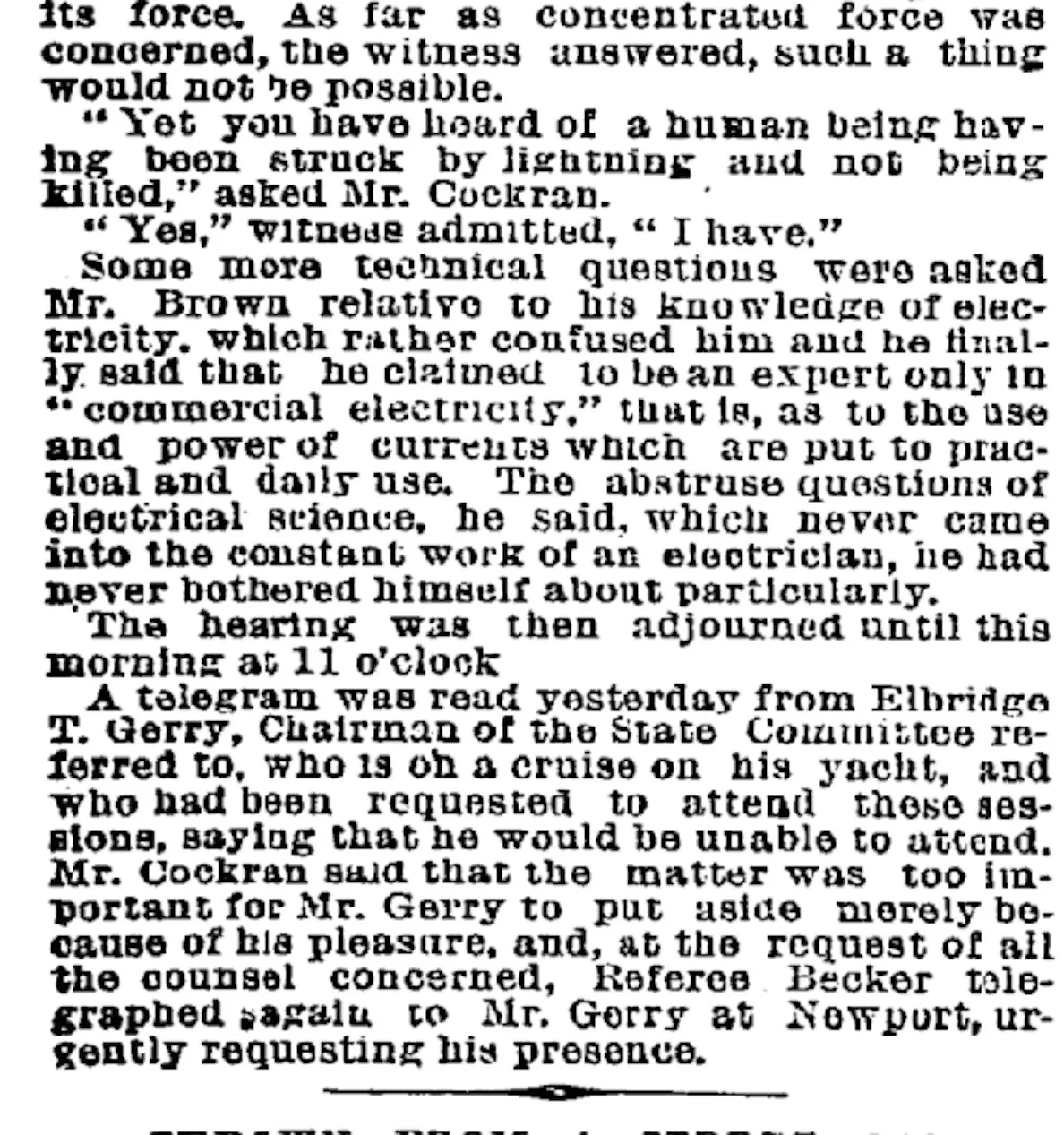
But the legal arguments continued, as this article from July 10, 1889 reveals.
The article reports on questions raised about the constitutionality of the new execution law. It also reports on the efforts of Harold Brown to develop a device to execute a person with electricity and the experiments he conducted.
Of particular note is Brown’s insistence on the lethality of Westinghouse’s AC electricity.
July 1, 1889
July 1, 1889
July 1, 1889