The Appeals of William Kemmler
This is the second of three posts about William Francis Kemmler, who played an inadvertent supporting role in the struggle between George Westinghouse and Thomas Edison commonly referred to as the War of the Currents.
As shown in the previous post, Kemmler was convicted of murder in June 1889 for killing his girlfriend in a jealous rage and was sentenced to be the first person executed by electricity.
But the date of his death was postponed for a year, pending legistation by New York State sanctioning this novel method of execution.
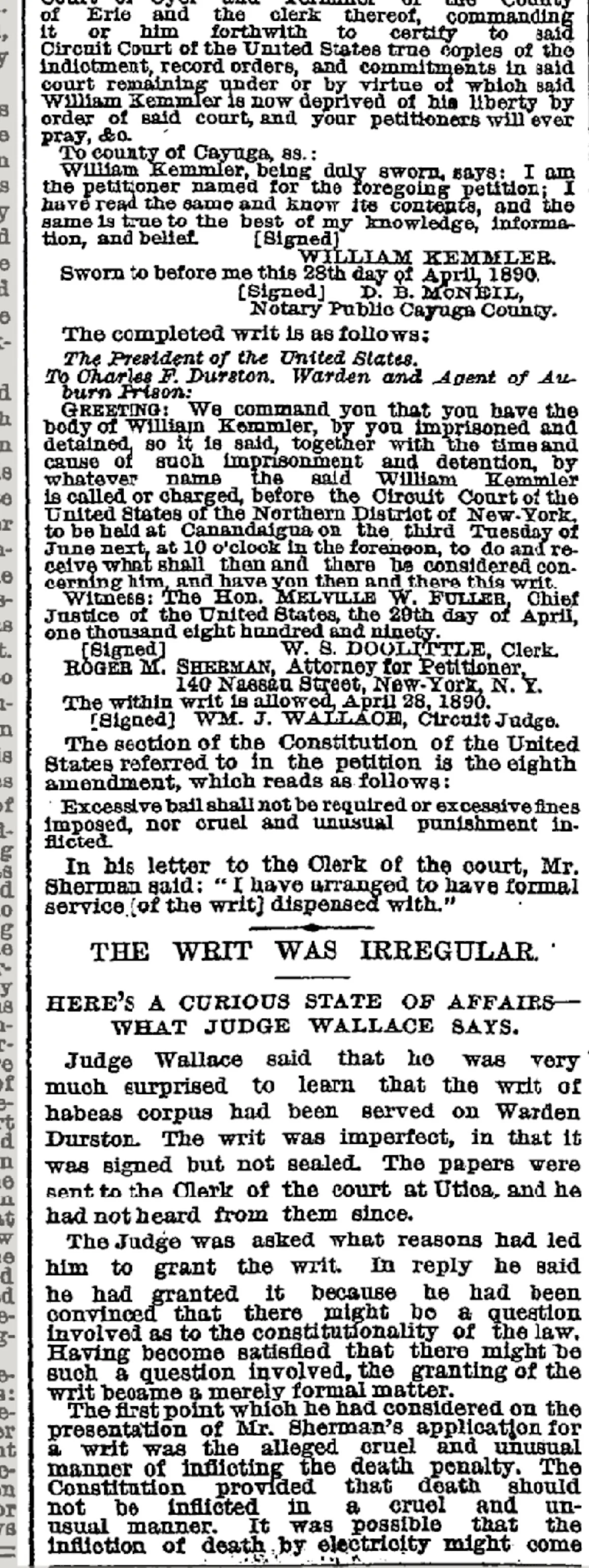
As 1890 began, the Kemmler case regained the attention of the New York Times.
The first article, which appeared on February 26, reported on the disposition of the two appeals that had been made in his case.

February 26, 1890
Then on March 24, 1890, this brief item ran at the bottom othe front page.
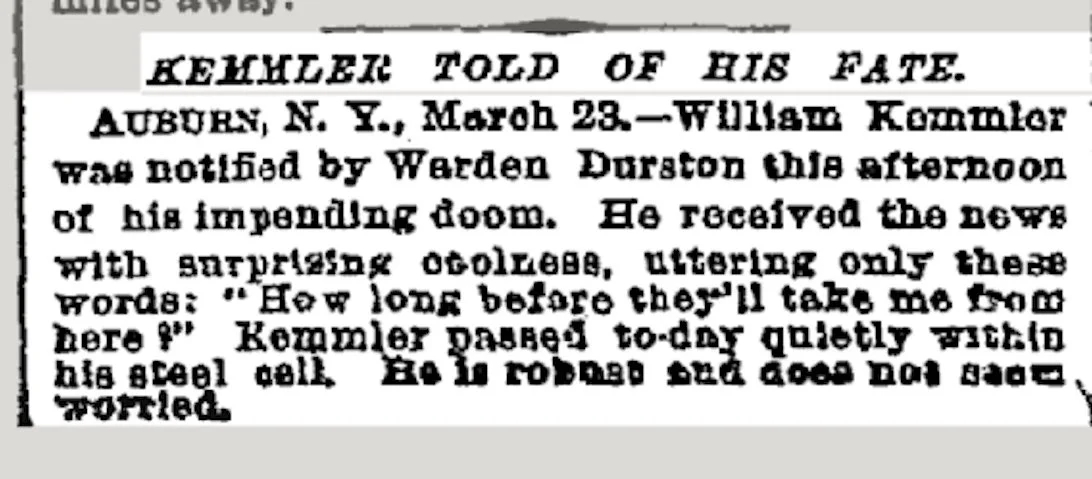
The next mention appeared in the April 1, 1890 edition.
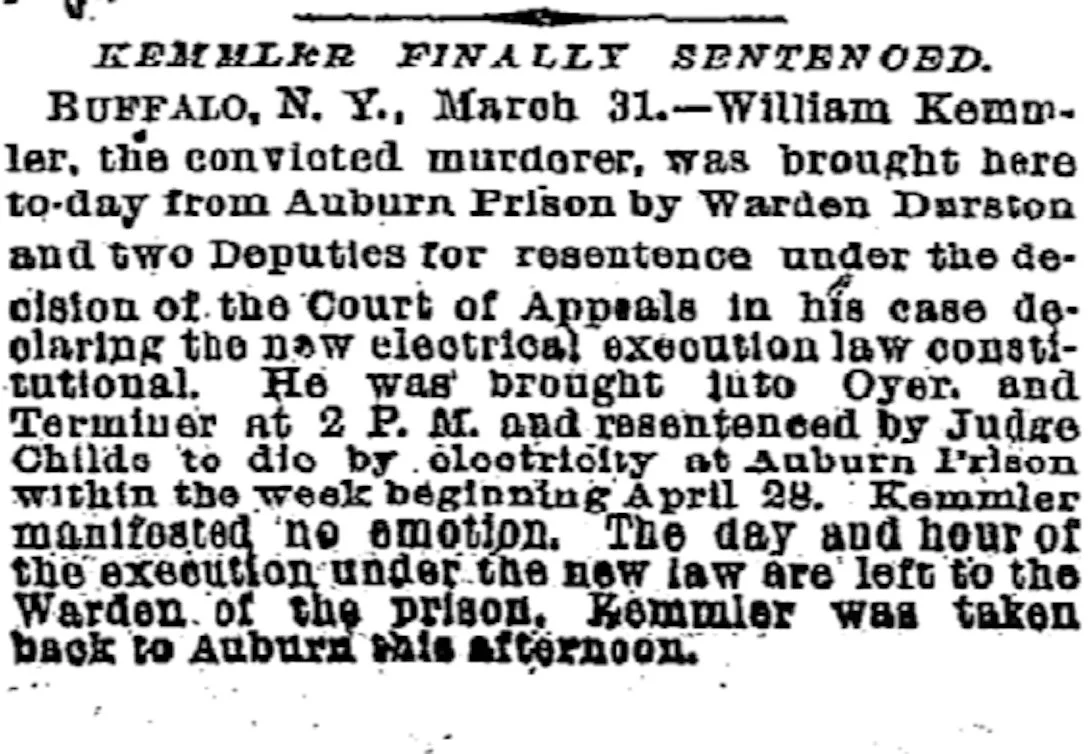
Two items on Kemmler’s case appeared in the issue of May 21, 1890. This brief report on page one.
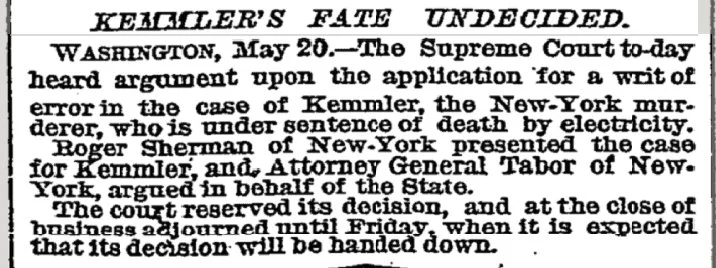
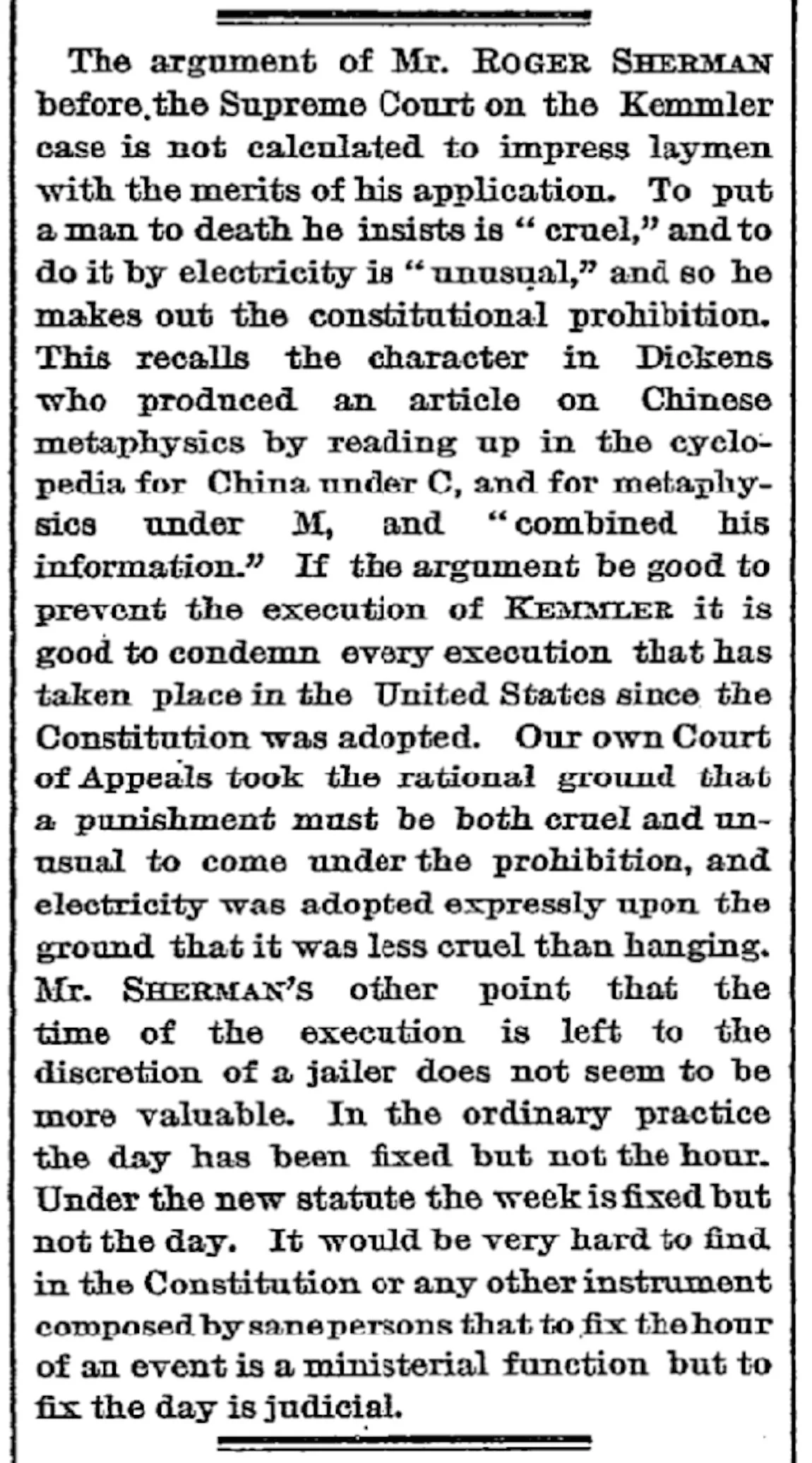
And this editorial comment on page four.
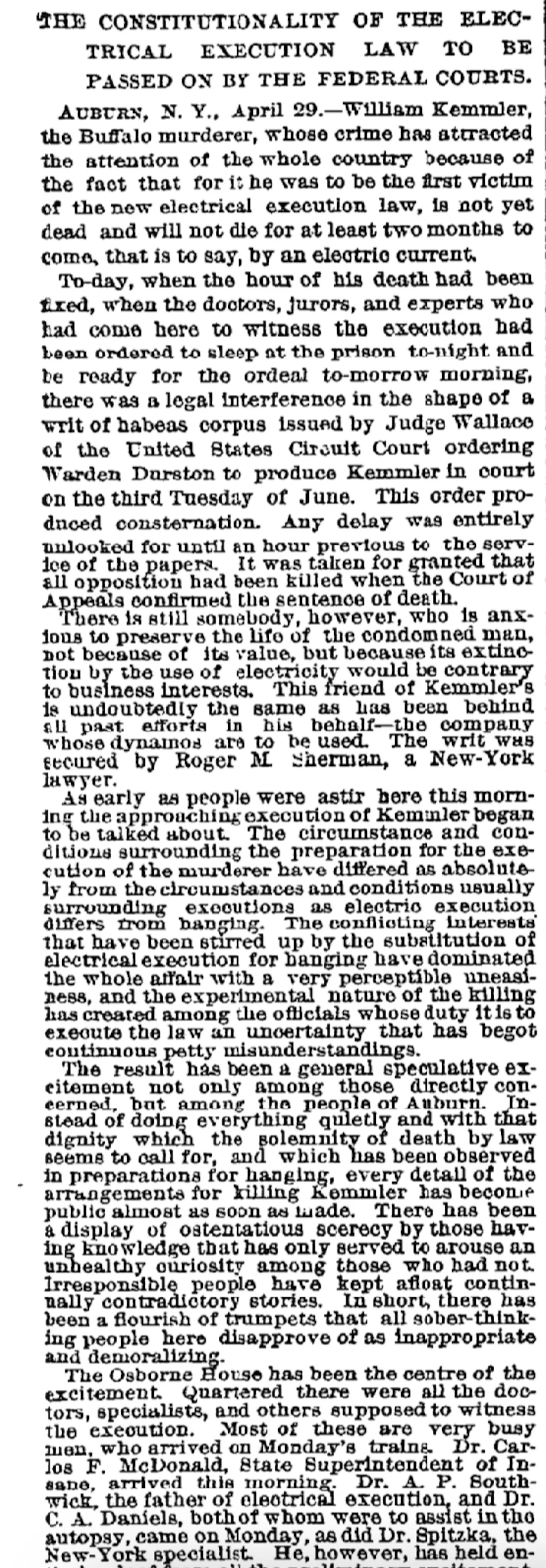
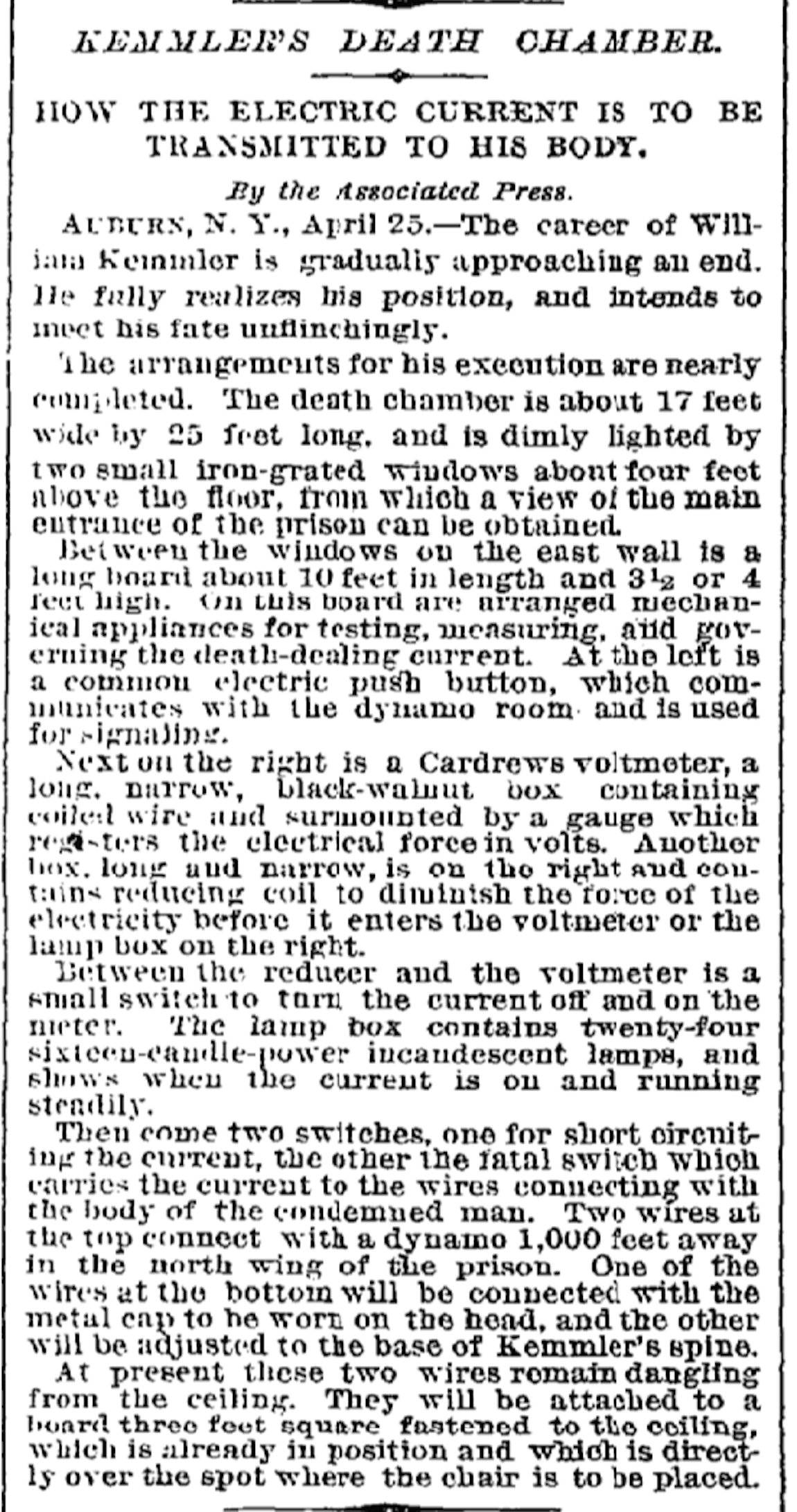
Then on April 26, 1890, the New York Times ran an Associated Press article which offered readers their first look inside the death chamber.
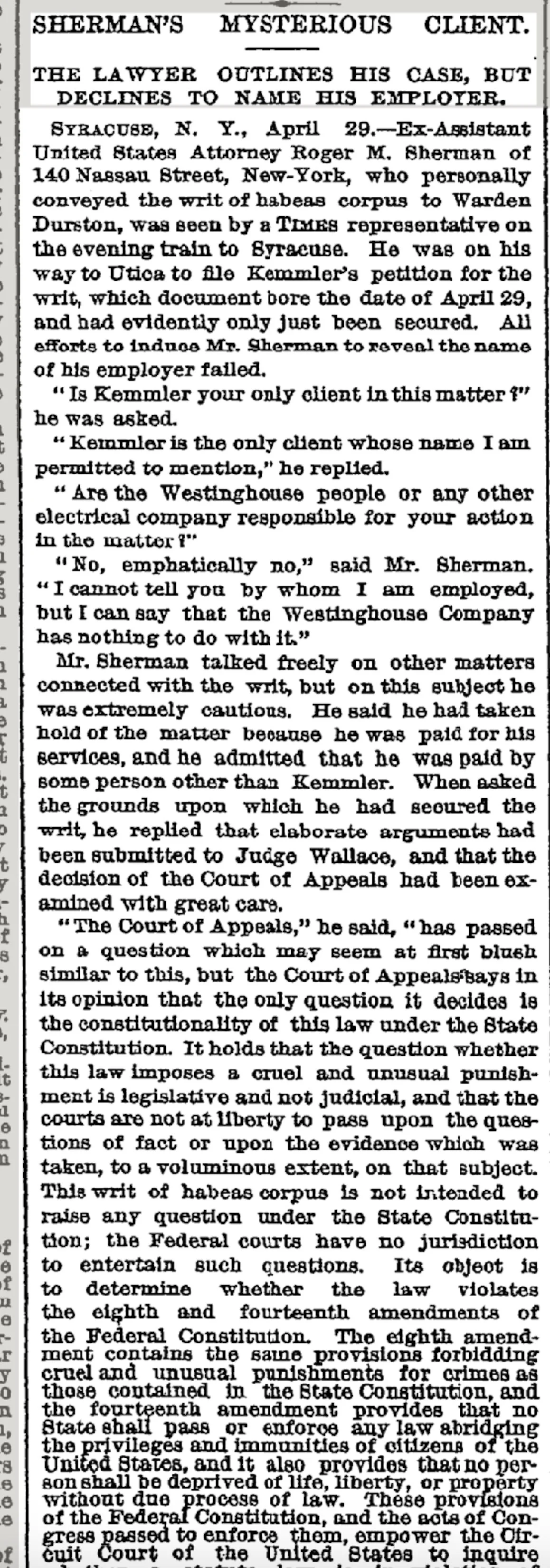
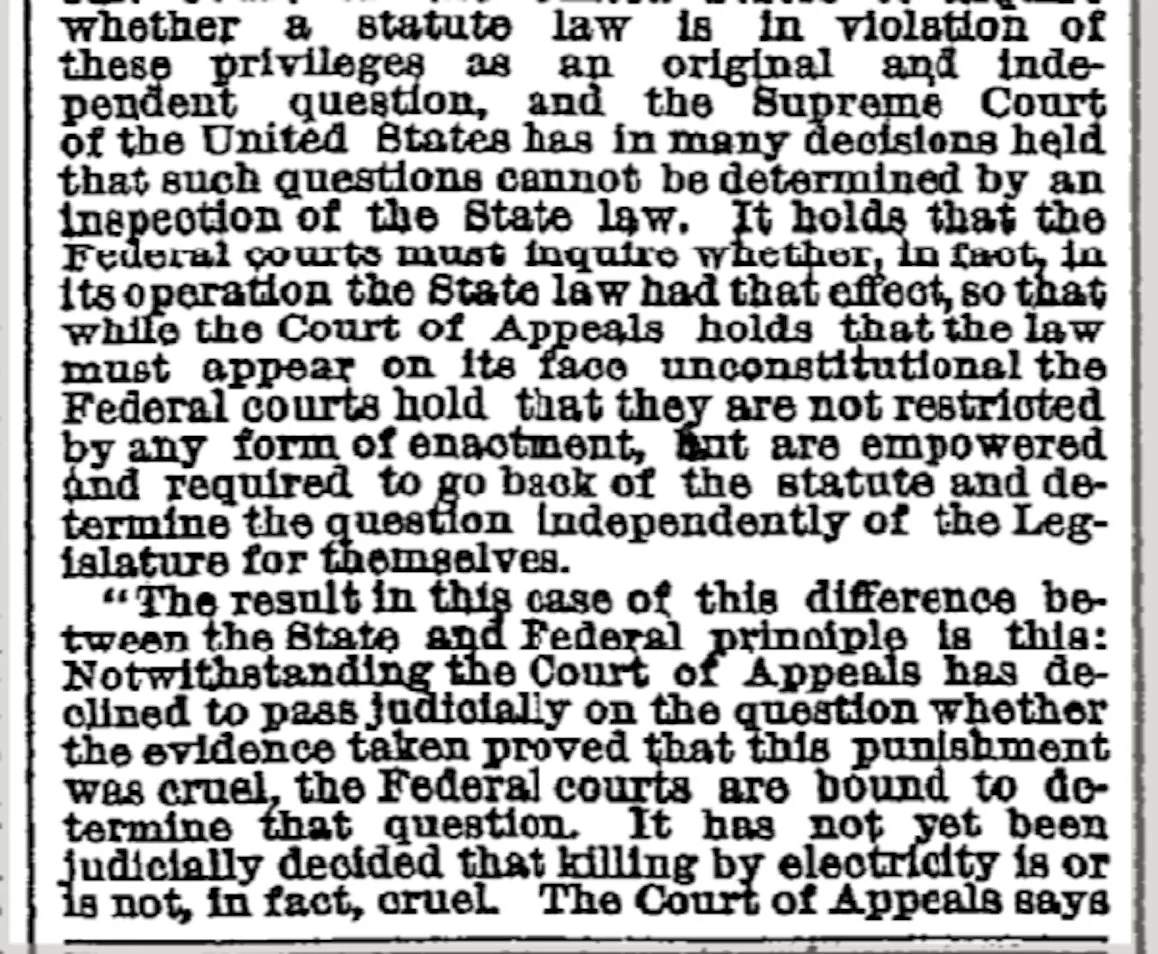
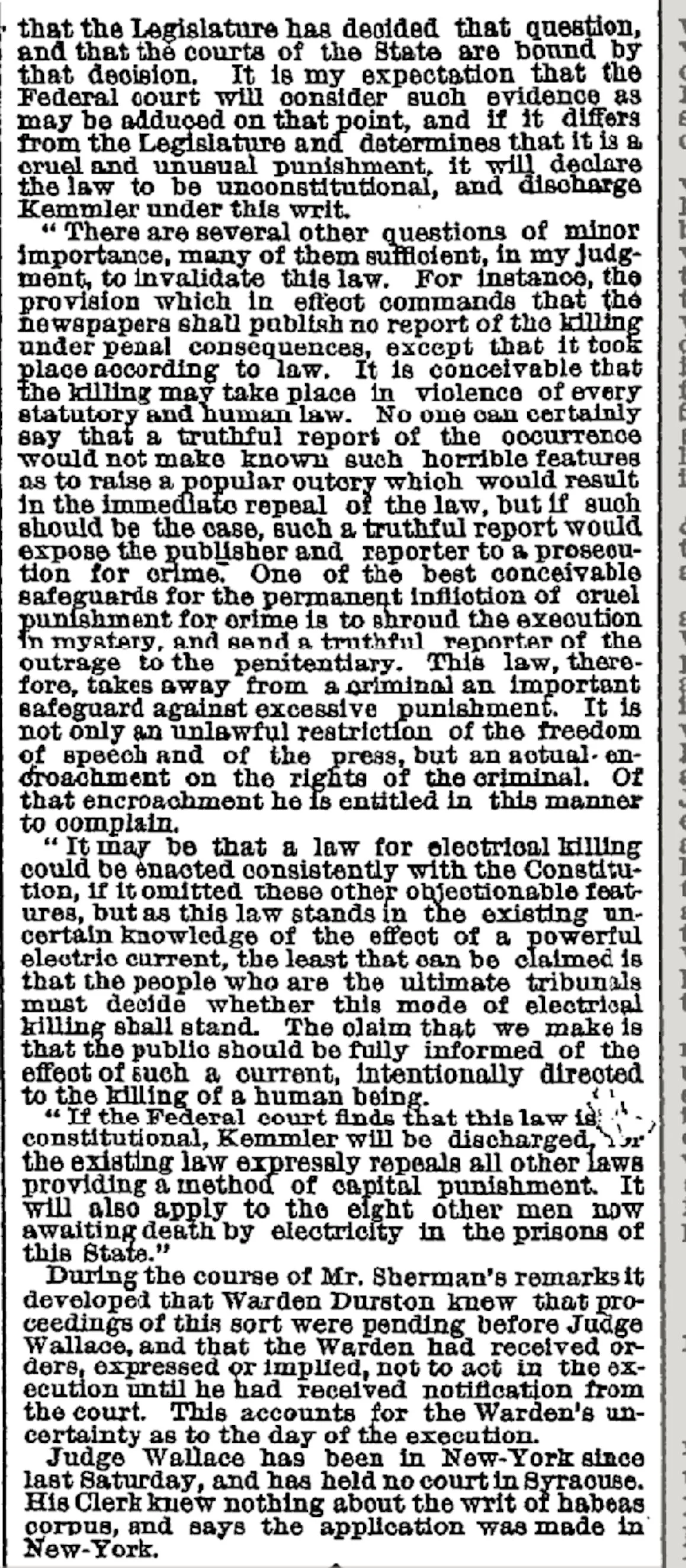
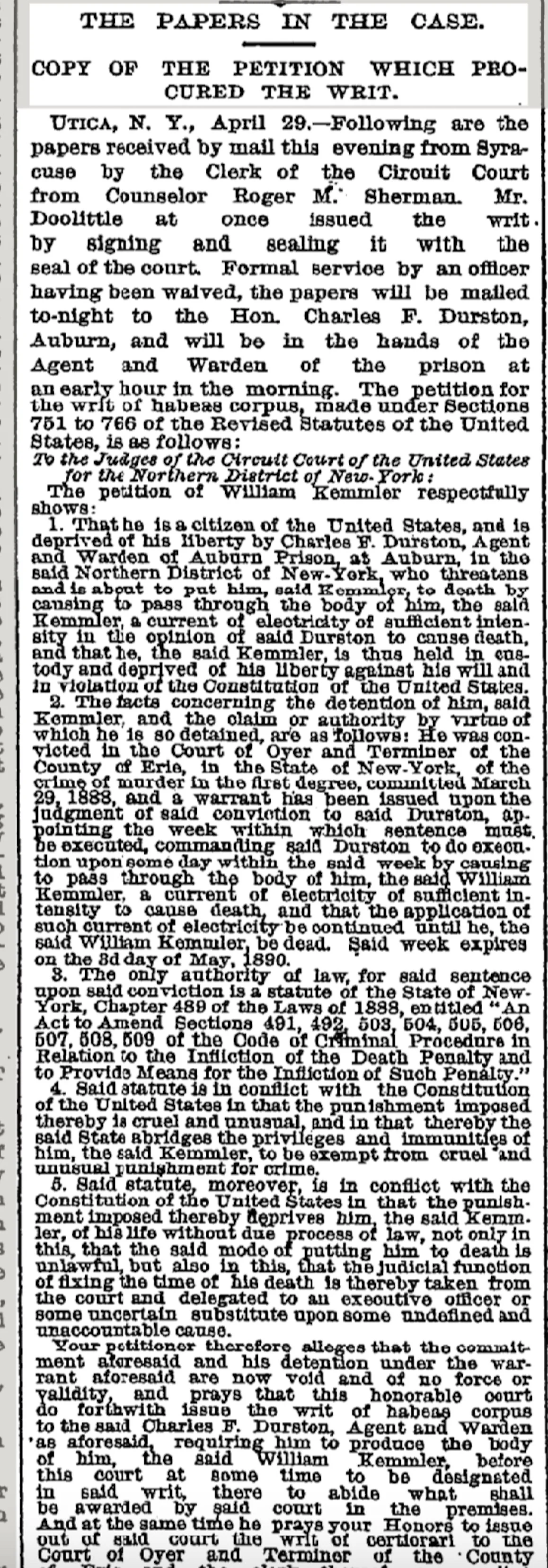
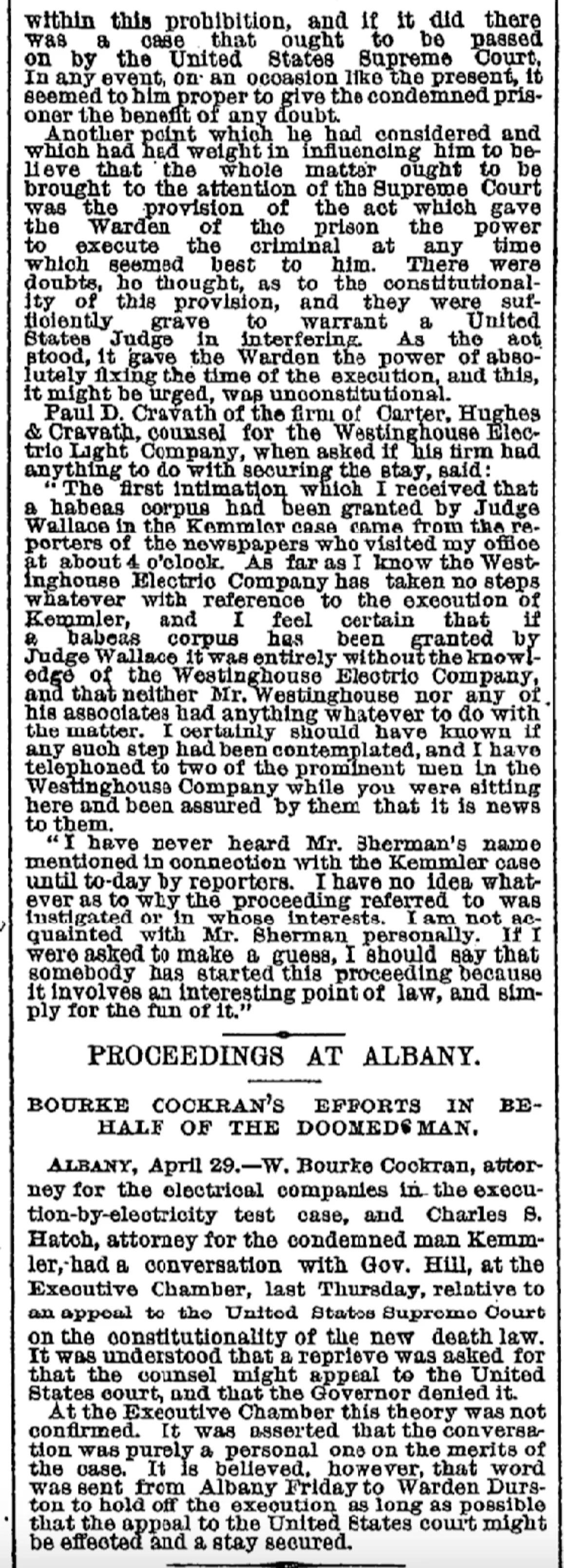
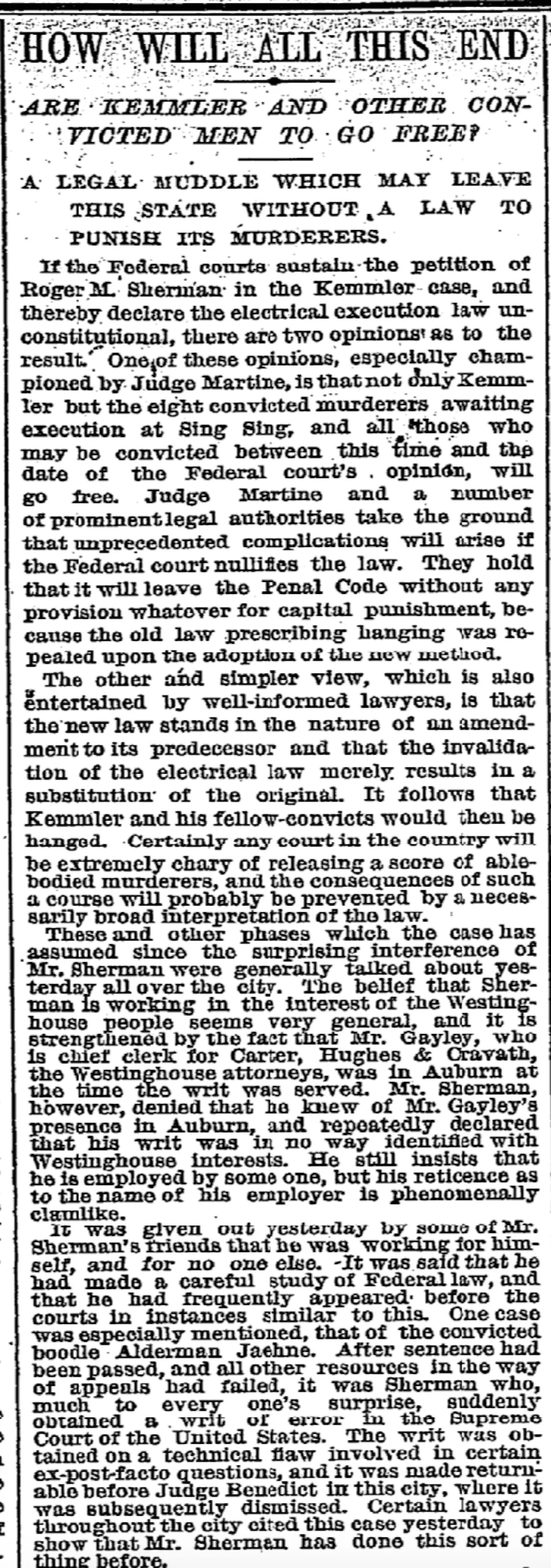
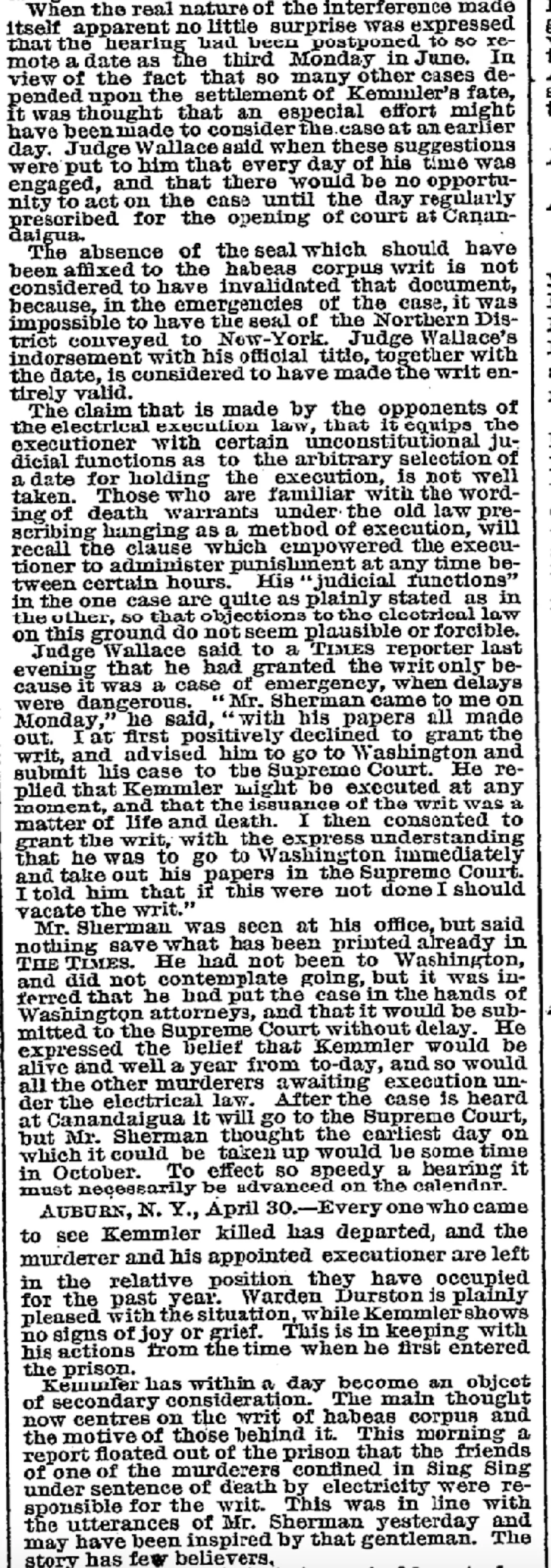
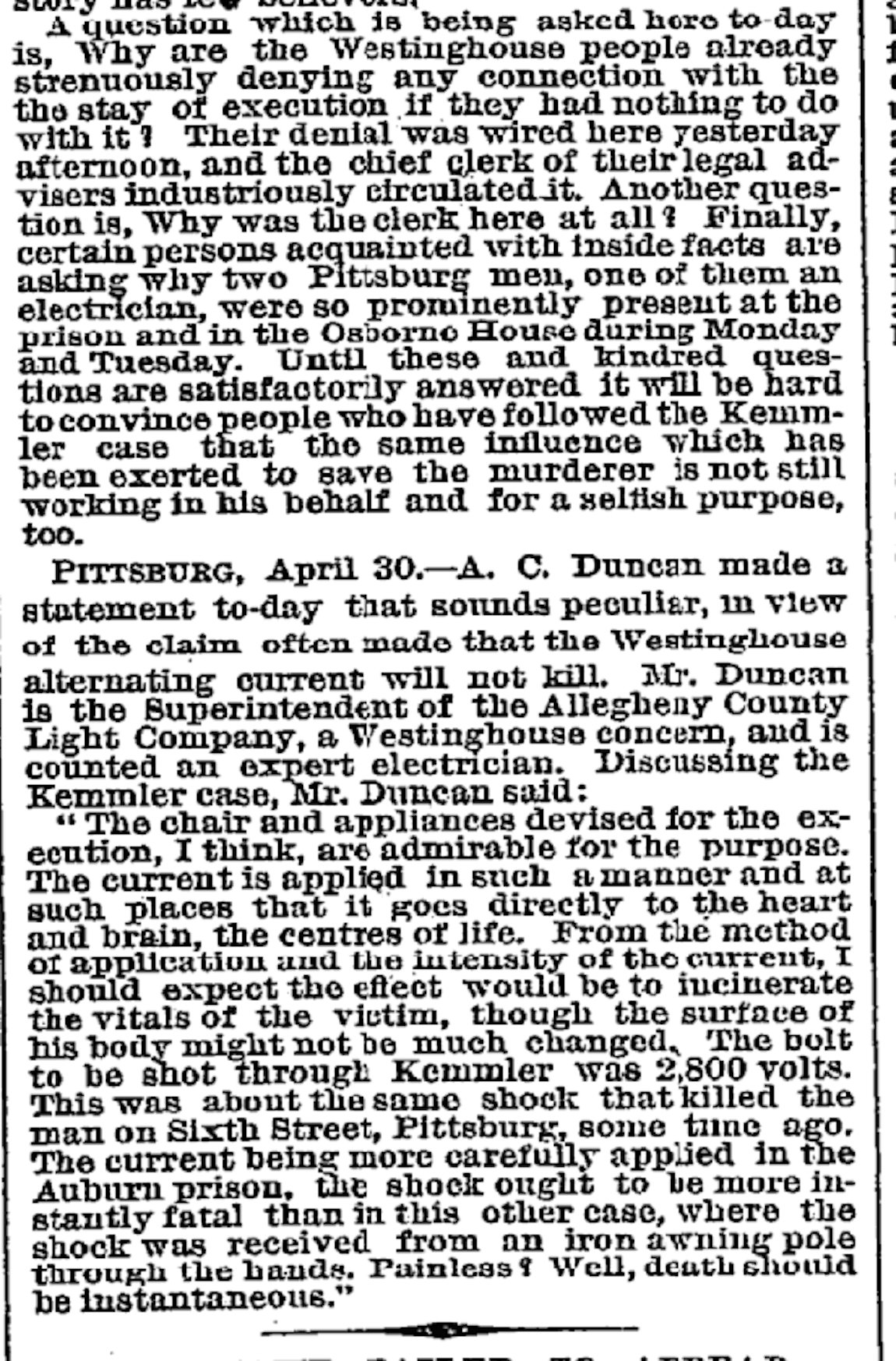
On May 1, 1890, the Times provided a detailed analyis of the case and thoughtful speculations about what its verdict might mean for the future.
It also considers the issue of whether Kemmler’s star lawyer, Roger Sherman, had been hired by George Westinghouse.
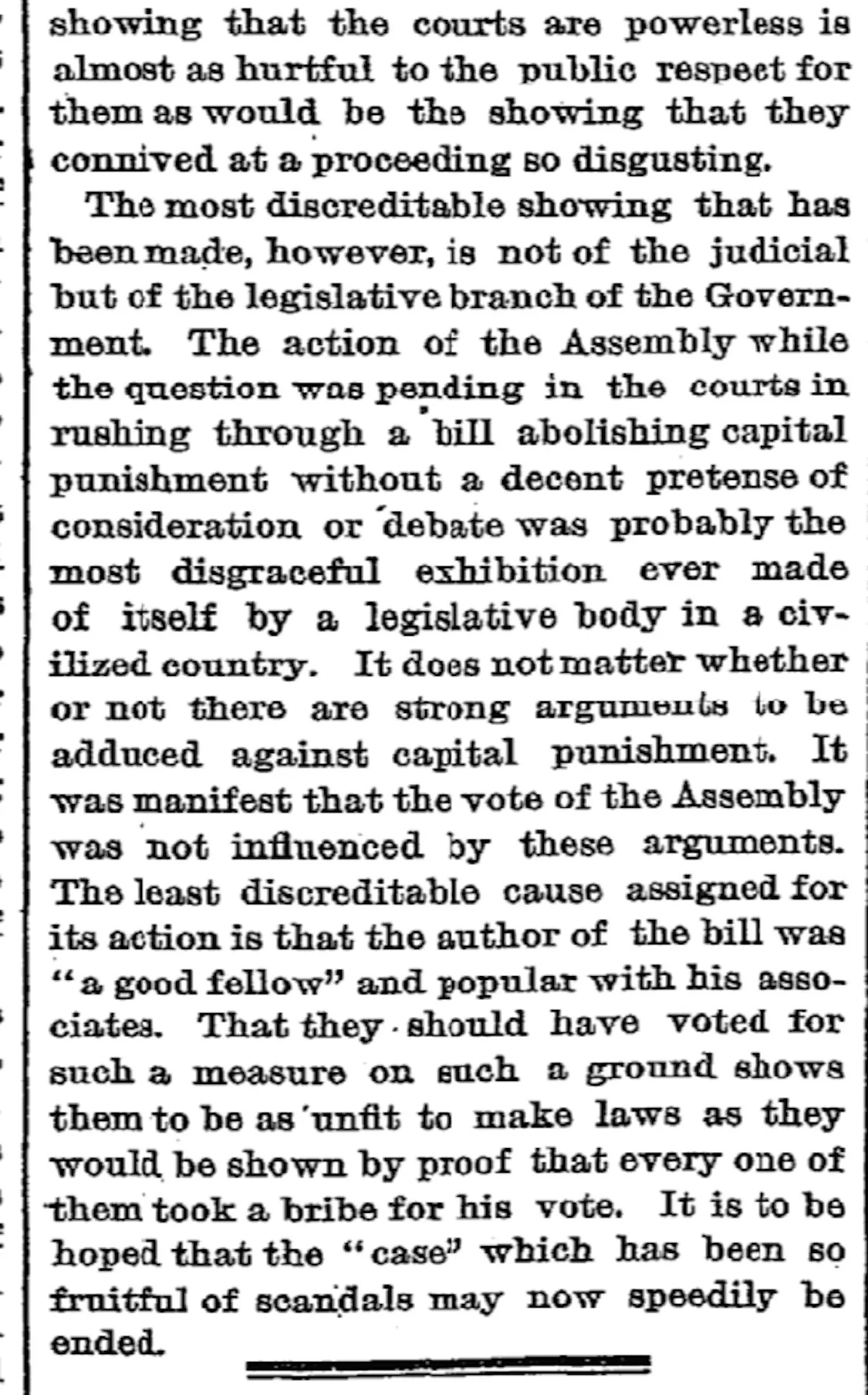
In that same May 2, 1890 issue, the Times offered this editorial opinion on the state legislature debate over the death penalty that had been raised by Kemmler’s case.
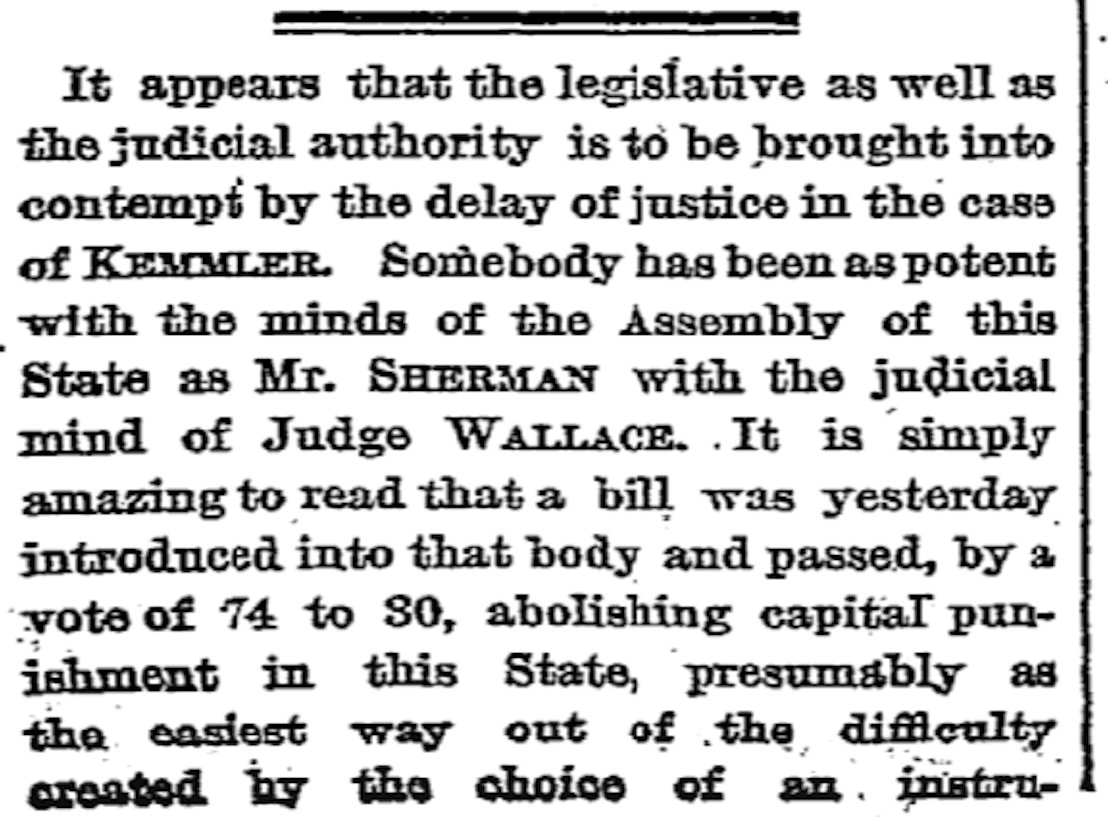
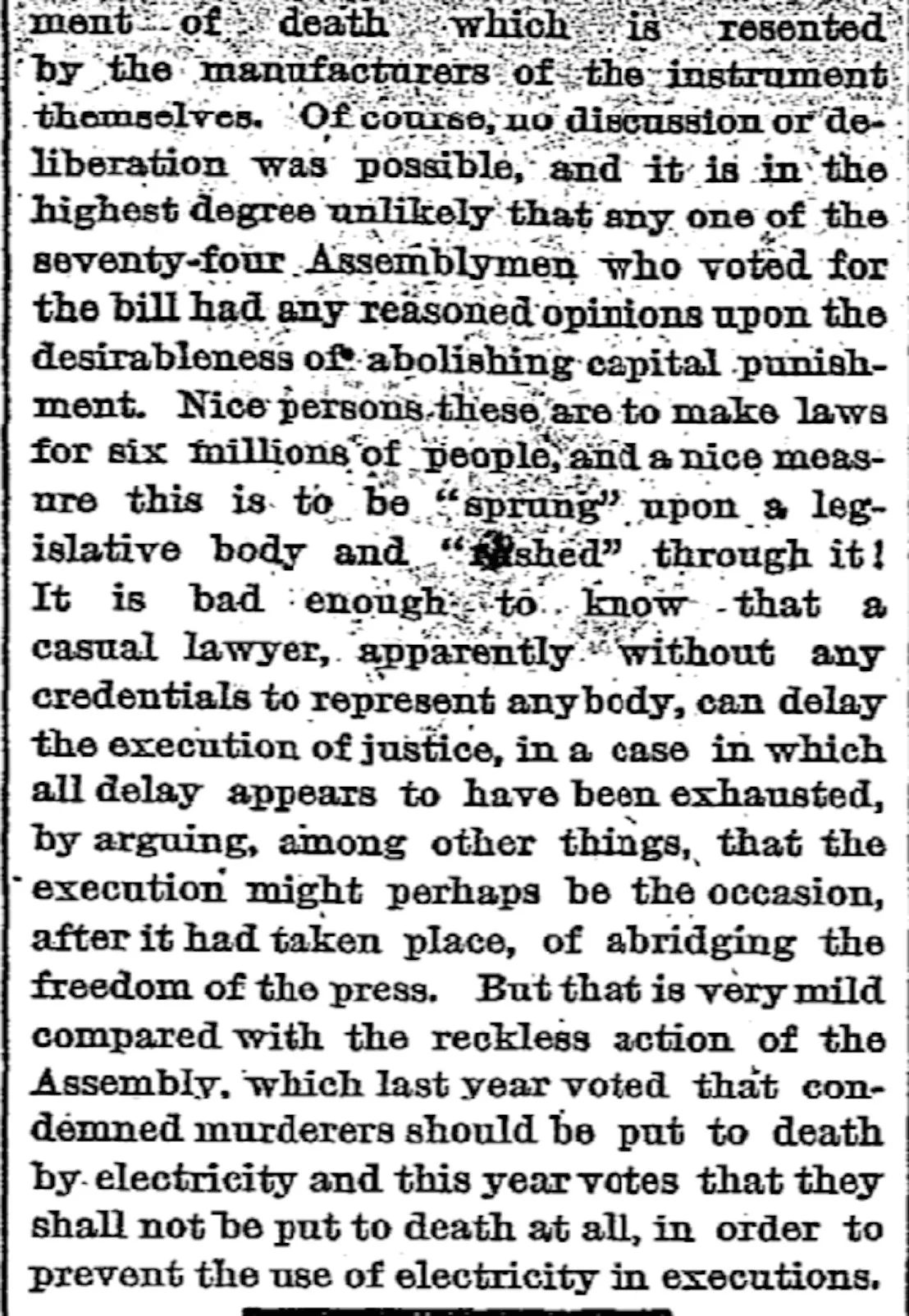
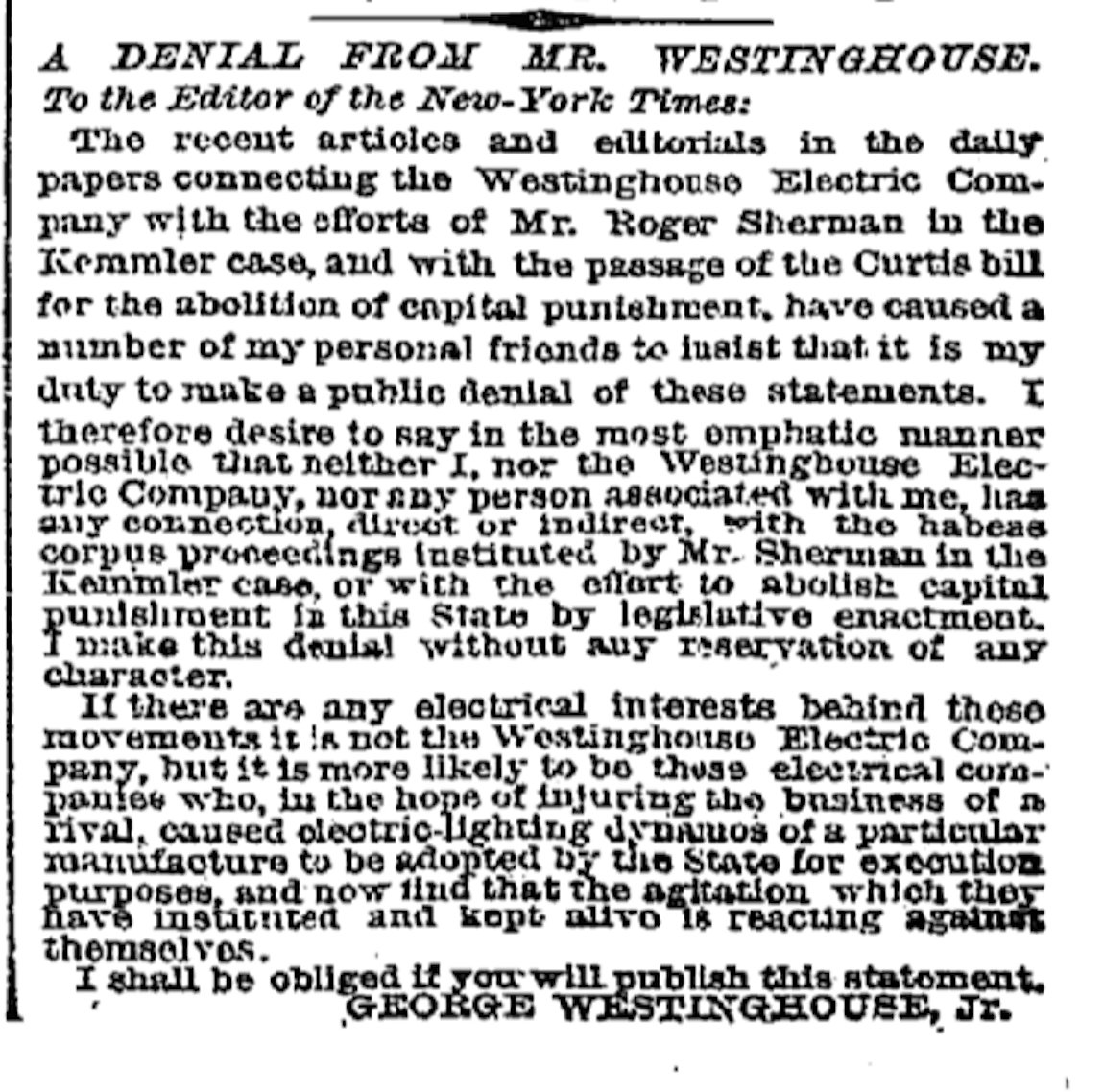
Two days later, on May 4, 1890, the Times published a letter from George Westinghouse commenting on recent coverage of the case and certifying that his company had nothing to do with the creation of the electric chair.
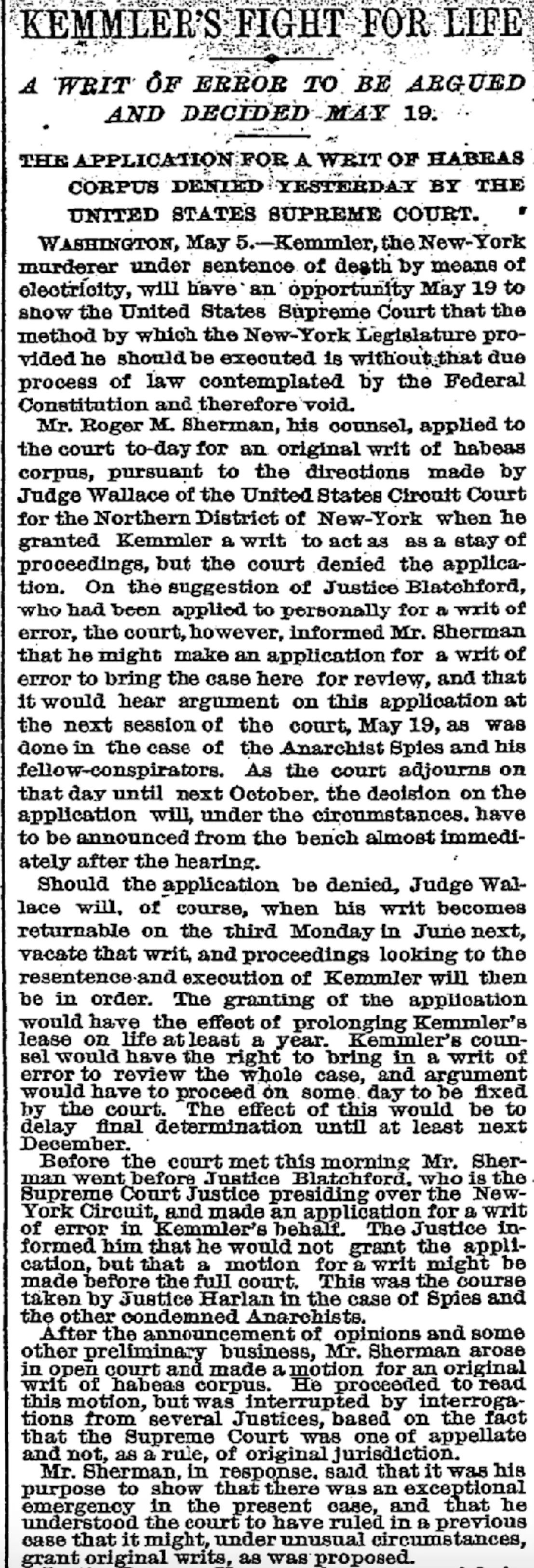
On May 6, 1890, the Times published this comprehensive recap on the many twists in the Kemmler case, including arguments to be made before the U.S. Supreme Court.
In addition to detailed analysis, the article provides direct quotes from Kemmler’s lawyer, Roger Sherman, and New York Justices Bradley, Brewer, Blatchford, Field, and Fulmer who presided over the case.
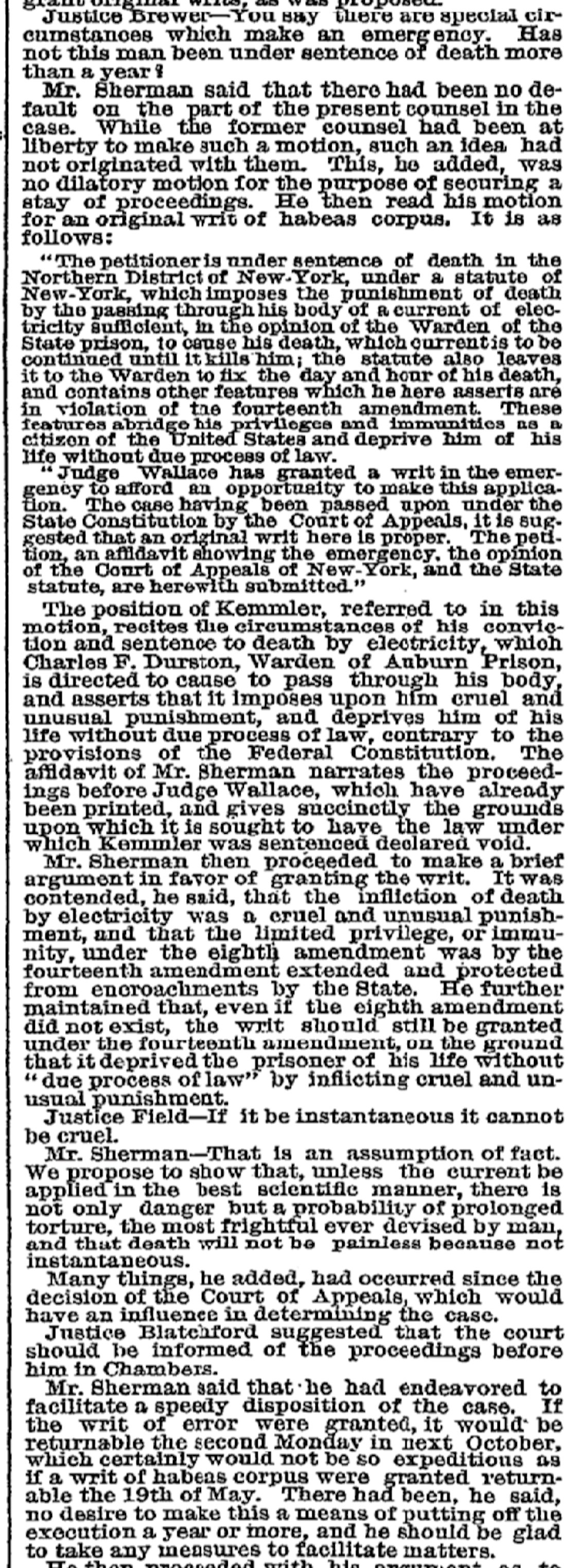

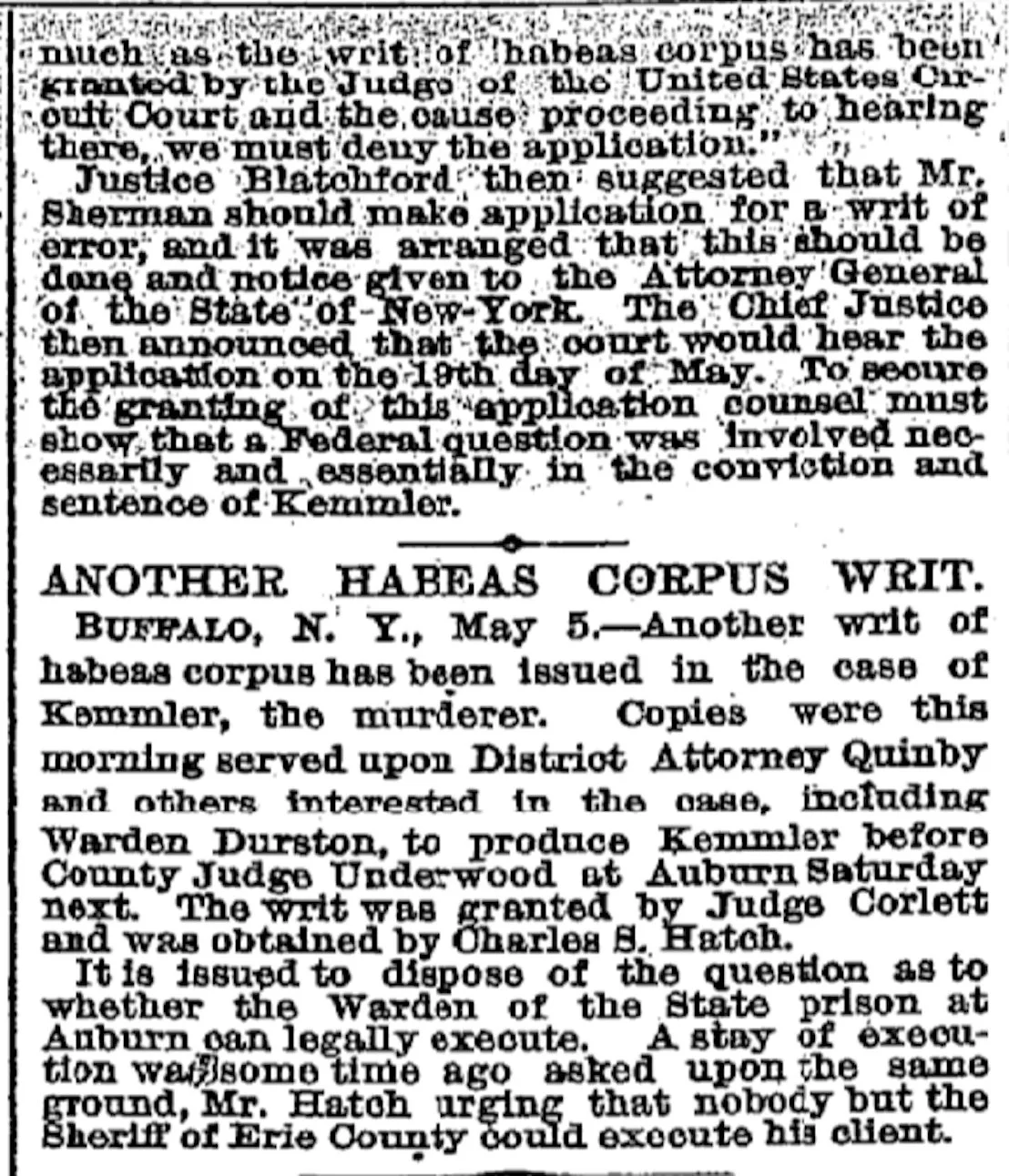
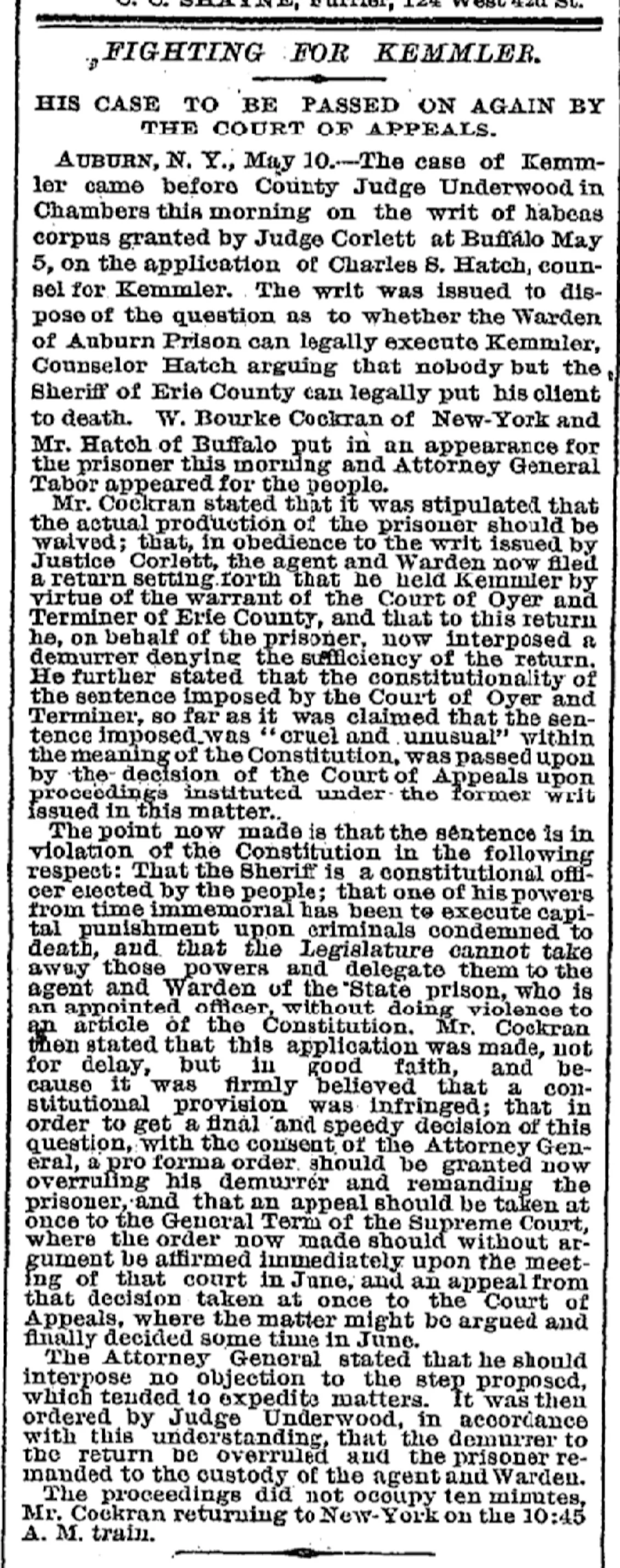
A follow-up article ran on Sunday, May 11, 1890.
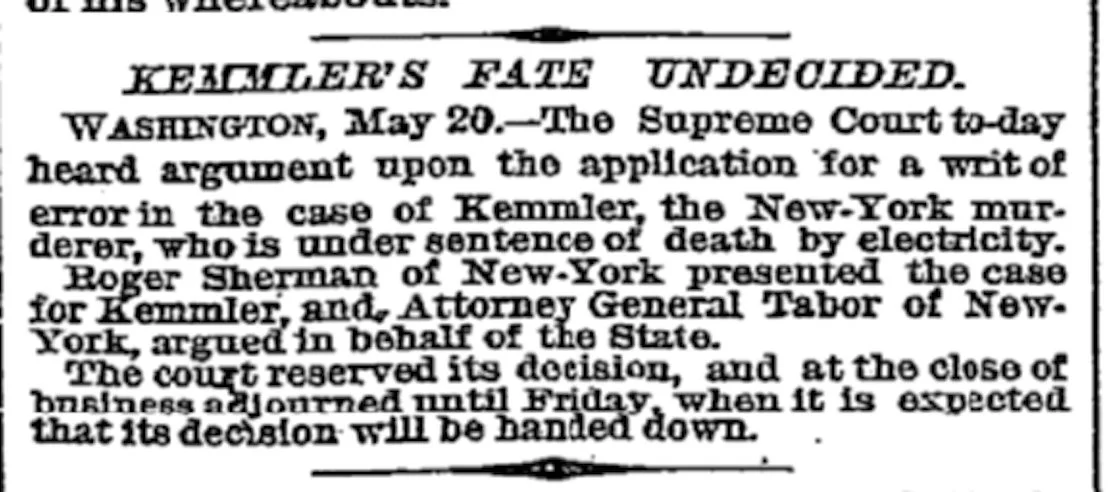
On May 21, 1890, there was this brief up-date regarding arguments made before the U.S. Supreme Court the day before.
A brief editoral critiquing the defense strategies of Kemmler’s lawyer appeared in the same issue, May 21, 1890.
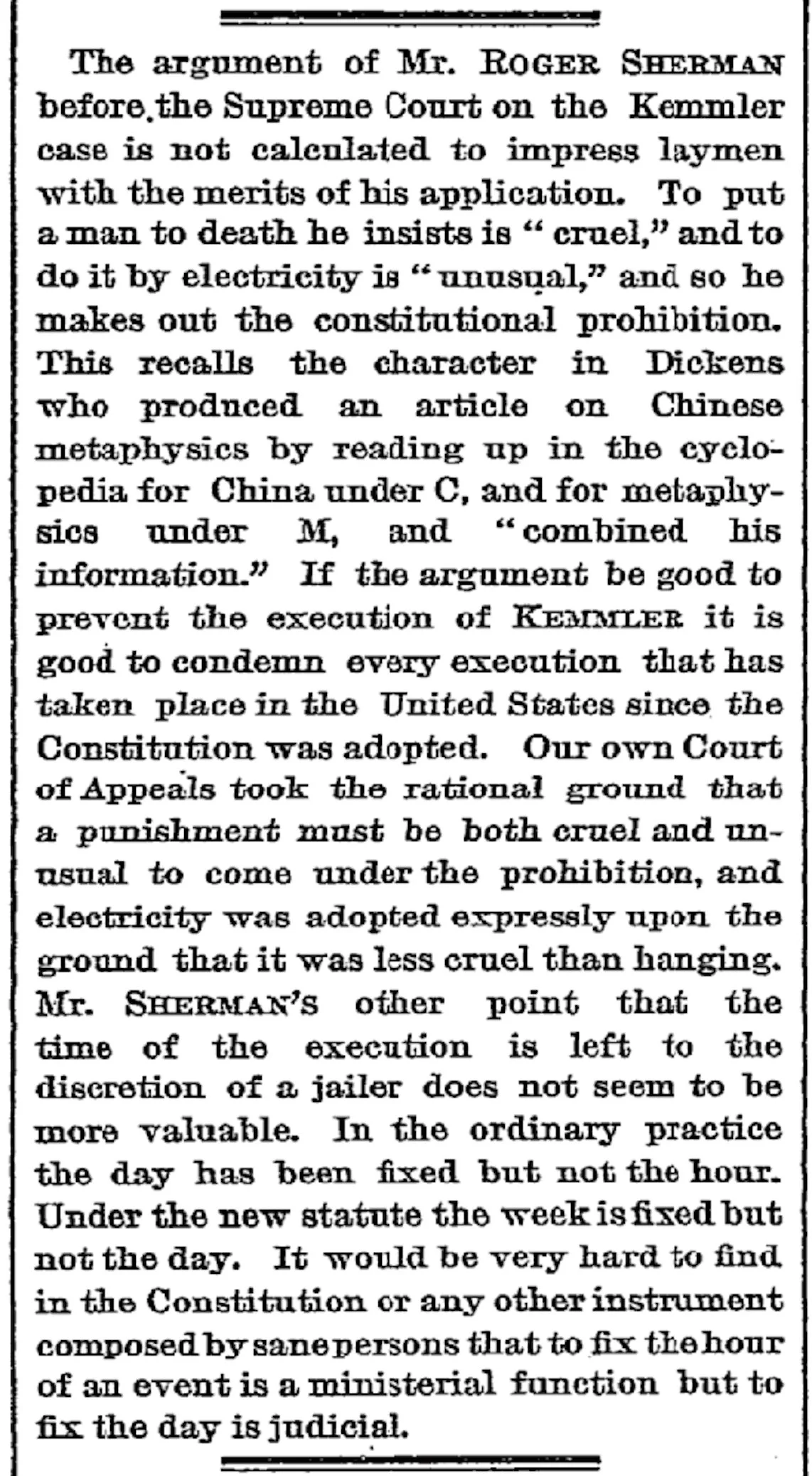
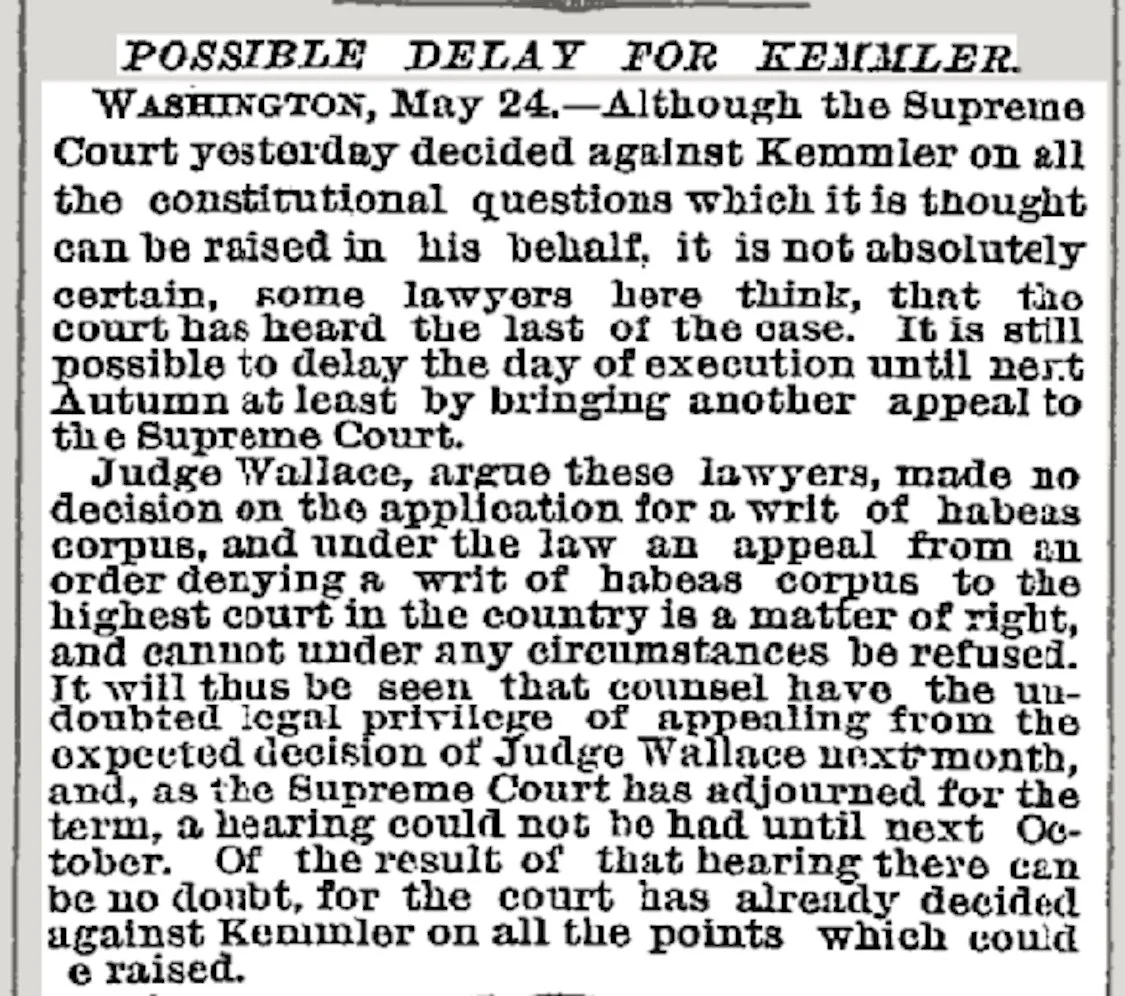
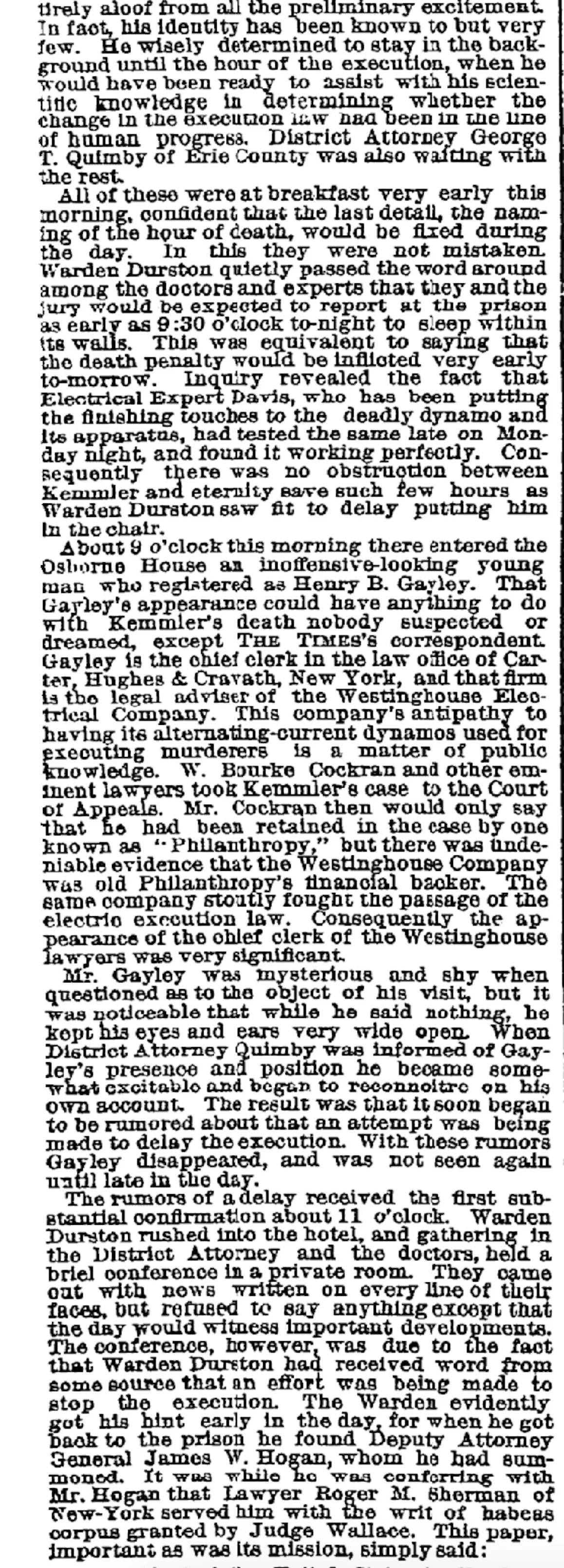
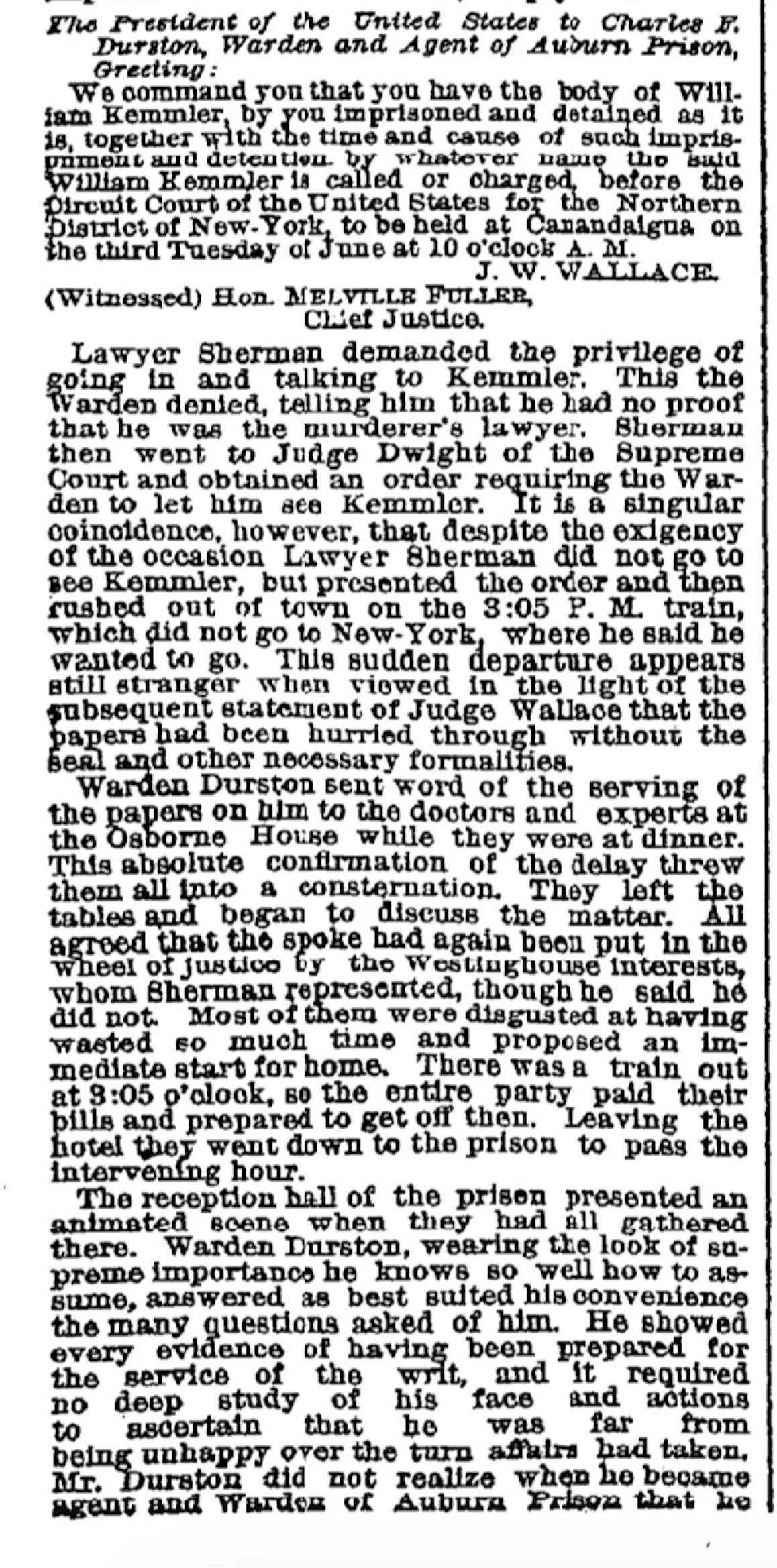
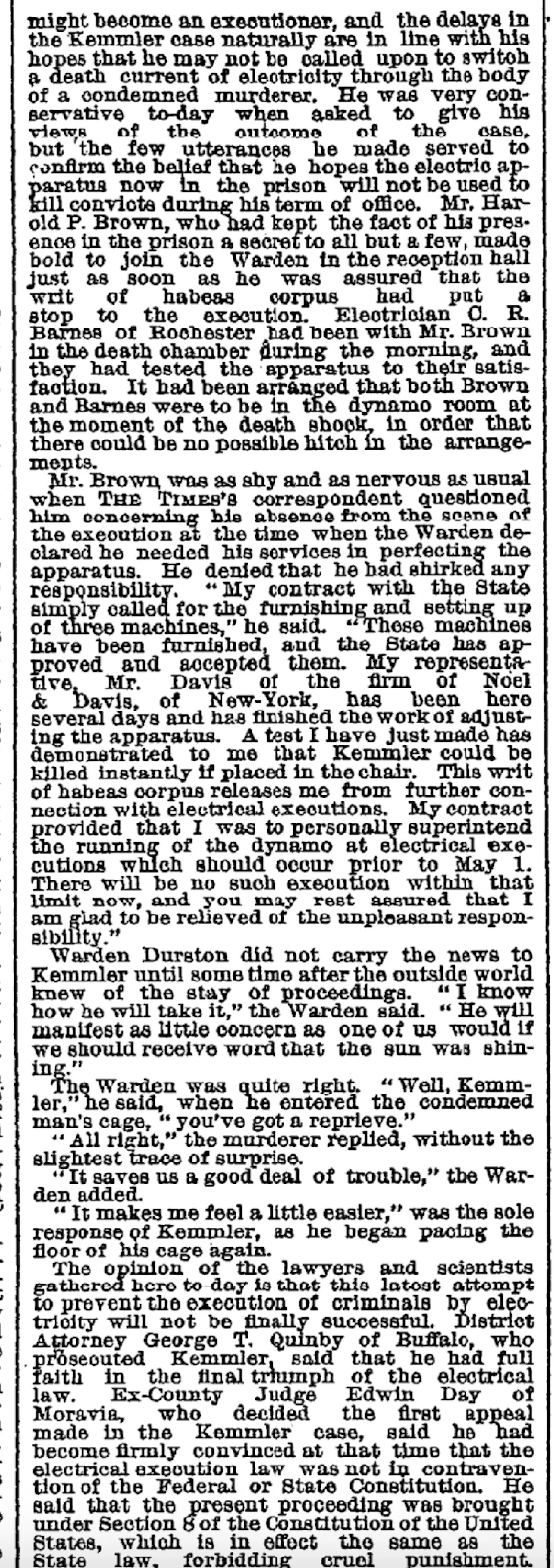
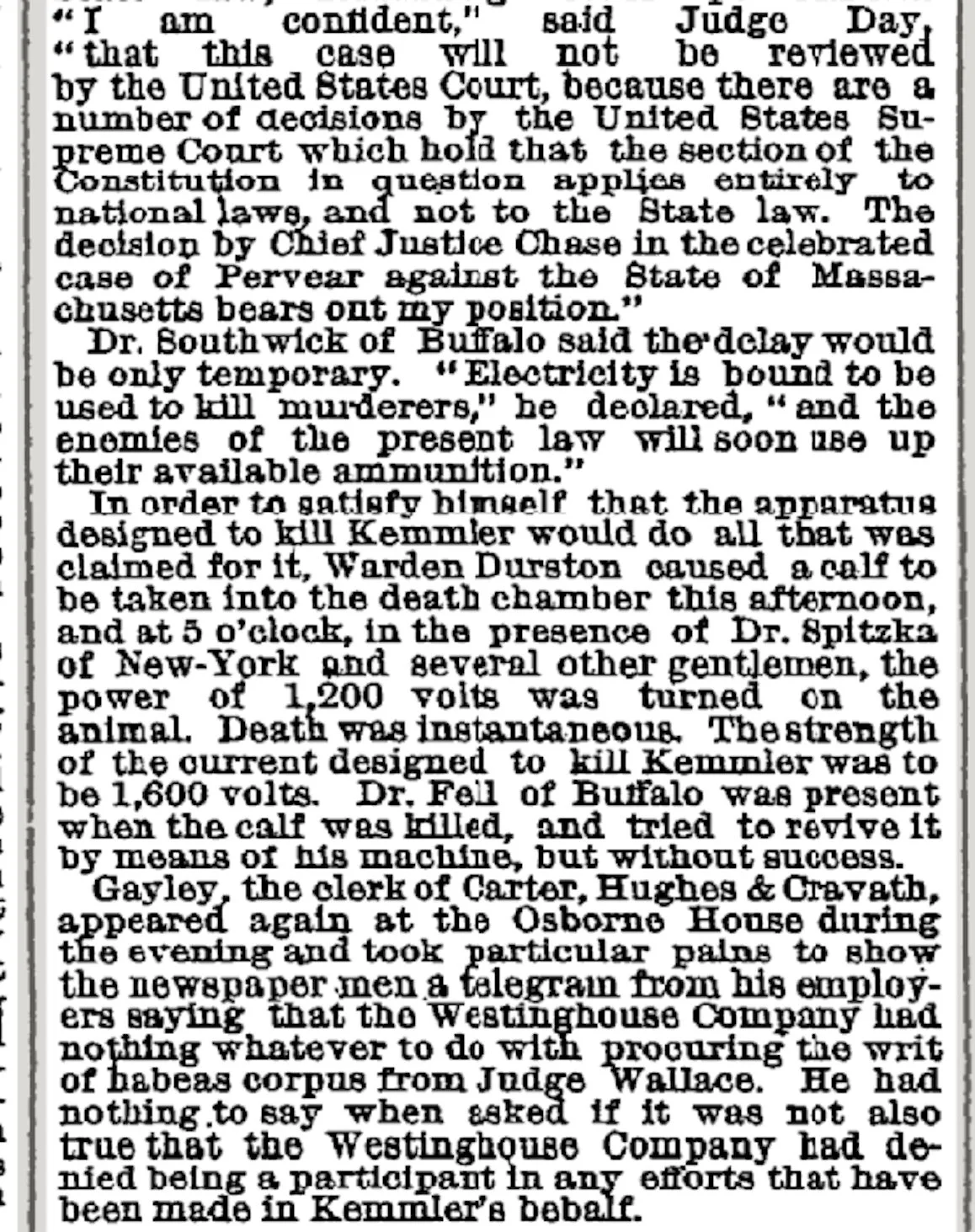
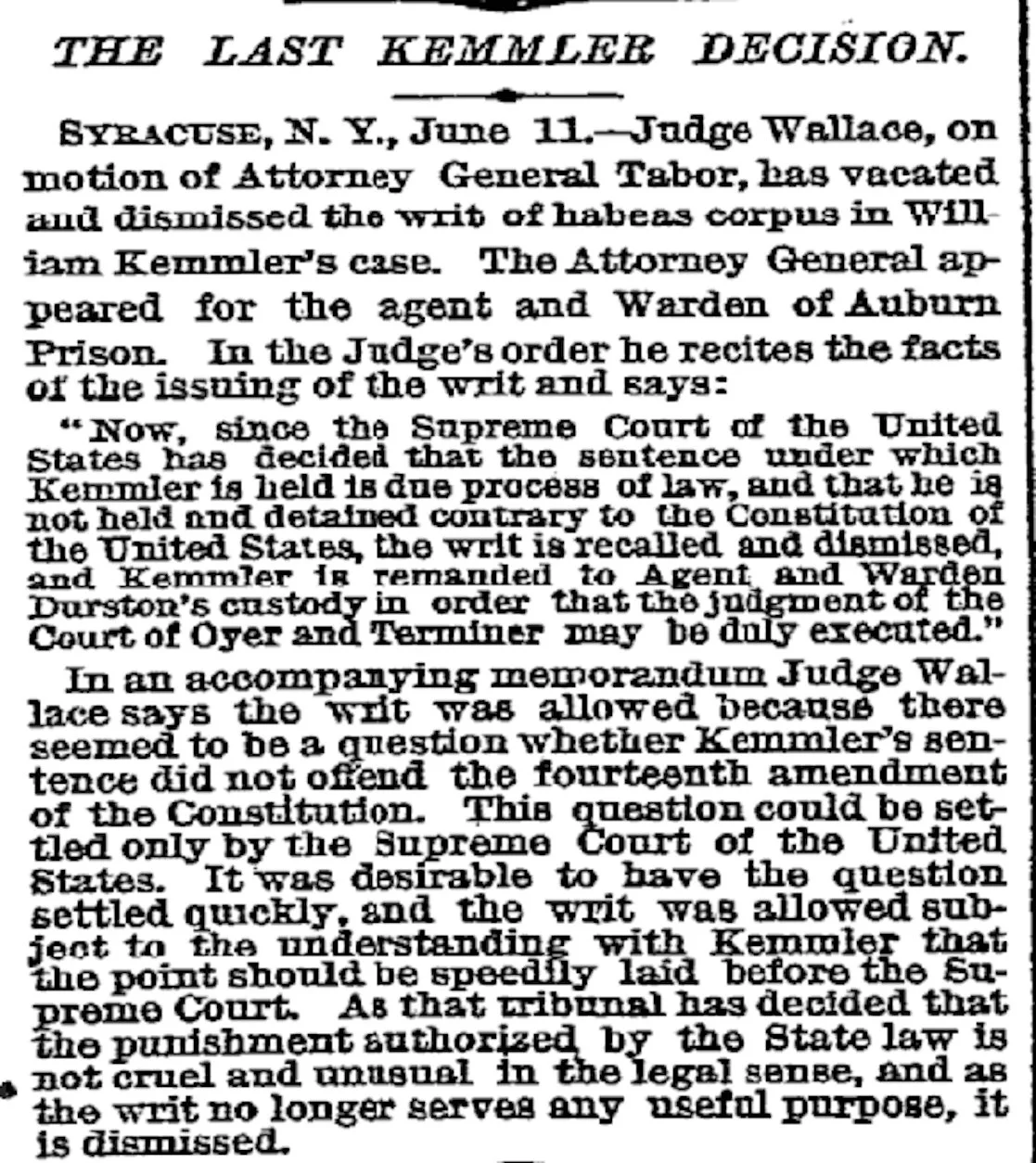
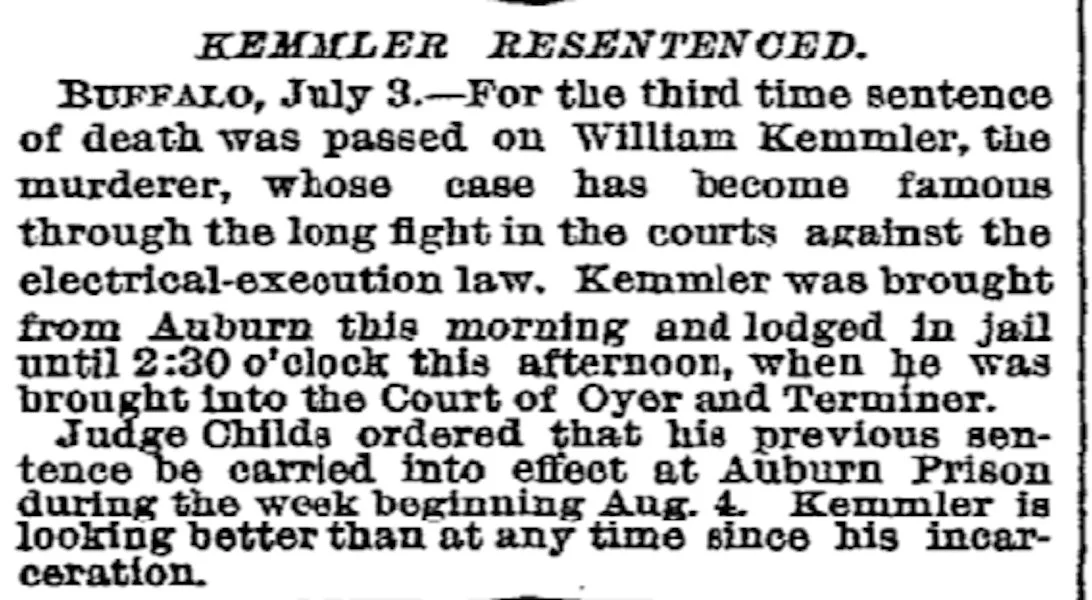
Finally the U.S. Supreme Court ruled against Kemmler’s application. On May 24, 1890, this impressive array of articles reported on developments in the case.
The package also includes an objection by George Westinghouse, as well as detailed reporting on how the electric chair had been developed and tested by Thomas Edison and Harold Brown.
Finally, there’s a somewhat lurid recapitulation of Kemmler’s original crime.
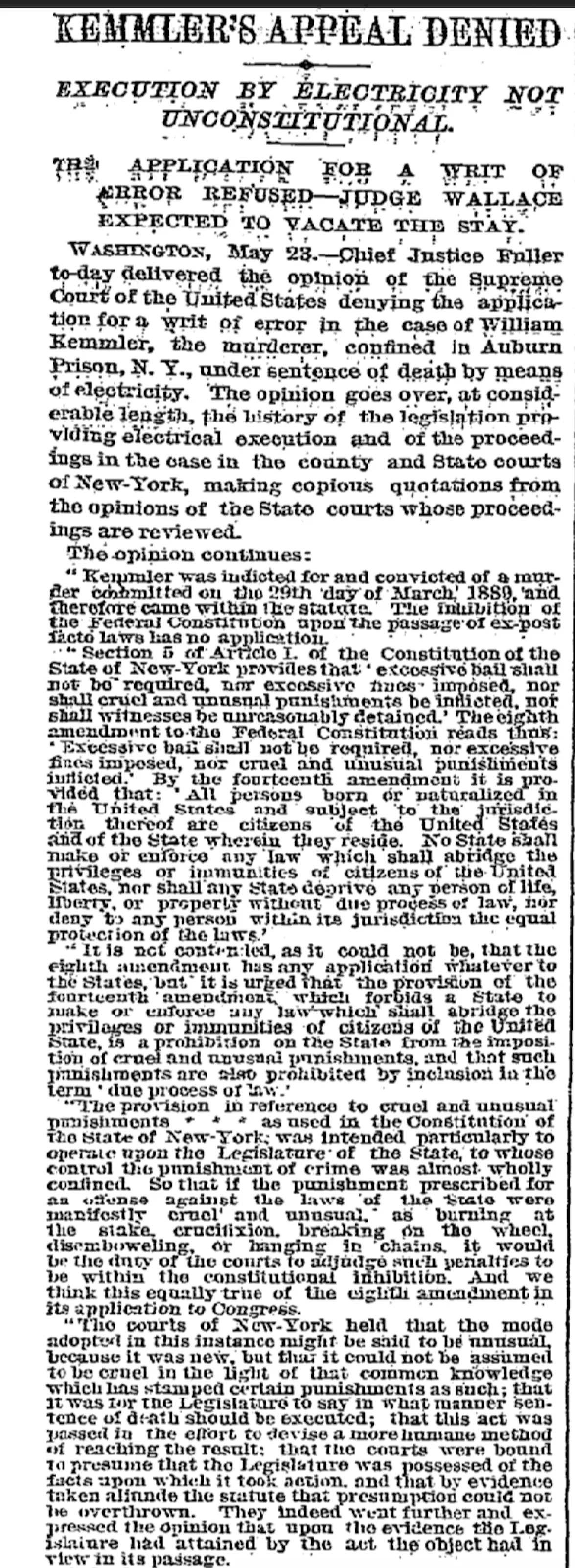
May 24, 1890
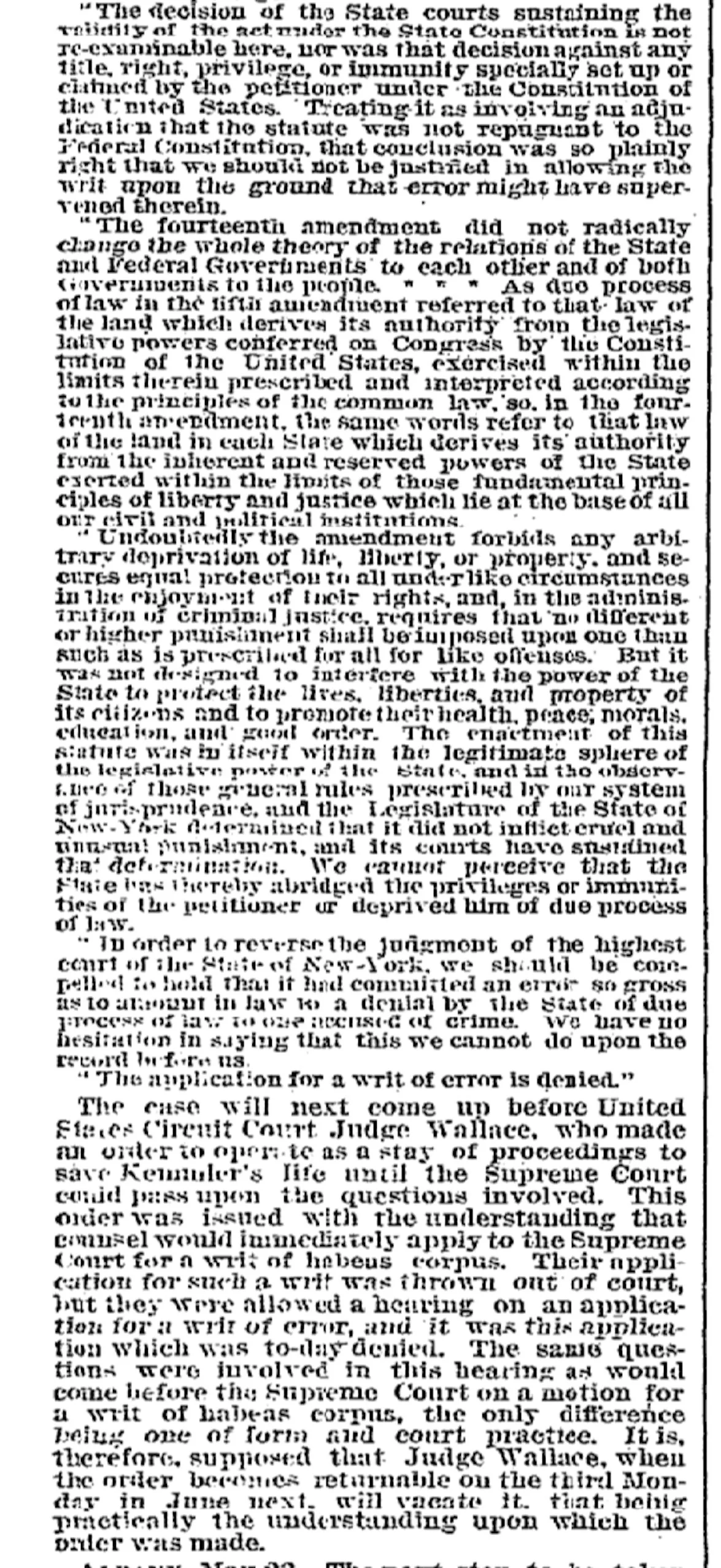
May 24, 1890
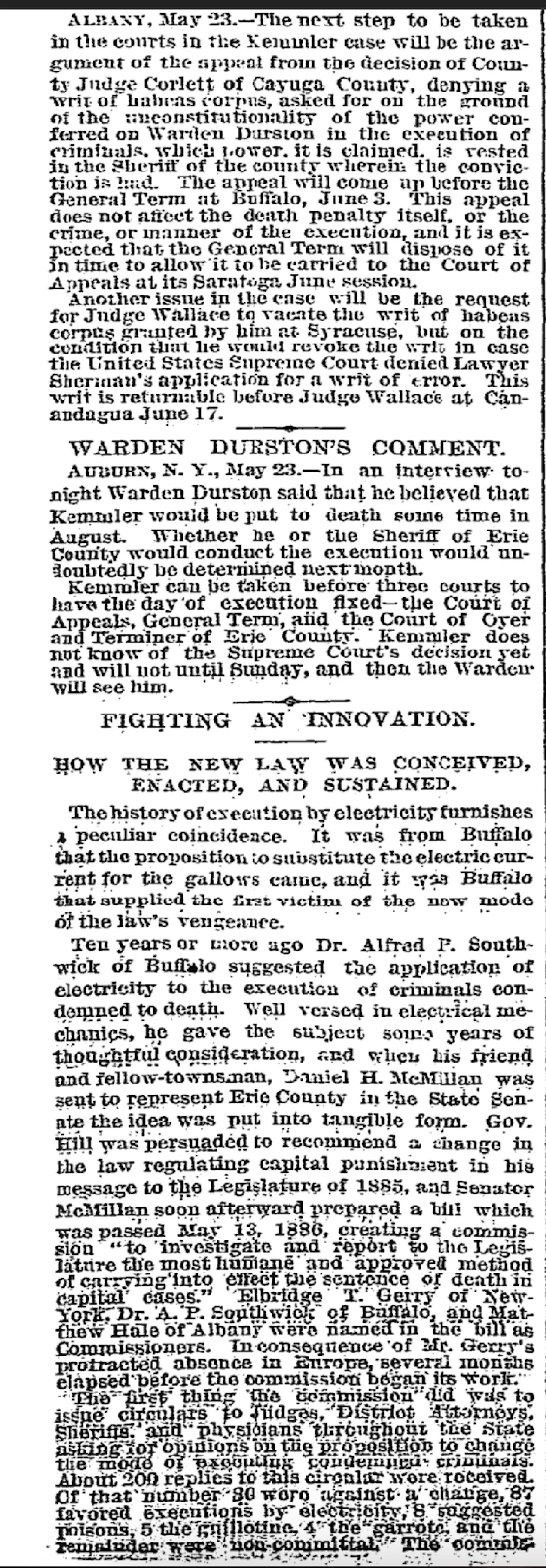
May 24, 1890
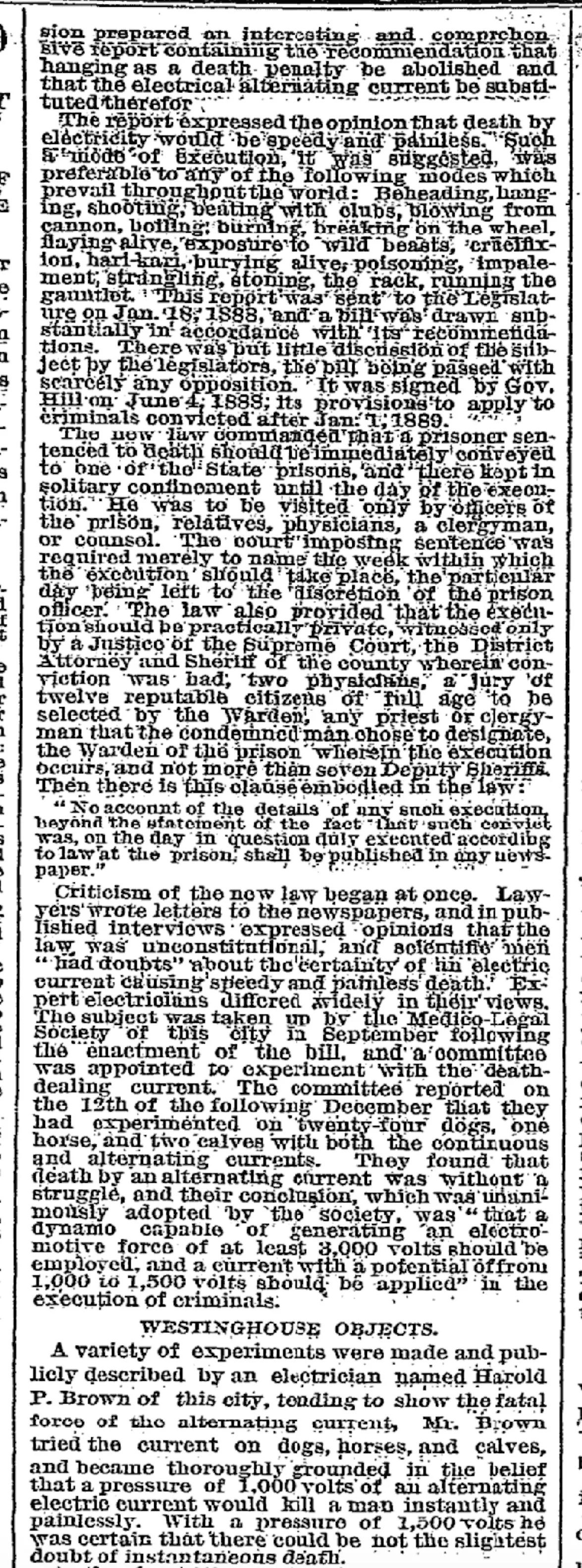
May 24, 1890
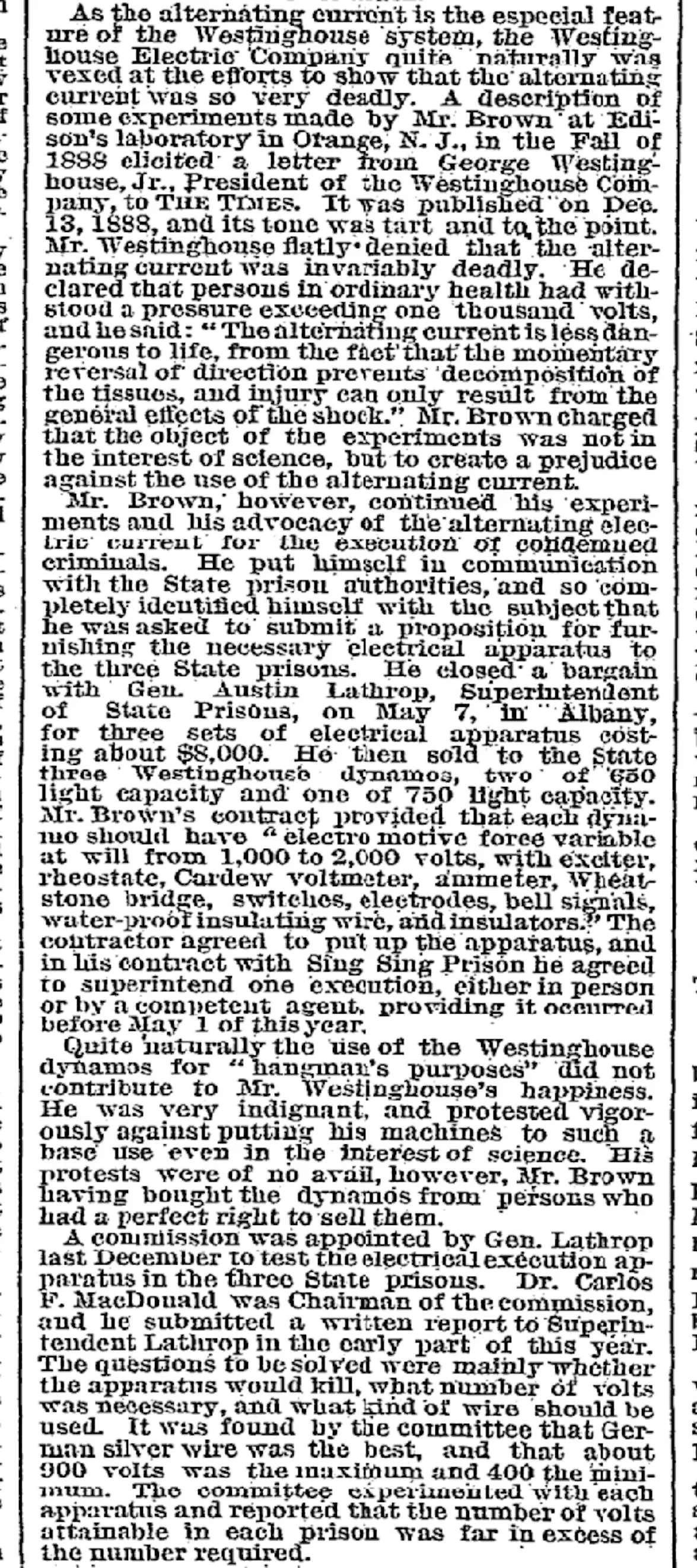
May 24, 1890
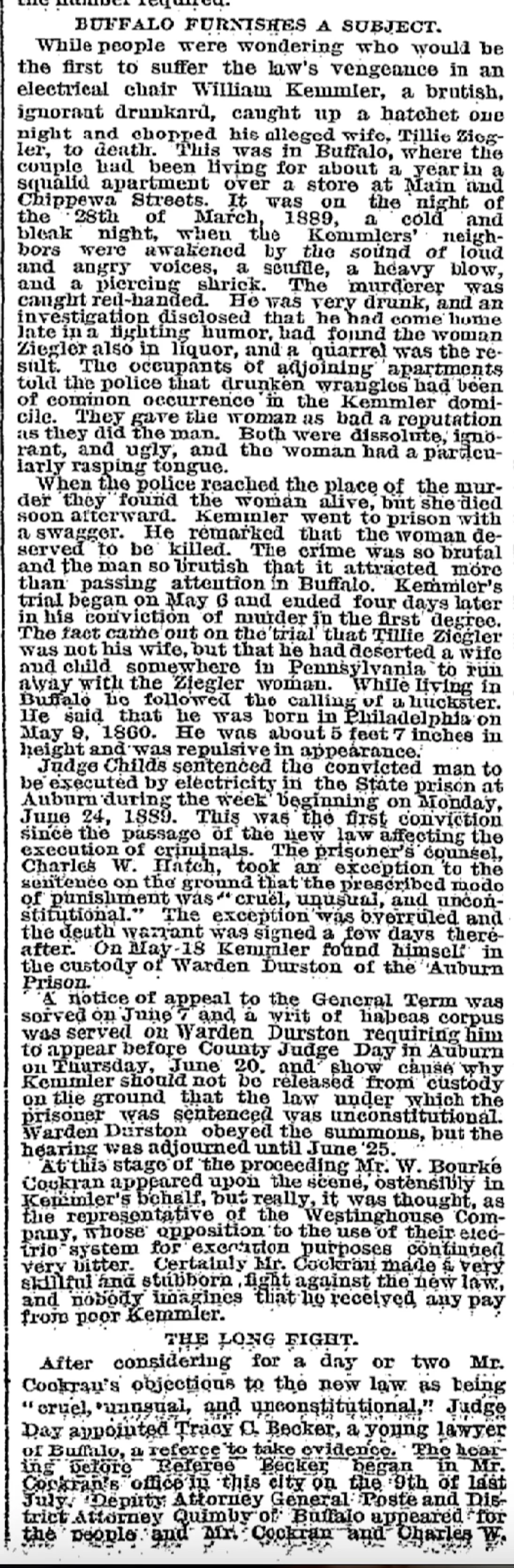
May 24, 1890
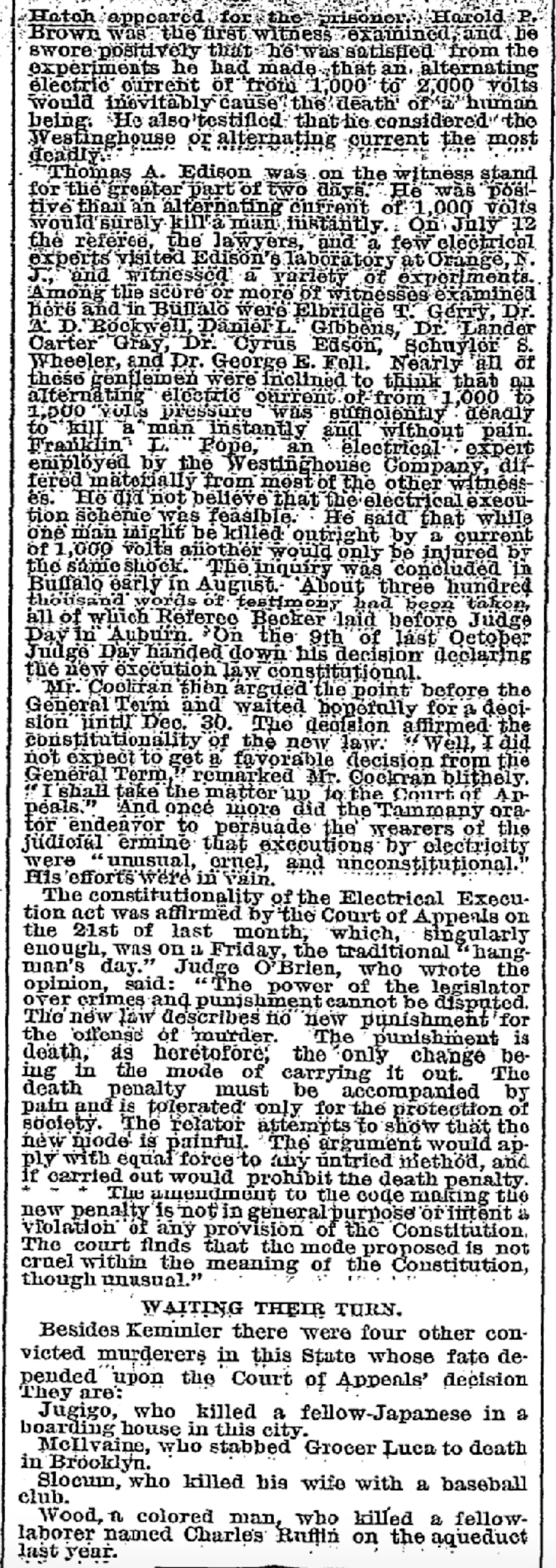
May 24, 1890
Elsewhere in that same issue of May 24, 1890, The New York Times published its critique of the year-long legal wrangling over Kemmler appeals which had captured the public’s attention.
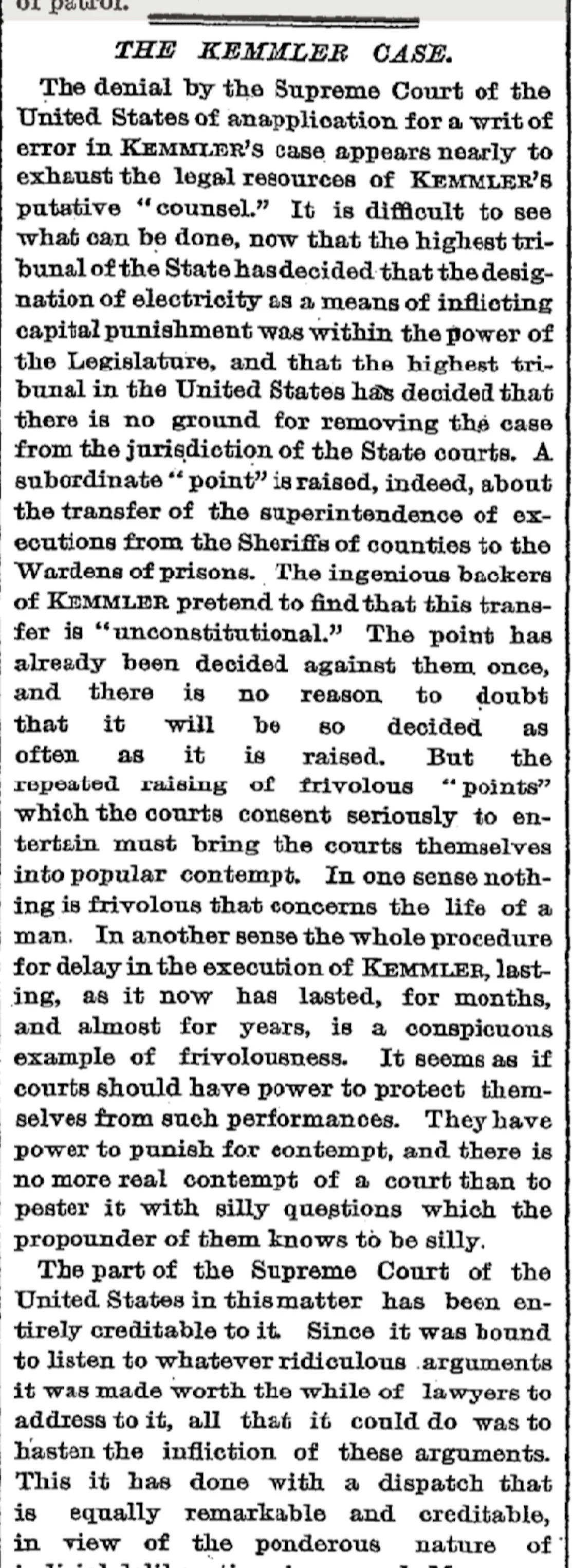
5/24/1890
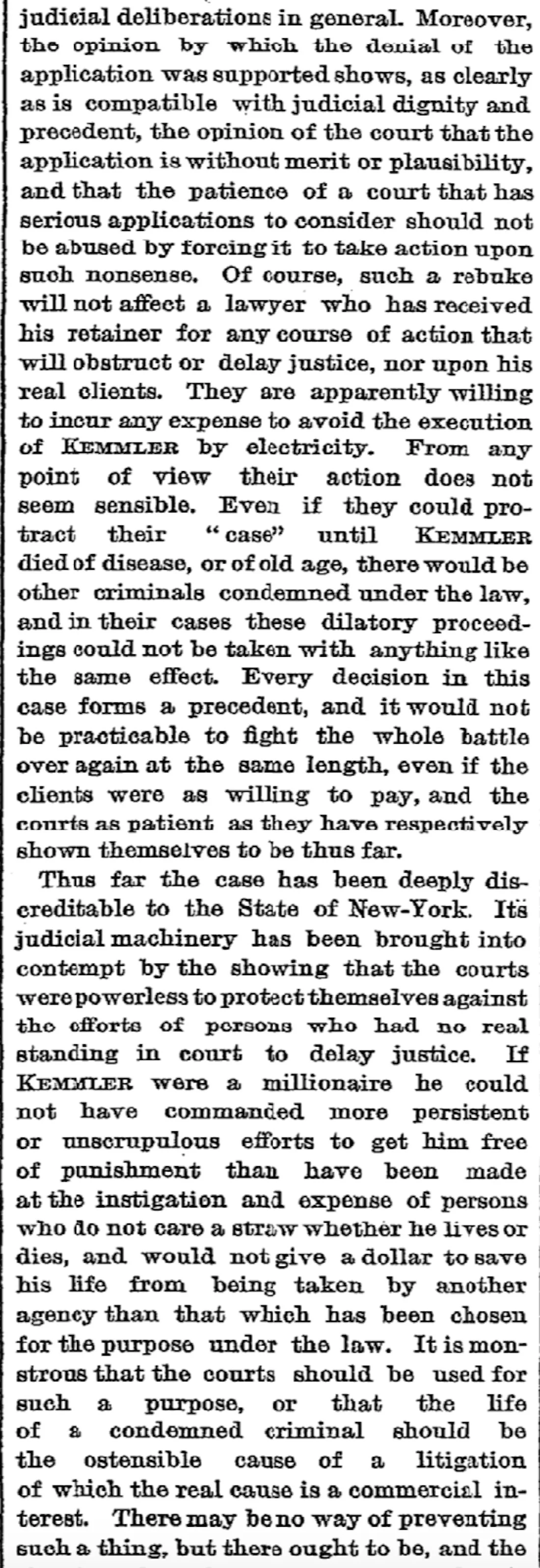
5/24/1890